
A great coffee experience starts long before the first sip. The material of your coffee cup—often overlooked—plays a decisive role in how flavor evolves, how heat is retained, and how the beverage interacts with its environment. As consumers shift toward premium drinkware and health-conscious purchasing, understanding the science behind cup materials becomes a differentiator for both brands and retailers.
Today, the cup is no longer just a container. It is a performance asset, a sensory tool, and increasingly, a symbol of lifestyle choices: sustainability, health, and product quality. This is where material science becomes a tangible driver of perceived beverage quality.
1. Material Choice as a Strategic Component of the Coffee Experience
When a hot beverage enters a cup, the material sets off a chain reaction. Thermal conductivity, surface reactivity, insulation systems, and heat-loss behavior all shape the aroma concentration, sweetness perception, bitterness development, and the speed at which flavor stability changes.
In brand terms, material affects customer satisfaction, repeat usage, spill risk, and the customer’s perception of “premium-ness.”
For users, it dictates everything from drinking tempo to how long a cup fits their daily routine—whether on a commute, at a workstation, or outdoors.
Material is no longer aesthetic; it is functional strategy.
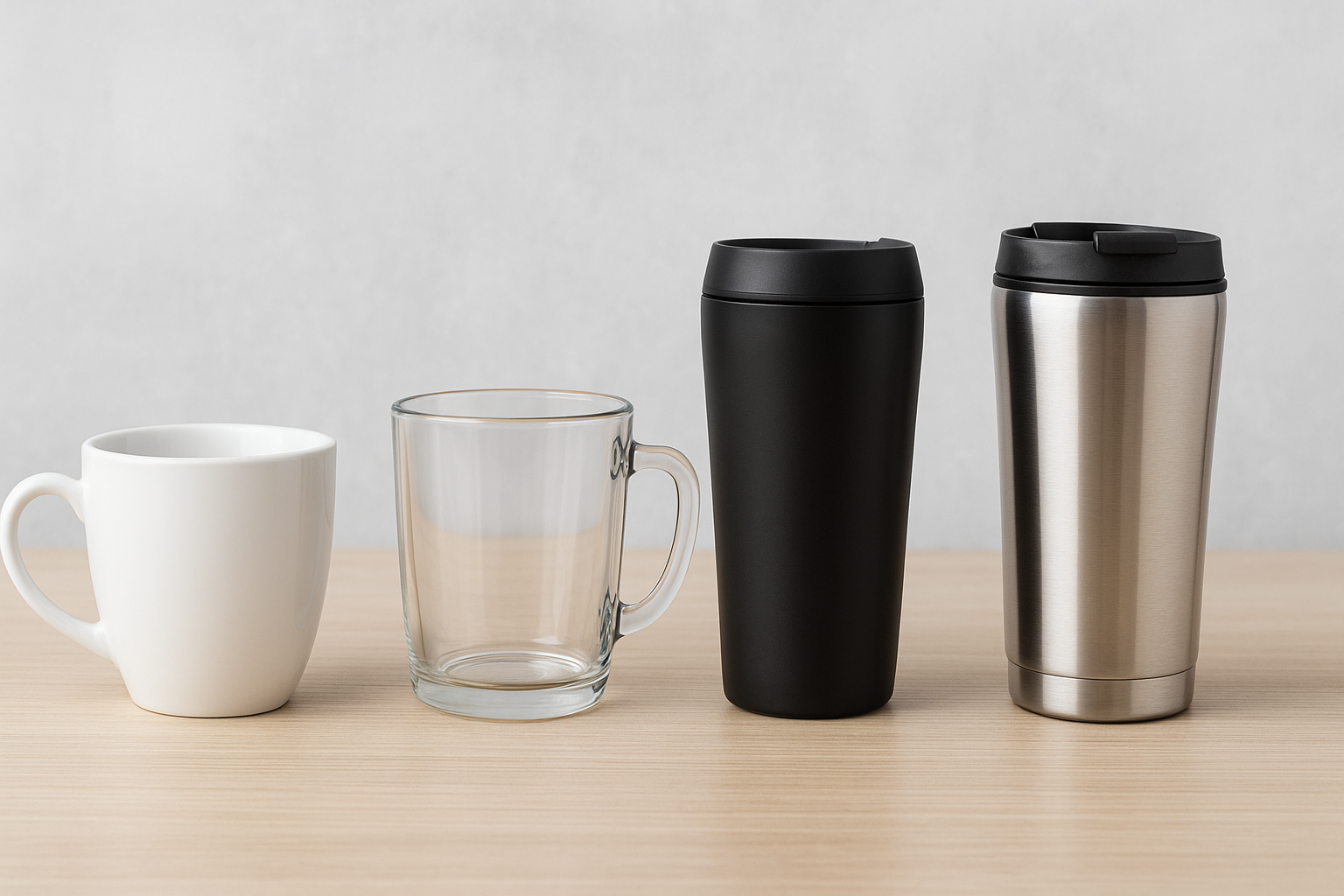
2. Porcelain: Classic, Flavor-Neutral, but Limited by Heat Loss
Porcelain’s appeal lies in its neutrality. Café environments rely on it because the material does not modify taste and provides a stable platform for espresso-based beverages.
However, porcelain loses heat rapidly due to its higher thermal conductivity and non-insulated walls, causing temperature to fall below optimal drinking range within minutes.
This creates a quality gap for slow drinkers and takeaway scenarios. In a fast-moving consumer landscape, porcelain now sits firmly in the “stationary consumption” category.
3. Glass: Aesthetic Transparency With Structural Trade-Offs
Glass offers a purified sensory experience—the ability to see crema layers and coffee color gradients. It is also chemically inert, preserving delicate notes in light-roast coffees.
Yet the thermal performance remains modest. Even double-wall glass can’t compete with insulated materials. Its fragility and weight introduce operational risk for mobile consumers.
Glass excels visually, but falls short structurally.
4. Plastic: Lightweight and Practical, With Performance Ceilings
High-quality, BPA-free plastics such as Tritan deliver durability and portability. They’re cost-efficient and easy for families and outdoor users.
But from a coffee-science perspective, limitations exist:
• Thermal retention is low
• Minor scratching can affect taste perception
• Heat can accelerate mild aroma carryover
Plastic wins on convenience but not on premium drinking performance.
5. Stainless Steel: The High-Precision Engineered Solution
Stainless steel—particularly food-grade 304 and 316—solves performance problems across the board.
Its rise aligns with modern user expectations: consistency, health assurance, sustainability, and long-term reliability.
Key advantages include:
• Excellent insulation performance when vacuum-sealed
• Minimal flavor interaction
• High corrosion resistance
• Strong durability for mobility-focused users
• High recyclability supporting sustainability positioning
Between the two, 316 stainless steel delivers higher corrosion resistance and stricter material stability, making it the go-to choice for luxury beverage containers.
6. How Material Directly Shapes Temperature Performance
Temperature retention is the heart of coffee quality.
A cup’s material determines how slowly heat escapes—which influences aroma concentration, acidity retention, sweetness perception, and how bitterness evolves over time.
Here is how the science plays out:
Thermal Conductivity:
Materials with high conductivity (like glass and porcelain) transfer heat away rapidly, leading to fast temperature decline. Stainless steel’s conductivity is managed by vacuum insulation, creating a low-exchange environment that slows thermal loss dramatically.
Surface Interaction:
Hot coffee interacting with cooler surfaces leads to immediate heat drop. Stainless steel cups pre-heated or designed with thermal buffers create a more stable curve.
Heat Loss Over Time:
Vacuum-insulated 304/316 stainless steel cups can maintain drinkable heat ranges for several hours—preserving flavor integrity and preventing the bitterness spike caused when temperature dips too low.
In markets prioritizing outdoor activities, long commutes, or all-day coffee routines, material-driven thermal performance becomes a competitive advantage.
7. Taste Integrity and Material Reactivity
Taste stability is influenced by micro-contamination, surface residue, and reactivity:
• Glass and porcelain are stable but lose temperature fast
• Plastic risks micro-flavor carryover over extended use
• Stainless steel (304/316) offers neutrality, resisting residue buildup and chemical migration
In essence, taste clarity requires both non-reactivity and temperature consistency—two strengths that converge in stainless steel.
8. Sustainability Expectations Shape Material Preference
Consumers increasingly associate sustainability with product longevity.
Reusable stainless steel drinkware aligns directly with structural durability, lifecycle value, and recyclability.
As sustainability commitments become more mainstream, short-lifecycle materials face declining relevance, especially in premium markets.
9. Why Stainless Steel Now Dominates the Modern Drinkware Market
The dominance of stainless steel is not accidental—it is a response to market behavior, performance expectations, and health-driven purchasing. Several forces drive this leadership:
Performance Reliability:
Stainless steel solves the core pain points—temperature loss, flavor interference, portability concerns.
Health Consciousness:
Consumers perceive stainless steel as a “cleaner” and more trustworthy option versus plastics.
Premium User Behavior:
As consumers invest more in lifestyle products, stainless steel aligns with perceived value and long-term ownership.
Evolving Usage Scenarios:
Remote work, outdoor hobbies, longer commuting times, and hybrid lifestyle patterns favor insulated, durable, mobile-ready solutions.
Brand Strategy Alignment:
Stainless steel containers allow companies to position themselves in higher-margin, brand-loyalty categories.
In short, stainless steel has become the “default premium material” because it meets both functional and emotional needs.
10. The Future of Coffee Cup Materials: Market Outlook & Innovation Path
Material innovation in drinkware continues accelerating. Over the next few years, key trends will reshape the category:
Advanced Thermal Engineering:
Multi-layer insulation, hybrid alloys, and improved vacuum sealing are raising performance ceilings.
Health-First Material Standards:
Expect stronger regulation on leaching, coatings, and chemical stability—pushing more brands toward higher-grade stainless steel.
Smart Drinkware:
Temperature indicators, integrated sensors, and app-paired hydration trackers are entering the mainstream.
Sustainability as a Status Signal:
Long-lasting stainless steel will increasingly represent responsible consumption rather than just convenience.
Premiumization of Everyday Drinkware:
Consumers are willing to pay more for “daily luxury items”—turning stainless steel tumblers into lifestyle accessories.
Stainless steel is not just dominant today; it is well-positioned to lead the next decade of beverage innovation.
References
(Example placeholder structure — you may replace with specific datasets for publication)
- Comparative material studies on thermal conductivity and insulation efficiency
- Food-grade stainless steel corrosion and safety assessments
- Lifecycle analysis of reusable drinkware materials
- Research on taste neutrality in beverage containers
- Consumer trend reports on drinkware purchasing behavior and sustainability adoption