
Introduction: Why “Lifestyle Fit” Matters More Than Features
Walk into any store or scroll through any online marketplace, and reusable water bottles look deceptively similar. Stainless steel, plastic, glass. Insulated, lightweight, smart, minimalist. On paper, the differences seem clear. In reality, many bottles end up abandoned in cabinets, replaced within months, or used far less than expected.
The core problem is not product quality. It is misalignment.
Most people choose a water bottle based on features or aesthetics, not on how they actually live, move, and hydrate. A bottle that performs well in a lab or marketing photo can fail completely in daily use if it does not fit the user’s lifestyle. This article reframes the decision process. Instead of asking “Which bottle is best?”, it focuses on a more practical question: Which bottle fits the way you actually drink water?
Start With How You Actually Use a Water Bottle
Daily Hydration Habits
Hydration behavior varies far more than people assume. Some individuals drink large volumes at once, while others sip continuously throughout the day. These habits directly affect which bottle designs feel natural or frustrating.
A large-capacity bottle may look efficient, but for someone who prefers frequent refills or struggles with carrying weight, it becomes a barrier rather than a solution. Conversely, a small bottle that requires constant refilling may disrupt focus for office workers or travelers.
Understanding whether hydration is episodic or continuous is the first filter. Bottles that align with natural drinking rhythms are used more consistently, regardless of material or price.
Where the Bottle Is Used Most
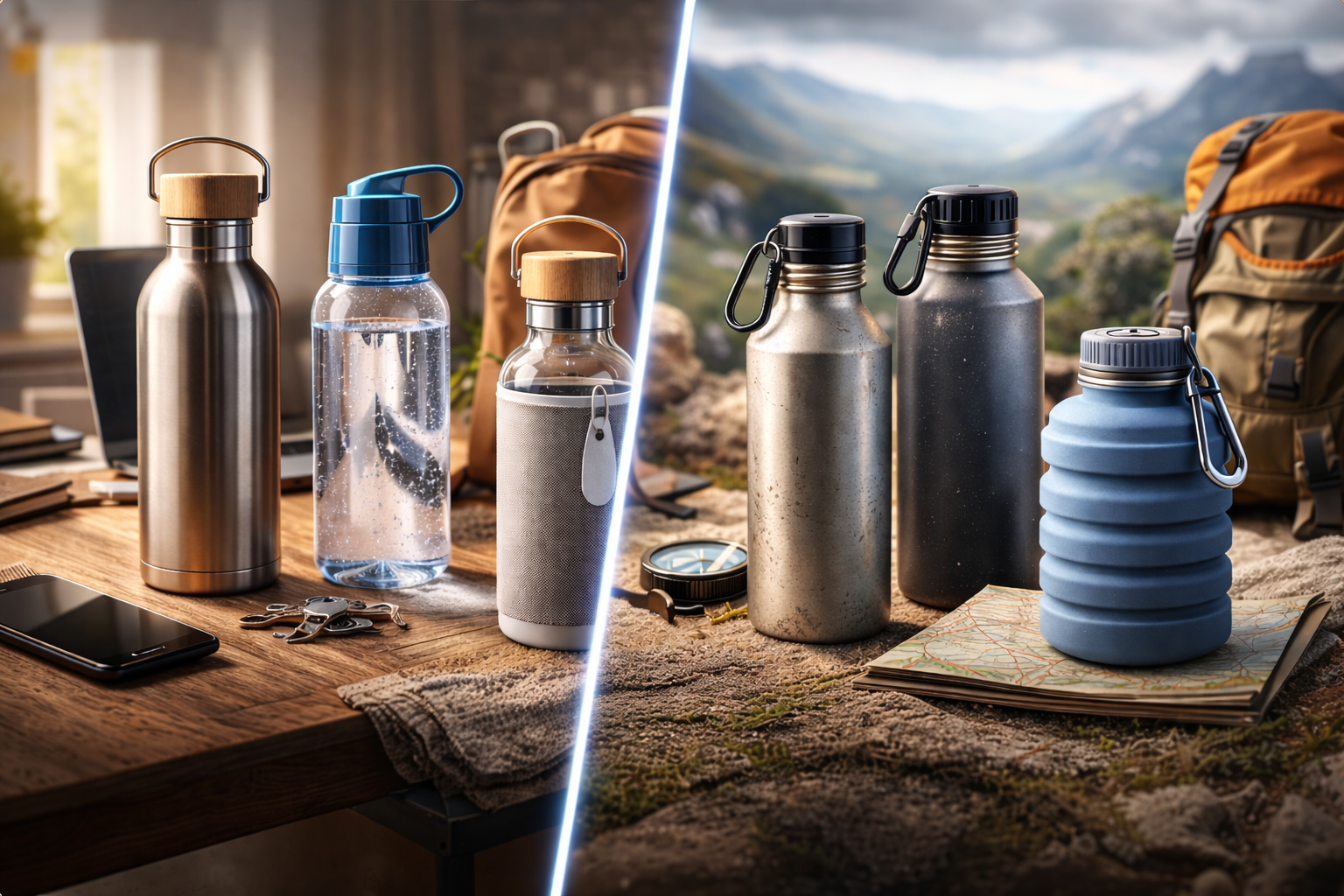
A water bottle rarely lives in just one place. It moves between desks, bags, cars, gyms, and outdoor environments. Each context imposes different constraints.
- Office and home environments prioritize comfort, ease of cleaning, and stability.
- Commutes demand leak resistance, one-hand usability, and moderate weight.
- Outdoor and fitness use shifts priorities toward durability, grip, and impact resistance.
A bottle optimized for one environment may underperform in another. The mistake is assuming a single “do-everything” bottle can cover all scenarios equally well.
How Often It’s Cleaned and Refilled
Maintenance is an invisible but decisive factor. Bottles with complex lids, narrow necks, or multiple seals require more effort to clean. Over time, friction accumulates. Users clean less frequently, hygiene suffers, and the bottle is eventually replaced.
Lifestyle fit includes realistic maintenance behavior. A bottle that matches how often someone is willing to clean it will last longer and feel more satisfying over time.
Material Choices and Lifestyle Compatibility
Material selection is often framed as a hierarchy of quality. In practice, it is a question of contextual suitability.
Stainless Steel Bottles
Stainless steel bottles are widely perceived as the most durable option. Their strength lies in structural integrity, corrosion resistance, and temperature retention when insulated.
They fit well with lifestyles that involve long days away from home, commuting, fitness routines, and outdoor activities. Insulated steel bottles support both hot and cold beverages, reducing the need for multiple containers.
Trade-offs exist. Stainless steel bottles are heavier than plastic alternatives and can dent when dropped. For users sensitive to weight or who prioritize minimal carry loads, this can reduce day-to-day comfort.
Plastic and Tritan Bottles
Plastic bottles, particularly those made from Tritan, prioritize lightweight portability. They are transparent, making it easy to monitor water intake, and are often more affordable.
These characteristics align well with students, short outings, or environments where weight matters more than insulation. However, plastic materials have a finite lifespan. Over time, scratches, odor retention, and material fatigue become noticeable.
For users who replace bottles frequently or accept shorter replacement cycles, plastic remains practical. For long-term, heavy use, it often underperforms relative to metal or glass.
Glass Bottles
Glass occupies a niche defined by purity and stability. It does not retain odors or flavors and is chemically inert. These properties make it attractive for home or office settings where the bottle remains stationary.
The downside is fragility. Even with protective sleeves, glass bottles are poorly suited for active or mobile lifestyles. They excel in controlled environments and fail quickly elsewhere.
Capacity, Weight, and Portability Trade-offs
Capacity is commonly misunderstood as a simple indicator of convenience. Larger bottles reduce refill frequency but increase weight and bulk. Smaller bottles improve portability but demand more frequent interaction.
Effective capacity selection balances three variables:
- Hydration volume per session
- Distance between refill opportunities
- Tolerance for carrying weight
Users who overestimate their willingness to carry large bottles often experience usage drop-off. In contrast, a bottle that feels effortless to bring along is more likely to be used consistently, even if refilled more often.
Lid Design and Drinking Experience
Lid design influences drinking behavior more than material choice.
Straw lids promote frequent sipping with minimal effort, making them suitable for desk work and fitness activities. Sip lids support controlled drinking and are easier to clean. Wide-mouth designs simplify cleaning and ice insertion but may reduce drinking comfort during movement.
Leak resistance and one-hand operation are critical for commuters. Bottles that require two hands or conscious effort interrupt routines and are used less frequently over time.
Temperature Needs: Insulated or Not?
Insulation is often treated as a premium feature, but it introduces trade-offs. Insulated bottles are heavier and bulkier. For users who primarily drink room-temperature water, insulation adds cost without functional benefit.
For those consuming hot beverages, iced drinks, or spending long hours outdoors, insulation delivers tangible value. The key is distinguishing between perceived and actual need.
Maintenance, Durability, and Replacement Cycle
Durability extends beyond structural strength. It includes how materials age, how seals wear, and how coatings respond to daily use.
Metal bottles may last years structurally but require periodic replacement of lids or seals. Plastic bottles often need full replacement once odors or surface wear become noticeable. Glass bottles can last indefinitely in safe environments but fail catastrophically when dropped.
A realistic replacement cycle aligns expectations with material behavior and reduces frustration.
A Lifestyle-Based Selection Framework
Instead of product-first comparisons, lifestyle-based selection simplifies decision-making.
- Office-focused users benefit from moderate-capacity bottles with easy-clean lids.
- Commuters need leak-proof, one-hand-friendly designs with balanced weight.
- Fitness and outdoor users prioritize durability, grip, and insulation.
- Students and casual users often value lightweight and affordability.
- Home users may prioritize taste neutrality and visual clarity.
This framework emphasizes functional alignment rather than brand loyalty.
Common Mistakes When Choosing a Water Bottle
The most common error is optimizing for specifications rather than behavior. Features that look impressive in isolation often introduce friction in daily use. Overly complex lids, excessive capacity, or unnecessary insulation reduce actual hydration rather than improving it.
Another mistake is underestimating maintenance effort. Bottles that are difficult to clean rarely survive long-term use, regardless of material quality.
Conclusion: The Best Bottle Is the One You’ll Actually Use
The effectiveness of a water bottle is not defined by its material, price, or advertised durability. It is defined by usage consistency.
A bottle that fits seamlessly into daily routines, aligns with real hydration habits, and requires minimal cognitive effort will outperform technically superior alternatives that do not.
Designing or choosing for lifestyle fit is not about compromise. It is about realism. And realism, in the long run, is what sustains both hydration habits and product longevity.