
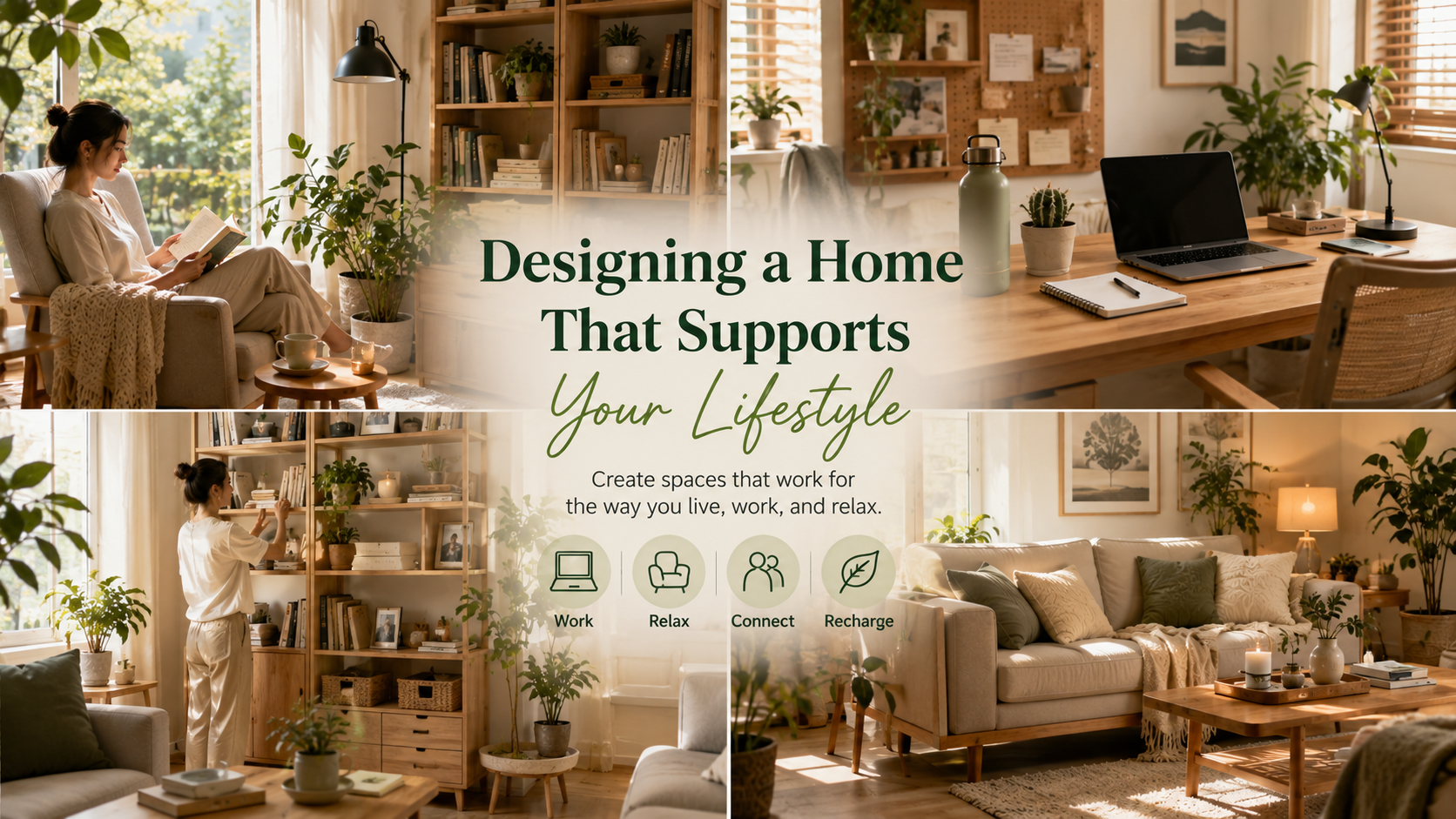
Creating Spaces That Work for the Way You Live
In a world filled with home design inspiration, it is easy to believe that the perfect home is the one that looks the most beautiful.
Social media platforms are full of spotless living rooms, designer furniture, minimalist workspaces, and carefully styled shelves. While these spaces can be inspiring, they often raise an important question:
Do they actually support the way people live?
A beautiful home and a functional home are not always the same thing.
The most comfortable homes are rarely built around trends alone. Instead, they are designed around daily habits, routines, priorities, and personal values.
A home should help you rest when you are tired, focus when you need to work, connect with loved ones, and support healthy habits over the long term.
In other words, a well-designed home is not simply a place you live in—it becomes a tool that helps you live better.
This article explores how to create a home that truly supports your lifestyle, regardless of your budget, home size, or stage of life.
Why Your Home Matters More Than You Think
Many people spend a significant portion of their lives indoors.
Depending on work patterns and lifestyle habits, it is common for people to spend:
- Working from home
- Sleeping
- Cooking
- Eating
- Relaxing
- Reading
- Exercising
- Socializing
within the same environment.
Because of this, our surroundings influence more than just convenience.
They can affect:
- Mood
- Productivity
- Stress levels
- Sleep quality
- Daily routines
- Long-term habits
A home that supports your lifestyle removes friction from everyday activities.
A home that works against your lifestyle often creates unnecessary stress.
For example:
If your workspace is uncomfortable, working becomes harder.
If your kitchen is poorly organized, healthy cooking becomes less convenient.
If your living room feels cluttered, relaxation becomes more difficult.
Small environmental factors often have larger impacts than people realize.
Lifestyle First, Design Second
One of the biggest mistakes people make when designing their homes is focusing on furniture before understanding their lifestyle.
Many people ask:
"What sofa should I buy?"
"What color should I paint the walls?"
"What style is trending right now?"
A better question is:
"How do I actually live?"
Before making design decisions, consider:
- What does a typical day look like?
- Where do you spend most of your time?
- What activities bring you joy?
- What habits do you want to encourage?
- What frustrations occur regularly?
Your answers should guide your home design choices.
The most successful spaces are designed around behavior rather than appearance.
Understanding Your Daily Routine
Every lifestyle is unique.
A family with young children has different needs than a remote worker.
A student has different priorities than a retiree.
Understanding your routine helps identify what your home should support.
Morning Habits
Think about how you start your day.
Do you:
- Read in the morning?
- Drink coffee or tea?
- Exercise?
- Work immediately?
Small adjustments can make mornings smoother.
For example:
A dedicated breakfast corner.
A comfortable chair near a window.
A water bottle prepared the night before.
These simple elements support positive routines.
Work and Productivity
Modern work patterns have changed dramatically.
Many people now spend hours working from home.
If work is a major part of your life, your home should support focus and productivity.
Consider:
- Comfortable seating
- Proper lighting
- Organized storage
- Reduced distractions
A workspace does not need to be large.
It simply needs to support the way you work.
Evening Recovery
After a busy day, most people need time to recharge.
Some enjoy:
- Reading
- Watching movies
- Spending time with family
- Listening to music
- Caring for plants
Creating spaces that support these activities encourages healthier recovery from daily stress.
Designing for Different Lifestyles
No single home design works for everyone.
Let's explore a few examples.
For Busy Professionals
Many professionals face:
- Long work hours
- Limited free time
- High mental demands
Their homes should prioritize efficiency.
Helpful features include:
- Easy-to-clean surfaces
- Organized storage
- Functional workspaces
- Comfortable relaxation areas
Reducing unnecessary household friction creates more time for rest and recovery.
For Families
Families often require flexibility.
A family-oriented home benefits from:
- Shared gathering spaces
- Durable furniture
- Multi-purpose rooms
- Practical storage solutions
The goal is to create spaces that support interaction while remaining functional.
For Remote Workers
Remote workers often face unique challenges.
Without clear boundaries, work and personal life can overlap.
A dedicated workspace can help establish separation.
Even a small desk in a quiet corner can improve focus and work-life balance.
Important considerations include:
- Ergonomic seating
- Natural light
- Cable organization
- Visual separation from relaxation areas
For Students
Students often need environments that support concentration.
Helpful features include:
- Quiet study zones
- Comfortable desks
- Good lighting
- Minimal distractions
A supportive study environment can improve both productivity and comfort.
Small Features That Make a Big Difference
Large renovations are not always necessary.
Often, the most meaningful improvements come from small details.
Natural Light
Natural light is one of the most powerful design elements available.
Rooms with good daylight often feel:
- Larger
- More welcoming
- More energetic
Simple changes can increase light exposure:
- Opening curtains
- Rearranging furniture
- Using lighter-colored furnishings
A brighter environment often improves the overall atmosphere of a home.
Indoor Plants
Plants introduce a natural element into indoor spaces.
Popular choices include:
- Snake Plants
- Pothos
- ZZ Plants
- Spider Plants
- Peace Lilies
Plants can soften interiors and create a more inviting atmosphere.
Many people also find plant care relaxing and rewarding.
Hydration Stations
One overlooked aspect of home design is hydration.
Many people struggle to drink enough water simply because it is inconvenient.
Creating dedicated hydration points can help.
Examples include:
- A water bottle on your desk
- A pitcher of water in the refrigerator
- A tea station in the kitchen
Making hydration easier supports healthier daily habits.
Comfortable Seating
Whether for work or relaxation, seating affects comfort significantly.
A well-chosen chair or sofa supports:
- Better posture
- Reduced fatigue
- Longer periods of comfort
Since seating is used daily, it often provides one of the highest returns on investment within a home.
Storage That Makes Sense
Storage should support behavior.
Many organization systems fail because they do not match how people naturally use spaces.
Good storage should be:
- Easy to access
- Easy to maintain
- Convenient to use
The simpler a system is, the more likely it is to remain organized.
Designing for Comfort, Not Perfection
One of the most refreshing perspectives in modern home design is recognizing that perfection is not necessary.
Homes are meant to be lived in.
A perfectly styled room may look impressive but feel uncomfortable.
A home should reflect life.
That might include:
- A book left on the sofa
- A favorite mug on the table
- A blanket nearby
- Family photos
- Plants growing naturally
These details create warmth and personality.
Comfort often comes from authenticity rather than perfection.
Creating Spaces for Rest and Recovery
Modern life can be overwhelming.
Work, technology, and constant notifications create mental fatigue.
Because of this, homes should include spaces designed for recovery.
Reading Corners
A comfortable chair, soft lighting, and a nearby bookshelf can create a simple retreat.
Even fifteen minutes of reading can provide a mental reset.
Tea and Coffee Spaces
Preparing a warm drink often becomes a meaningful ritual.
These small routines encourage people to slow down and be present.
Quiet Zones
Not every area of a home needs entertainment.
A quiet corner without screens can become a valuable place for reflection.
Screen-Free Areas
Many people benefit from creating spaces where phones, tablets, and televisions are not the primary focus.
These areas encourage conversation, hobbies, and relaxation.
How Your Environment Shapes Behavior
An important principle in behavioral science is that environments influence actions.
People often assume habits are purely a matter of motivation.
In reality, surroundings play a major role.
For example:
If healthy food is visible, people are more likely to eat it.
If books are accessible, people are more likely to read.
If exercise equipment is convenient, people are more likely to use it.
Similarly:
If water is nearby, people drink more water.
If a workspace is organized, people focus more easily.
Designing a home that supports positive habits can make good choices feel more natural.
Common Home Design Mistakes
Many home frustrations come from a few recurring mistakes.
Following Trends Blindly
Trends change constantly.
Lifestyle needs tend to remain more stable.
Choose solutions that fit your life rather than temporary aesthetics.
Buying Before Planning
Furniture should support a purpose.
Buying items before understanding how a space will be used often leads to clutter.
Overcrowding Spaces
More furniture does not necessarily create more comfort.
Breathing room matters.
Open space can improve both function and visual calmness.
Ignoring Daily Habits
A home should accommodate real behavior rather than idealized behavior.
Design for how you live now.
Not how you imagine you might live someday.
The Lifestyle-First Home Philosophy
Ultimately, designing a home that supports your lifestyle requires a shift in perspective.
Instead of asking:
"What looks good?"
Ask:
- What helps me feel calm?
- What helps me stay organized?
- What supports my health?
- What makes daily life easier?
- What encourages meaningful habits?
When these questions guide decision-making, homes become more functional, personal, and comfortable.
The result is not necessarily a larger or more expensive home.
It is a home that works better.
Conclusion: Design Around Life, Not Around Trends
A supportive home is not defined by square footage, designer brands, or social media trends.
It is defined by how well it serves the people who live there.
The best homes make everyday activities easier.
They support:
- Better habits
- Better focus
- Better rest
- Better relationships
- Better well-being
Sometimes this comes from a comfortable sofa.
Sometimes it comes from a reading corner.
Sometimes it comes from a simple water bottle placed within reach.
Small decisions accumulate.
Over time, they shape the experience of daily life.
The goal is not to create a perfect home.
The goal is to create a home that supports the life you want to live.
And often, that is the most meaningful design choice of all.
References, Community Insights & Further Reading
Disclaimer
This article is intended for educational and lifestyle purposes only. Individual experiences may vary. The recommendations presented here are based on environmental psychology principles, behavioral science research, home organization practices, and commonly shared experiences within home living communities.
Environmental Psychology & Human Behavior
- Environmental psychology studies examining the relationship between physical spaces and well-being
- Research on habit formation and environmental cues by behavioral scientists including James Clear and BJ Fogg
- Studies related to workspace design, comfort, and productivity
Home & Lifestyle Research
- Harvard Health Publishing articles discussing home environments and daily habits
- American Psychological Association (APA) resources regarding stress and environmental influences
- World Green Building Council reports on indoor environmental quality
Community Experiences & Shared Observations
Common recommendations referenced throughout this article frequently appear across:
- Reddit communities focused on home organization and decluttering
- Home office productivity forums
- Minimalist living communities
- Interior design discussion groups
- Houseplant and gardening communities
- Slow living and intentional lifestyle blogs
Frequently Shared Community Insights
Across thousands of discussions, people consistently report improvements in comfort and quality of life after:
- Reducing household clutter
- Improving natural lighting
- Creating dedicated reading spaces
- Adding indoor plants
- Improving seating comfort
- Establishing hydration routines
- Creating screen-free relaxation zones
- Designing spaces around daily habits rather than visual trends
While many of these observations are anecdotal, their consistency across different communities suggests that thoughtful environmental design can play a meaningful role in supporting everyday well-being and lifestyle satisfaction.