
A Complete Guide to Residue, Odors, Stains, Materials, and Everyday Bottle Care
Part 1 — What Every Beverage Leaves Behind
Introduction: Your Water Bottle Remembers Every Drink
Most of us think of a reusable water bottle as a simple container.
Fill it.
Drink from it.
Wash it.
Repeat.
But over time, anyone who regularly enjoys coffee, tea, fruit juice, or protein shakes has probably noticed something unexpected.
A faint coffee aroma that refuses to disappear.
Brown stains that slowly develop inside the bottle.
A silicone gasket that seems to hold yesterday's flavors.
White mineral spots that remain even after washing.
These changes aren't signs that your bottle is "wearing out."
Instead, they're evidence that every beverage leaves something behind.
Some leave natural oils.
Others contain plant compounds that attach to surfaces.
Certain drinks introduce sugars, proteins, minerals, pigments, or acids that interact differently with stainless steel, ceramic coatings, glass, plastic, and silicone components.
Understanding these interactions helps you do more than simply keep your bottle clean.
It allows you to choose the right drinkware for different beverages, develop smarter cleaning habits, preserve flavor, and extend the life of products designed to be used for many years.
The goal isn't to avoid your favorite drinks.
It's to understand what happens after the last sip.
Every Drink Leaves a Different Kind of Residue
When people hear the word "residue," they often imagine visible dirt.
In reality, many beverage residues are nearly invisible.
Some affect smell before appearance.
Others change taste without leaving noticeable stains.
Generally speaking, most drinks leave behind one or more of the following:
| Residue Type | Common Sources | What You May Notice |
|---|---|---|
| Plant Polyphenols (Tannins) | Tea, herbal infusions, red wine | Brown staining and discoloration |
| Natural Oils | Coffee, cocoa | Lingering aromas and oily films |
| Sugars | Fruit juice, flavored drinks | Sticky surfaces and microbial growth if not cleaned promptly |
| Proteins & Fats | Milk, dairy drinks, protein shakes | Persistent odors and residue buildup |
| Minerals | Tap water, mineral water | White spots or scale deposits |
| Organic Acids | Citrus drinks, fruit juice | Flavor retention and potential interaction with mineral deposits |
None of these substances automatically damage quality drinkware.
However, each requires slightly different care.
Treating every beverage as though it behaves like plain water often leads to unnecessary odors, stains, or cleaning difficulties.
Water Isn't Always Just Water
It may sound surprising, but even plain water can influence your bottle over time.
The biggest difference lies in the minerals it contains.
Filtered Water
Filtered water generally contains fewer dissolved minerals, making it less likely to leave visible deposits.
For people who primarily drink filtered water, bottles often remain cleaner between deep cleanings.
Tap Water
Tap water varies dramatically depending on where you live.
Some regions provide naturally soft water, while others have "hard water" that contains higher concentrations of calcium and magnesium.
Over time, these minerals may leave white spots or chalky deposits inside bottles, especially near the bottom or around the threads.
Fortunately, these deposits are usually harmless and can often be removed with mild acidic cleaning solutions recommended for reusable drinkware.
Mineral Water
Natural mineral water intentionally contains dissolved minerals that contribute to flavor.
While perfectly enjoyable to drink, regular use may gradually increase mineral buildup inside bottles if cleaning is delayed.
This explains why two people using identical bottles can experience very different cleaning needs depending on the water they drink.
Tea: Beautiful Flavor, Stubborn Tannins
Tea is one of the healthiest and most widely enjoyed beverages in the world.
It is also one of the most misunderstood when it comes to bottle care.
The main reason tea leaves stains is a group of naturally occurring plant compounds called tannins.
Tannins belong to a broader family of polyphenols, compounds that contribute to tea's color, flavor complexity, and characteristic astringency.
When hot tea repeatedly contacts the interior surface of a bottle, tiny amounts of these compounds gradually adhere to the material.
As they oxidize through repeated exposure to air and heat, they slowly darken.
The result is the familiar brown film many tea drinkers eventually notice.
Contrary to popular belief, these stains are usually not caused by dirt.
They are simply concentrated plant compounds accumulating over time.
Different teas behave differently.
Black tea typically leaves the strongest stains because it undergoes extensive oxidation during processing.
Pu-erh tea also tends to create noticeable discoloration due to its fermentation process.
Oolong generally produces moderate staining.
Green tea usually leaves lighter residue, while white tea often leaves the least.
Herbal infusions vary depending on ingredients.
Hibiscus, rooibos, turmeric, and certain berry-based blends may produce surprisingly vivid staining because of their natural pigments rather than tannins alone.
Fortunately, tannin stains are mostly cosmetic.
With regular cleaning, they rarely affect the performance or safety of stainless steel bottles.
Tea Residue Score
| Category | Rating |
|---|---|
| Odor Retention | ★☆☆☆☆ |
| Visible Staining | ★★★★★ |
| Cleaning Difficulty | ★★★☆☆ |
| Flavor Carryover | ★★☆☆☆ |
Coffee: Small Oils, Big Impact
Coffee creates a completely different challenge.
Unlike tea, which primarily leaves polyphenols behind, coffee contains natural oils released during roasting and brewing.
These aromatic oils are responsible for much of coffee's rich flavor.
Unfortunately, they also have a tendency to cling to bottle walls, lids, and silicone seals.
This explains why a bottle that appears perfectly clean may still smell faintly like yesterday's espresso.
The culprit is rarely the stainless steel itself.
Instead, silicone components—such as sealing rings, straw valves, and flip-top gaskets—are slightly more porous and therefore more likely to absorb aromatic compounds over time.
Dark roast coffees often leave stronger aromas than lighter roasts because they contain different aromatic profiles developed during roasting.
Cold brew may also leave noticeable residue due to its longer extraction time.
Coffee mixed with cream, milk, or flavored syrups increases cleaning difficulty further because oils combine with proteins and sugars, creating more persistent residue.
For this reason, many experienced coffee drinkers rinse their bottles shortly after finishing rather than waiting until the end of the day.
A simple rinse removes much of the remaining oil before it has time to settle.
Coffee Residue Score
| Category | Rating |
|---|---|
| Odor Retention | ★★★★★ |
| Visible Staining | ★★★☆☆ |
| Cleaning Difficulty | ★★★★☆ |
| Flavor Carryover | ★★★★★ |
Fruit Juice: Sweet, Colorful, and Surprisingly Sticky
Fresh fruit juice often seems harmless because it looks clean and natural.
Yet from a bottle-care perspective, juice introduces a combination of sugars, organic acids, and colorful plant pigments.
Orange juice contains citric acid.
Berry juices contain anthocyanins that produce deep red or purple colors.
Pomegranate juice is rich in natural pigments.
Mango and tropical fruit blends often contain pulp that settles inside narrow bottles.
Unlike coffee oils or tea tannins, juice residues become sticky as moisture evaporates.
If left overnight, they can encourage unwanted microbial growth and unpleasant fermentation odors.
This is especially true during warmer weather.
Smooth interior surfaces are generally easy to clean after juice consumption.
However, bottle lids, drinking spouts, and reusable straws deserve extra attention because pulp and sugars often collect in narrow spaces that are easy to overlook.
Juice Residue Score
| Category | Rating |
|---|---|
| Odor Retention | ★★☆☆☆ |
| Visible Staining | ★★★★☆ |
| Cleaning Difficulty | ★★★☆☆ |
| Stickiness | ★★★★★ |
Not All Residues Are Bad
At first glance, the idea that every drink leaves something behind may sound alarming.
In reality, residue is simply part of using reusable drinkware.
Tea leaves tannins because plants naturally contain polyphenols.
Coffee leaves aromatic oils because that's where much of its flavor comes from.
Mineral water leaves calcium because minerals are exactly what distinguish it from purified water.
The presence of residue doesn't necessarily indicate poor hygiene.
The key is understanding which residues are harmless, which require prompt cleaning, and which bottle materials are best suited for different beverages.
Part 2 — Choosing Better Habits for Better Drinkware
Milk and Dairy Drinks: The Most Time-Sensitive Beverage
If tea is known for stains and coffee for lingering aromas, milk presents an entirely different challenge.
Milk contains proteins, fats, natural sugars, and moisture—a combination that can become difficult to clean if left inside a bottle for extended periods.
Unlike tannins or coffee oils, dairy residue is highly perishable.
At room temperature, bacteria can multiply rapidly, especially in warm weather or inside insulated bottles that retain heat. Even chilled milk can leave behind a thin protein film that clings to bottle walls, lids, and silicone seals if it isn't rinsed soon after use.
Protein shakes, yogurt drinks, and milk-based coffee beverages behave similarly. Their higher protein content often makes residue even more noticeable.
This doesn't mean reusable bottles should never be used for dairy drinks.
It simply means timing matters.
A quick rinse after finishing your drink removes most residue before it has a chance to dry or develop odors. A thorough wash with warm water and mild dish soap later in the day is usually enough to keep bottles fresh.
Dairy Residue Score
| Category | Rating |
|---|---|
| Odor Retention | ★★★★★ |
| Visible Staining | ★★☆☆☆ |
| Cleaning Difficulty | ★★★★★ |
| Food Safety Priority | ★★★★★ |
Sports Drinks and Electrolyte Beverages
Sports drinks are designed to replace fluids, electrolytes, and energy during physical activity.
From a bottle-care perspective, however, they introduce another combination of ingredients.
Many contain dissolved minerals such as sodium and potassium, along with sweeteners, flavorings, and colorants.
If bottles aren't rinsed promptly, sugary residue can become sticky, while brightly colored drinks may leave faint staining on plastic components or silicone seals over time.
Electrolyte tablets dissolved in water are generally easier to clean because they contain fewer sugars, although mineral deposits may still appear with frequent use.
For athletes or hikers who refill bottles multiple times throughout the day, a quick rinse between uses helps prevent flavor buildup without requiring constant washing.
Sports Drink Residue Score
| Category | Rating |
|---|---|
| Odor Retention | ★★☆☆☆ |
| Visible Staining | ★★★☆☆ |
| Cleaning Difficulty | ★★★☆☆ |
| Mineral Build-Up | ★★★☆☆ |
Can You Put Soup in an Insulated Bottle?
Insulated food jars and wide-mouth bottles have made it increasingly common to carry soup for work, school, or outdoor adventures.
Soup, however, combines several ingredients that challenge reusable drinkware.
Vegetable oils coat surfaces.
Proteins from meat or beans leave residue.
Salt remains after liquid evaporates.
Small food particles often collect beneath lids or inside threaded openings.
Cream-based soups require especially careful cleaning because dairy and oils together can produce persistent odors if forgotten overnight.
The good news is that high-quality stainless steel itself doesn't absorb soup flavors.
The areas that usually retain odors are silicone seals, narrow drinking spouts, and bottle caps.
Cleaning these components separately from time to time can dramatically improve freshness.
Soup Residue Score
| Category | Rating |
|---|---|
| Odor Retention | ★★★★☆ |
| Visible Staining | ★★☆☆☆ |
| Cleaning Difficulty | ★★★★★ |
| Oil Residue | ★★★★☆ |
Sparkling Water and Carbonated Drinks
A common question among bottle users is whether sparkling water or carbonated beverages are suitable for insulated bottles.
The answer depends largely on the bottle's design and manufacturer recommendations.
Carbonated drinks release carbon dioxide gas.
Inside a tightly sealed container, pressure can gradually build, especially if the bottle is shaken or exposed to heat.
While this doesn't necessarily damage high-quality drinkware, it may cause unexpected pressure release when opening the lid.
From a cleaning perspective, sparkling water leaves very little residue.
Sugary soft drinks, however, behave differently.
Added sugars and flavorings increase stickiness and require more thorough cleaning than plain sparkling water.
Whenever using carbonated beverages, it's wise to follow the bottle manufacturer's guidance regarding pressure and intended use.
Carbonated Drink Residue Score
| Category | Rating |
|---|---|
| Odor Retention | ★☆☆☆☆ |
| Visible Staining | ★☆☆☆☆ |
| Cleaning Difficulty | ★★☆☆☆ |
| Pressure Consideration | ★★★★★ |
How Different Bottle Materials Respond
Not all drinkware materials react the same way.
Understanding these differences helps you choose the right bottle for your favorite beverages.
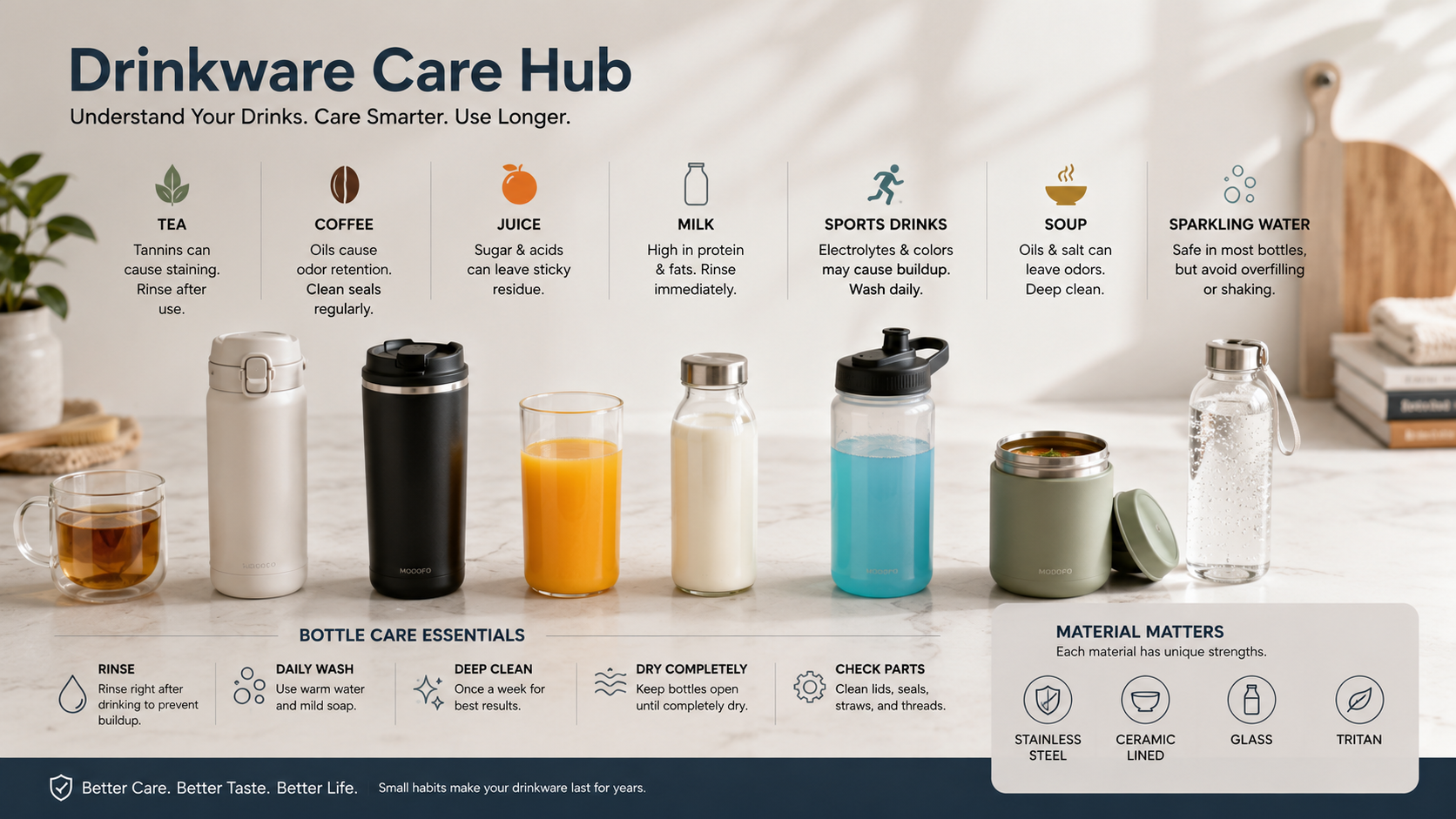
| Beverage | Stainless Steel | Ceramic-Lined | Glass | Tritan Plastic |
|---|---|---|---|---|
| Water | Excellent | Excellent | Excellent | Excellent |
| Tea | Excellent, may show tannin film | Excellent, less flavor carryover | Excellent | Good |
| Coffee | Excellent, but clean seals regularly | Excellent for preserving flavor | Excellent | Good, may retain aroma over time |
| Juice | Excellent | Excellent | Excellent | Good |
| Milk | Excellent with prompt cleaning | Excellent | Excellent | Good with immediate washing |
| Soup | Excellent (wide-mouth bottles preferred) | Good | Less practical for travel | Limited |
| Sports Drinks | Excellent | Excellent | Excellent | Excellent |
The bottle body itself is rarely the problem.
More often, the parts that require attention are the removable components.
The Parts Most People Forget to Clean
When people notice odors inside a bottle, they often blame the stainless steel.
In reality, stainless steel is non-porous and naturally resistant to absorbing flavors.
The real trouble spots are usually much smaller.
Pay particular attention to:
- Silicone sealing rings
- Straw tips and reusable straws
- Flip-top lids
- Bottle threads
- Rubber valves
- Bottle caps with hidden cavities
These areas trap moisture and beverage residue long after the main bottle has been washed.
Removing silicone seals occasionally—according to the manufacturer's instructions—and allowing every component to dry completely before reassembly helps prevent unwanted odors.
A Practical Cleaning Routine
Instead of treating every drink the same, adjust your cleaning routine based on what you've been drinking.
After Every Use
- Empty remaining liquid.
- Rinse with warm water.
- Leave the bottle open until dry if you won't wash it immediately.
Daily
Suitable after coffee, tea, juice, sports drinks, or flavored water.
Wash with warm water, mild dish soap, and a soft bottle brush.
Weekly
Perform a deeper clean.
Disassemble removable parts.
Clean silicone seals separately.
Inspect threads, lids, and drinking spouts.
Monthly
Check for mineral deposits, worn gaskets, or trapped residue in hidden areas.
Replace damaged seals if necessary.
Regular maintenance is often more effective than occasional aggressive cleaning.
Common Bottle Care Mistakes
Many cleaning problems begin with simple habits that are easy to change.
Avoid these common mistakes:
- Leaving coffee or milk overnight.
- Closing the lid before the bottle has dried.
- Forgetting to clean the silicone gasket.
- Using abrasive steel wool that can scratch interior surfaces.
- Storing bottles with the cap tightly closed while still damp.
- Assuming a bottle that "looks clean" is completely clean.
Small improvements in daily care usually have a greater impact than using stronger cleaning products.
Which Drinks Are Hardest on Your Bottle?
Every beverage behaves differently.
Here's a simple comparison.
| Beverage | Odor | Stains | Cleaning Difficulty |
|---|---|---|---|
| Water | ★☆☆☆☆ | ★☆☆☆☆ | ★☆☆☆☆ |
| Tea | ★☆☆☆☆ | ★★★★★ | ★★★☆☆ |
| Coffee | ★★★★★ | ★★★☆☆ | ★★★★☆ |
| Fruit Juice | ★★☆☆☆ | ★★★★☆ | ★★★☆☆ |
| Milk | ★★★★★ | ★★☆☆☆ | ★★★★★ |
| Soup | ★★★★☆ | ★★☆☆☆ | ★★★★★ |
| Sports Drinks | ★★☆☆☆ | ★★★☆☆ | ★★★☆☆ |
| Sparkling Water | ★☆☆☆☆ | ★☆☆☆☆ | ★★☆☆☆ |
No beverage is "bad."
Each simply leaves behind different compounds that require different care.
Conclusion: Every Drink Deserves the Right Care
Reusable bottles are designed to accompany us through everyday life.
Morning coffee.
Afternoon tea.
Fresh juice after exercise.
Soup on a winter commute.
Cold water during a summer hike.
The variety of drinks we enjoy is one of the reasons reusable drinkware has become so versatile.
Understanding what each beverage leaves behind doesn't mean limiting your choices.
Instead, it allows you to build smarter habits.
Rinse promptly.
Clean gently.
Pay attention to lids and seals.
Choose the right bottle for the right drink.
With consistent care, a well-made reusable bottle can remain clean, fresh, and enjoyable to use for many years.
The secret isn't avoiding coffee, tea, or juice.
It's simply understanding how each drink interacts with your bottle—and giving it the care it deserves.
References
This article draws upon publicly available educational resources, scientific literature, and guidance from organizations specializing in food safety, materials science, and beverage research, including:
- U.S. Food & Drug Administration (FDA). Food Safety and Storage Guidelines
- World Health Organization (WHO). Food Safety: Five Keys to Safer Food
- Centers for Disease Control and Prevention (CDC). Guidance on food hygiene and safe handling practices.
- NSF International. Consumer guidance on reusable bottles, food-contact materials, and sanitation.
- Specialty Coffee Association (SCA). Educational resources on coffee chemistry and brewing.
- Tea Association of the U.S.A. Information on tea composition and preparation.
- Journal of Food Science – Research on food-contact surfaces, beverage compounds, and cleaning practices.
- Food Chemistry – Studies on tea polyphenols, coffee oils, pigments, and flavor compounds.
- Comprehensive Reviews in Food Science and Food Safety – Reviews covering beverage chemistry and food safety.
- International Organization for Standardization (ISO) – Standards related to food-contact materials and stainless steel applications.
Editor's Note: The information in this article is intended for educational purposes. Different bottle brands and materials may have specific care recommendations. Always follow the cleaning and usage instructions provided by your drinkware manufacturer for the best long-term performance.