
The Complete Guide to Better Hygiene, Longer Bottle Life, and Healthier Everyday Hydration
Part 1 — Understanding Bottle Hygiene and Everyday Care
Introduction: A Great Water Bottle Deserves Great Care
A reusable water bottle is one of the few everyday items that follows us almost everywhere.
It sits beside us during work meetings, accompanies us on morning commutes, joins us at the gym, travels through airports, rests on hiking trails, and waits on our bedside tables before we wake up the next morning. Unlike many personal belongings, a reusable bottle comes into direct contact with our hands, mouth, beverages, and the surrounding environment every single day.
Yet despite using it so frequently, many people spend far more time choosing a bottle than learning how to care for it.
Modern reusable bottles are built to last. High-quality stainless steel, durable BPA-free plastics, borosilicate glass, and advanced insulation technologies allow many bottles to perform well for years. However, longevity doesn't happen automatically. Like any product used daily, performance depends on proper maintenance.
Cleaning a bottle isn't simply about keeping it looking new. Regular care helps prevent unpleasant odors, removes beverage residue, protects seals and moving parts, reduces the buildup of bacteria and mold, and ensures every sip tastes as fresh as intended.
Fortunately, maintaining a reusable bottle doesn't require expensive products or complicated routines. A few consistent habits can dramatically improve hygiene while extending the life of your favorite bottle.
This guide explains not only how to clean reusable drinkware, but also why proper maintenance matters, how different beverages affect your bottle, and which cleaning methods work best for different materials.
Why Bottle Hygiene Matters More Than Most People Realize
People often associate hygiene with kitchens, bathrooms, or food preparation surfaces.
Reusable bottles rarely receive the same attention.
However, because they repeatedly come into contact with drinking water, saliva, and our hands, they create an environment where microorganisms and residue can gradually accumulate if left uncleaned.
This does not mean reusable bottles are inherently unsafe.
On the contrary, when cleaned regularly, reusable drinkware remains one of the safest and most sustainable ways to stay hydrated.
The issue lies in inconsistency.
Many users rinse their bottles with water and assume the inside is clean.
Unfortunately, rinsing alone removes only loose debris. Invisible layers of organic material can remain attached to the interior surface, particularly after beverages other than plain water have been consumed.
Coffee leaves natural oils.
Tea leaves tannins.
Fruit juices leave sugar.
Protein shakes contain dairy or plant proteins.
Sports drinks introduce electrolytes and sweeteners.
Over time, these substances create an ideal environment for microscopic buildup if cleaning is neglected.
The good news is that routine cleaning is usually enough to prevent these issues from developing.
Your Bottle Encounters More Than Water
Many people imagine their bottle only holds drinking water.
In reality, it interacts with much more.
Throughout an ordinary day, a reusable bottle may come into contact with:
- Hands after using public transportation
- Backpack interiors
- Office desks
- Gym equipment
- Vehicle cup holders
- Outdoor dust
- Kitchen countertops
- Rain, humidity, and changing temperatures
Each time the bottle is opened, closed, carried, or refilled, tiny amounts of environmental contamination naturally occur.
This is completely normal.
The goal is not to eliminate every microorganism but to prevent residue from accumulating into larger hygiene problems.
Regular washing accomplishes exactly that.
What Actually Builds Up Inside a Water Bottle?
When people notice unpleasant smells or visible stains, bacteria often receive all the attention.
In reality, several different types of buildup can develop inside reusable drinkware.
Understanding each one helps explain why different cleaning methods exist.
Biofilm: The Invisible Layer Most People Never Notice
One of the most common forms of buildup inside reusable bottles is known as biofilm.
Biofilm is a thin layer of microorganisms that attaches itself to surfaces exposed to moisture.
Rather than floating freely in water, these microorganisms produce a protective coating that allows them to remain attached to bottle walls, drinking spouts, silicone seals, and straws.
Fresh biofilm is often invisible.
As it develops, the inside of a bottle may begin to feel slightly slippery, even after being rinsed with water.
That slippery feeling is frequently one of the earliest signs that a more thorough cleaning is needed.
Fortunately, biofilm is usually removed through gentle scrubbing with warm water, dish soap, and an appropriate bottle brush.
Mineral Deposits from Everyday Water
Not every stain comes from bacteria.
Many regions use hard water, which contains naturally occurring minerals such as calcium and magnesium.
Over time, these minerals may leave:
- White spots
- Chalky residue
- Cloudy interior surfaces
These deposits are generally harmless but may affect appearance and beverage flavor if allowed to accumulate.
Periodic deep cleaning helps dissolve mineral buildup before it becomes difficult to remove.
Coffee Oils and Tea Tannins
Coffee and tea are among the most popular beverages carried in reusable bottles.
Both contain natural compounds that gradually stain interior surfaces.
Coffee leaves oils that cling to stainless steel and plastic.
Tea contains tannins, natural plant compounds responsible for its color and slight bitterness.
Neither substance is dangerous.
However, over weeks or months they can produce:
- Brown discoloration
- Lingering aromas
- Slight flavor transfer between beverages
Regular cleaning minimizes these effects while preserving the fresh taste of drinking water.
Sugary Drinks Leave More Than Sweetness
Fruit juice, smoothies, flavored water, sports drinks, and soft drinks introduce sugars into the bottle.
Sugar itself is not the problem.
The issue arises when residue remains inside for extended periods.
Sugary liquids provide nutrients that microorganisms can use as food.
Warm environments accelerate this process.
For this reason, bottles used for sweetened beverages should ideally be washed soon after use rather than left overnight.
Why Silicone Seals Need Special Attention
Many modern insulated bottles rely on silicone gaskets to create leakproof seals.
These small components perform an important function.
Unfortunately, they are also among the easiest places for moisture to become trapped.
Tiny gaps beneath removable seals may collect:
- Water droplets
- Coffee residue
- Tea particles
- Fruit pulp
- Condensation
Without periodic removal and cleaning, these hidden spaces can develop unpleasant odors over time.
Fortunately, most high-quality bottles allow seals to be removed easily for cleaning before being fully dried and reinstalled.
How Often Should You Clean Your Bottle?
One of the most common questions people ask is surprisingly simple:
"How often should I wash my reusable bottle?"
The answer depends largely on what you drink.
If your bottle contains only plain water, daily rinsing combined with regular washing is usually sufficient for most users.
However, beverages containing sugar, dairy, protein, coffee, or tea require more frequent cleaning.
A useful maintenance routine might look like this:
After Every Use
- Empty remaining liquid.
- Rinse with warm water.
- Leave the bottle open until dry if it will not be used again that day.
Daily
Wash with warm water, mild dish soap, and a bottle brush.
Pay attention to the lid and drinking spout.
Weekly
Remove silicone seals if possible.
Clean lid threads, straws, and hidden components.
Inspect for residue or discoloration.
Monthly
Perform a deeper cleaning using an appropriate method based on bottle material and beverage history.
This schedule keeps maintenance manageable while preventing larger cleaning problems from developing.
Different Drinks Require Different Cleaning Habits
One reason reusable bottle maintenance sometimes feels confusing is that not every beverage behaves the same.
Plain Water
The easiest option.
Minimal residue.
Simple daily washing is generally enough.
Coffee
Natural oils gradually coat the interior.
A bottle dedicated to coffee may eventually develop a characteristic aroma unless cleaned thoroughly.
Tea
Tea stains accumulate more slowly than coffee but can still leave noticeable discoloration after prolonged use.
Protein Shakes
Protein powders deserve special attention.
Small amounts trapped beneath lids or inside drinking spouts can spoil quickly if forgotten.
Prompt cleaning after workouts greatly reduces odor.
Milk-Based Drinks
Milk should never remain inside a bottle for extended periods, particularly in warm climates.
Cleaning immediately after use is highly recommended.
Fruit Juice
Natural sugars increase the importance of thorough rinsing and washing.
Allowing juice residue to dry inside the bottle makes cleaning considerably more difficult later.
Climate Can Affect Bottle Hygiene
Environmental conditions influence not only hydration habits but also bottle maintenance.
Warm, humid climates often accelerate microbial growth compared with cooler, drier regions.
For people living in tropical areas, this means:
- Bottles should dry completely before storage.
- Silicone seals deserve more frequent inspection.
- Deep cleaning may be needed slightly more often.
- Leaving beverages inside a hot vehicle should be avoided whenever possible.
By contrast, dry climates may reduce moisture retention but increase mineral deposits caused by hard water.
Understanding your environment helps you establish cleaning habits that match your daily routine.
Good Maintenance Starts with Small Daily Habits
One of the biggest misconceptions about reusable bottles is that maintenance requires occasional intensive cleaning.
In reality, the opposite is true.
Consistent daily habits usually eliminate the need for aggressive cleaning later.
Simple routines—emptying leftover drinks, rinsing promptly, washing with mild soap, allowing every component to dry completely, and checking seals regularly—take only a few minutes but significantly improve hygiene and extend product lifespan.
Much like brushing your teeth or washing dishes, bottle care works best when it becomes part of everyday life rather than an occasional chore.
In Part 2, we'll explore practical step-by-step cleaning methods, compare cleaning solutions such as baking soda, vinegar, and bottle-cleaning tablets, explain how to remove stubborn odors and stains, discuss material-specific care for stainless steel, plastic, glass, and titanium bottles, and share expert maintenance tips that can keep a high-quality reusable bottle performing at its best for many years.
How to Clean and Maintain Your Reusable Water Bottle
Part 2 — Deep Cleaning, Material Care, Long-Term Maintenance, and Sustainability
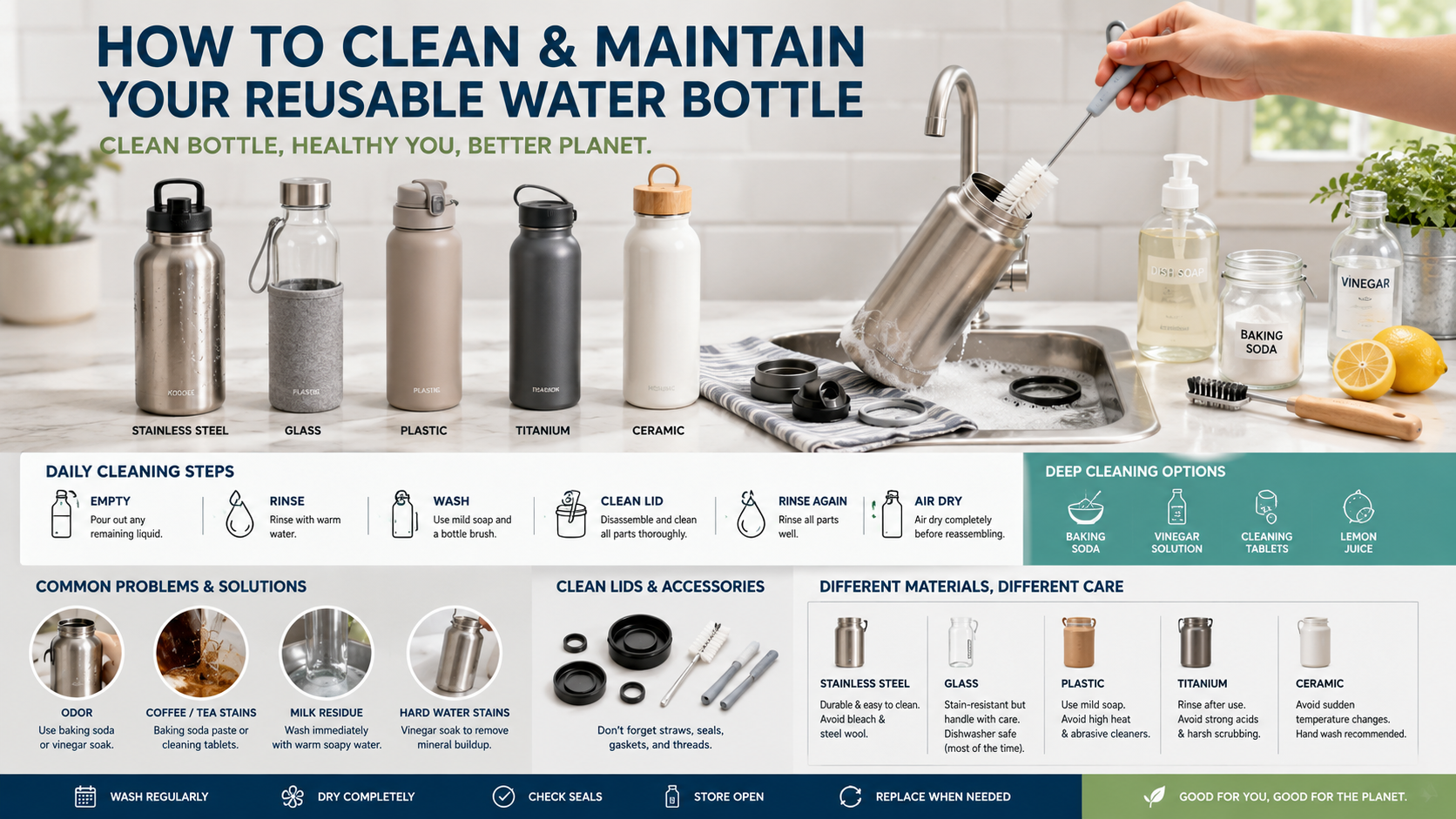
Step-by-Step: How to Clean Your Bottle Every Day
Keeping a reusable bottle clean does not require expensive equipment or harsh chemicals. In fact, gentle and consistent cleaning is often more effective than occasional aggressive scrubbing.
A simple routine only takes a few minutes.
Step 1: Empty the Bottle Completely
Never leave leftover beverages inside for extended periods, especially coffee, tea, juice, milk, or protein shakes.
Even small amounts of liquid can leave behind residue that becomes more difficult to remove over time.
Step 2: Rinse with Warm Water
Warm water helps loosen fresh residue before it has time to dry.
Avoid extremely hot water unless the manufacturer specifically recommends it, as excessive heat may damage certain plastics or seals.
Step 3: Add Mild Dish Soap
A few drops of mild dish soap are usually sufficient.
Strong detergents or heavily scented cleaners are generally unnecessary and may leave lingering odors.
Step 4: Use a Bottle Brush
A long bottle brush reaches the bottom and sides more effectively than a sponge.
Pay particular attention to:
- Bottom corners
- Bottle shoulders
- Threaded necks
- Drinking rims
These are common places where residue accumulates.
Step 5: Clean the Lid Separately
The lid often contains more hidden surfaces than the bottle itself.
Remove any detachable components if possible, including:
- Silicone seals
- Straw pieces
- Flip caps
- Drinking spouts
Cleaning each part individually ensures that hidden moisture and residue do not remain trapped.
Step 6: Rinse Thoroughly
Soap residue can affect the taste of your next drink.
Rinse every component with clean water until no bubbles remain.
Step 7: Air Dry Completely
Perhaps the most overlooked step is drying.
Rather than immediately reassembling the bottle, allow all parts to air dry separately.
Leaving the bottle open upside down on a drying rack encourages airflow and helps prevent trapped moisture.
Deep Cleaning: When Everyday Washing Isn't Enough
Over time, even well-maintained bottles benefit from occasional deep cleaning.
This is especially useful when:
- Odors begin to develop.
- Coffee stains become noticeable.
- Tea leaves discoloration.
- Hard water deposits appear.
- The bottle has been stored for a long period.
- It hasn't been cleaned for several days.
Fortunately, several effective methods use common household ingredients.
Baking Soda: A Gentle All-Purpose Cleaner
Baking soda remains one of the safest and most versatile cleaning options.
Its mild abrasive texture helps remove residue without scratching stainless steel or glass.
It is particularly useful for:
- Removing odors
- Freshening bottles after coffee
- Light stain removal
Simply add warm water with a small amount of baking soda, allow it to sit for several hours, then scrub gently before rinsing thoroughly.
White Vinegar for Mineral Deposits
If your bottle develops white mineral stains caused by hard water, white vinegar can help dissolve calcium buildup.
Mix vinegar with warm water and allow it to soak before rinsing thoroughly.
Because vinegar has a noticeable smell, an additional rinse with mild soap afterward is often helpful.
Bottle Cleaning Tablets
Specialized bottle-cleaning tablets have become increasingly popular among travelers and outdoor enthusiasts.
These products are designed to dissolve residue inside bottles without extensive scrubbing.
They can be particularly convenient for:
- Travel
- Camping
- Offices
- Bottles with narrow openings
Although not necessary for routine maintenance, they provide a useful option for occasional deep cleaning.
Lemon Juice for Mild Odors
Fresh lemon juice contains natural acids that may help reduce light odors while leaving a fresh scent.
It is not a replacement for proper washing but can serve as an occasional supplementary cleaning method.
Avoid Harsh Chemicals Unless Recommended
Some people assume stronger chemicals produce better results.
In reality, aggressive cleaning products can damage finishes, seals, coatings, or plastic components.
Bleach, for example, should only be used when specifically approved by the manufacturer and must always be diluted and rinsed thoroughly.
For most everyday users, warm water, mild soap, and occasional deep cleaning provide everything necessary.
Removing Common Bottle Problems
Even well-maintained bottles sometimes develop stains or odors.
Fortunately, most problems have simple solutions.
Coffee Stains
Coffee contains natural oils that gradually coat interior surfaces.
Regular washing usually prevents permanent staining, while baking soda or bottle-cleaning tablets help remove heavier buildup.
Tea Stains
Tea tannins slowly create brown discoloration.
A gentle deep cleaning typically restores the bottle without requiring abrasive scrubbing.
Unpleasant Odors
Lingering smells often originate from hidden areas rather than the bottle itself.
Inspect:
- Silicone seals
- Drinking spouts
- Straw interiors
- Lid threads
Cleaning these components separately often solves the problem.
Protein Shake Residue
Protein drinks can produce particularly persistent odors if left overnight.
Prompt cleaning after workouts remains the best prevention.
Sticky Lids
Sugary beverages sometimes leave sticky residue inside moving lid mechanisms.
Disassembling the lid and soaking the parts in warm soapy water usually restores smooth operation.
Caring for Different Bottle Materials
Different materials respond differently to cleaning methods.
Understanding these differences helps extend product lifespan.
Stainless Steel
Stainless steel is durable, resistant to odors, and suitable for most beverages.
Avoid using steel wool or highly abrasive pads that may scratch the interior surface.
Routine washing and occasional deep cleaning are generally sufficient.
Plastic
Modern BPA-free plastic bottles are lightweight and convenient.
Avoid exposing them to excessive heat unless specifically designed for dishwasher use.
Replace bottles if deep scratches or cracks develop, as these areas become harder to clean thoroughly.
Glass
Glass offers excellent flavor neutrality.
Although highly resistant to staining, it should be handled carefully to prevent accidental breakage.
Protective silicone sleeves provide additional security during daily use.
Ceramic
Ceramic drinkware is best suited to home or office environments.
Avoid sudden temperature changes that may stress the material.
Titanium
Titanium requires relatively little maintenance.
Gentle cleaning preserves both its appearance and performance.
Because titanium naturally resists corrosion, it remains popular among outdoor enthusiasts.
Taking Care of Lids, Straws, and Seals
Many cleaning routines focus almost entirely on the bottle body.
Ironically, the lid often contains the most complicated surfaces.
Modern lids frequently include:
- Hinges
- Drinking valves
- Silicone rings
- Air vents
- Threaded connections
Each of these areas deserves occasional attention.
Using small cleaning brushes designed for reusable straws makes it easier to reach narrow passages.
Whenever possible, allow every component to dry individually before reassembly.
Habits That Shorten Bottle Life
A high-quality reusable bottle can last many years.
However, certain habits unnecessarily reduce its lifespan.
Common mistakes include:
- Leaving beverages inside for several days.
- Storing bottles while still wet.
- Ignoring worn silicone seals.
- Using abrasive metal scrubbers.
- Dropping bottles repeatedly onto hard surfaces.
- Freezing bottles not designed for freezer use.
- Heating bottles in microwaves when prohibited.
- Leaving bottles inside extremely hot vehicles for extended periods.
Most of these problems are easily avoided with a little awareness.
How to Store Your Bottle Properly
When not using a bottle for several days or weeks:
- Wash it thoroughly.
- Dry every component completely.
- Store with the lid slightly open.
Keeping the bottle slightly ventilated prevents trapped moisture and helps avoid stale odors.
For seasonal bottles used only during travel or outdoor activities, a quick rinse before storage and another before reuse is usually sufficient.
When Should You Replace Your Bottle?
A well-made reusable bottle should not require frequent replacement.
However, some components naturally wear over time.
Consider replacing the bottle—or individual replacement parts—if you notice:
- Cracks in plastic
- Persistent leaks caused by damaged threads
- Torn silicone seals
- Permanent odors despite repeated cleaning
- Severe dents affecting insulation performance
- Corrosion caused by improper use
Many premium manufacturers offer replacement lids or sealing rings, extending the usable life of the bottle without requiring an entirely new purchase.
Sustainable Care Is Part of Sustainable Living
Reusable bottles are often purchased for environmental reasons.
Proper maintenance supports that goal.
A bottle that lasts five or ten years replaces hundreds—or even thousands—of disposable plastic bottles over its lifetime.
Regular cleaning also reduces unnecessary replacement caused by preventable odor, staining, or neglected maintenance.
Sustainability therefore begins not only with choosing reusable products but also with caring for them responsibly.
Building a Simple Maintenance Routine
The easiest maintenance plan is also the most effective.
Every Day
- Empty leftover drinks.
- Wash with warm water and mild soap.
- Air dry thoroughly.
Every Week
- Remove and clean seals.
- Inspect the lid.
- Clean hidden components.
Every Month
- Perform a deep cleaning.
- Check for wear.
- Replace damaged seals if necessary.
This routine requires very little time but greatly improves both hygiene and product longevity.
Conclusion: A Cleaner Bottle Makes Hydration More Enjoyable
A reusable water bottle is more than just a container. It is a companion to everyday routines—whether you're commuting to work, studying at school, hiking through nature, exercising at the gym, or traveling across the world.
Like any tool used every day, it performs best when cared for consistently.
Fortunately, effective maintenance is surprisingly simple. Regular washing, proper drying, occasional deep cleaning, and attention to small details such as lids and silicone seals are usually all that's needed to keep a bottle clean, fresh, and reliable.
More importantly, a well-maintained bottle encourages healthier hydration habits. Clean drinkware makes water taste better, feels more pleasant to use, and becomes something people naturally reach for throughout the day.
In the long run, taking a few extra minutes to care for your bottle protects your investment, supports better hygiene, reduces waste, and helps transform a reusable bottle into a trusted everyday companion for years to come.
Good maintenance is not about perfection—it is about consistency. And those small daily habits often make the biggest difference.