
Exploring the History, Traditions, and Everyday Rituals Behind South America's Most Iconic Shared Beverage
Introduction: More Than a Drink — Yerba Mate Is a Shared Way of Life
Imagine walking through the streets of Buenos Aires on a sunny afternoon.
Families gather in parks. Friends sit along the riverside. Students relax between classes, and couples enjoy quiet conversations on park benches.
At first glance, many of them appear to be carrying the same things:
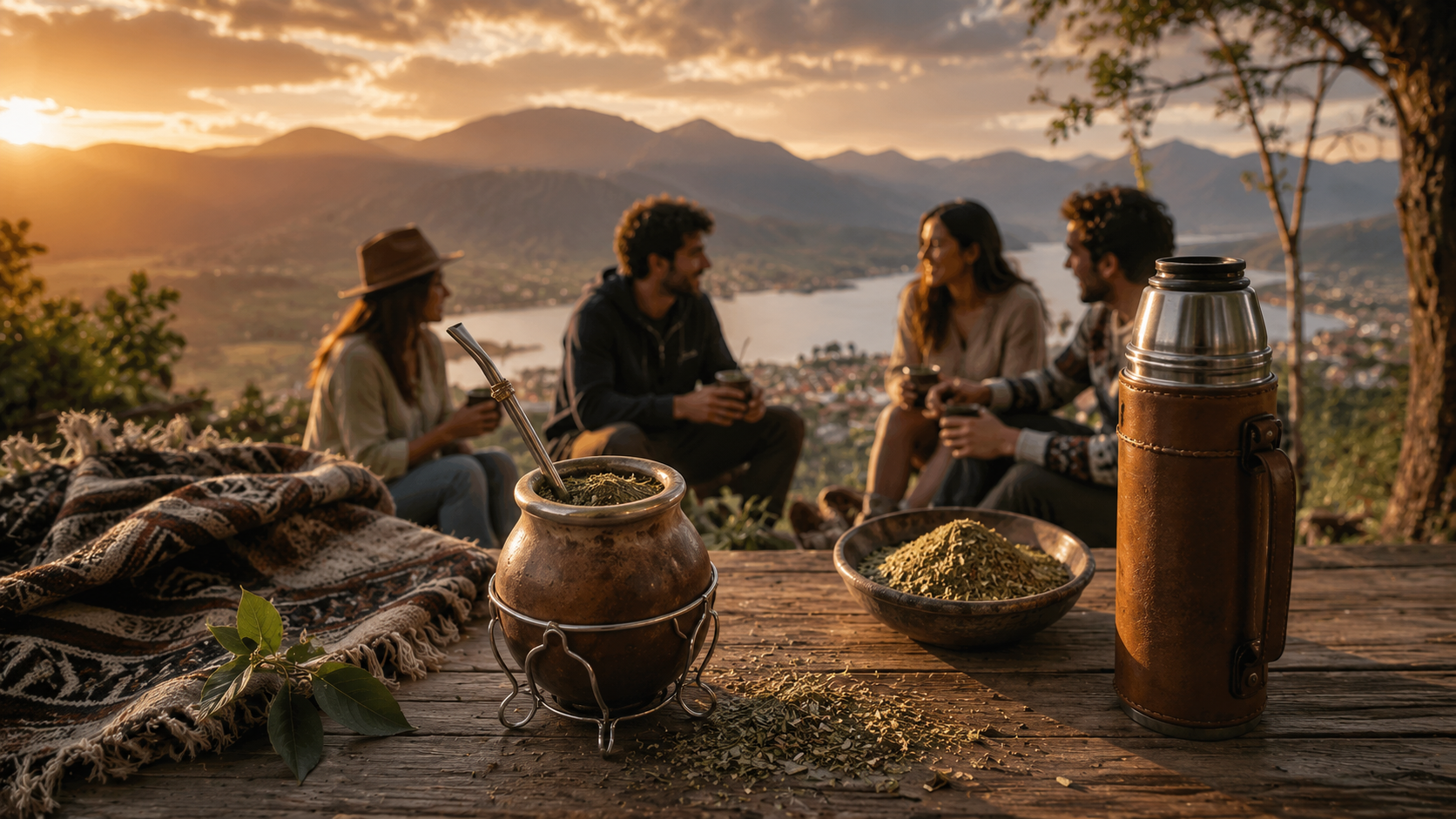
A thermos tucked under one arm.
A small cup held carefully in one hand.
A metal straw extending from a mound of green leaves.
As they talk, laugh, and enjoy the afternoon, something surprising happens.
Instead of everyone drinking from their own cup, they pass the same cup from one person to another.
For visitors experiencing South America for the first time, this often raises an immediate question:
Why is everyone sharing the same drink?
The answer reveals one of the continent's most treasured traditions.
They are drinking Yerba Mate—not simply as a beverage, but as a symbol of friendship, trust, hospitality, and community.
Unlike many drinks that are consumed individually, Yerba Mate is built around sharing. The ritual encourages people to slow down, stay present, and spend time together.
In today's fast-moving world, where coffee is often consumed while commuting and conversations are interrupted by smartphones, Mate offers something refreshingly different.
It reminds people that some of life's most meaningful moments happen when everyone pauses long enough to share a simple cup.
Part 1: What Is Yerba Mate?
More Than a Tea — A Cultural Tradition
Many people outside South America describe Yerba Mate as "Mate tea."
While this comparison helps newcomers understand the drink, it does not fully capture its cultural significance.
Yerba Mate is made from the dried leaves of Ilex paraguariensis, a native evergreen tree that grows naturally in parts of Argentina, Paraguay, southern Brazil, and Uruguay.
For centuries, Indigenous Guaraní communities prepared and enjoyed these leaves as part of their daily lives.
Over time, the drink spread across South America and became woven into the region's identity.
Today, Yerba Mate is much more than an herbal infusion.
It represents:
- Hospitality
- Friendship
- Conversation
- Patience
- Everyday connection
- Cultural heritage
In many South American households, preparing Mate is not simply making a drink—it is beginning a shared experience.
1.1 Indigenous Roots: A Tradition Passed Through Generations
Long before European explorers arrived in South America, the Guaraní people had already discovered the unique qualities of Yerba Mate.
Historical records suggest that Indigenous communities valued the leaves for both practical and social reasons.
The drink was enjoyed during:
- Community gatherings
- Hunting trips
- Family meetings
- Ceremonial occasions
Sharing Mate reflected an important belief:
Resources from nature were meant to strengthen relationships.
Rather than serving individual portions, communities often prepared one vessel that everyone shared.
This emphasis on togetherness remains one of the defining characteristics of Mate culture today.
Many of the customs practiced hundreds of years ago continue to influence how people enjoy Mate across South America.
1.2 Why Yerba Mate Is Different From Traditional Tea
At first glance, Yerba Mate may seem similar to green tea or herbal tea.
Both involve steeping plant leaves in hot water.
Both contain naturally occurring compounds that contribute to flavor and aroma.
However, the similarities largely end there.
Tea culture in many parts of the world often emphasizes individual preparation.
Each person receives a separate cup.
Yerba Mate follows a completely different philosophy.
Traditionally, everyone drinks from the same Mate cup using the same bombilla, the specially designed metal straw that filters the leaves.
Instead of preparing multiple servings, one person—known as the cebador—carefully manages the brewing process and passes the cup from one participant to the next.
This ritual transforms drinking into a shared experience.
The focus shifts away from the beverage itself and toward the people gathered around it.
The cup becomes a symbol of inclusion rather than ownership.
Part 2: The Origins of Sharing — How Yerba Mate Became South America's Social Drink
A Tradition That Crossed Borders
After European settlement expanded throughout South America, Yerba Mate gradually spread beyond Indigenous communities.
Jesuit missionaries documented its cultivation and helped organize early production.
Over time, the drink became deeply integrated into daily life across several countries.
Today, Mate remains especially important in:
- Argentina
- Uruguay
- Paraguay
- Southern Brazil
Although preparation styles differ slightly between regions, the spirit of sharing remains remarkably consistent.
Unlike many food traditions that changed significantly over time, the social ritual surrounding Mate has stayed surprisingly intact.
This continuity is one reason UNESCO and cultural researchers frequently recognize traditional food and drink customs as important forms of intangible cultural heritage.
Mate is often viewed through this same lens—not only as a beverage, but as a living cultural practice passed from generation to generation.
2.1 Why Sharing One Cup Matters
For people unfamiliar with the tradition, sharing one drinking vessel may seem unusual.
Yet within South American culture, it communicates something very different.
Passing the same cup demonstrates:
Trust
Sharing the same Mate cup shows comfort and mutual respect among participants.
It reflects openness rather than concern.
Equality
Everyone drinks from the same vessel.
There is no "better" cup or "special" serving.
The ritual quietly reinforces the idea that everyone around the circle shares the same experience.
Presence
Unlike grabbing coffee on the run, Mate encourages people to remain together.
Each participant waits patiently while another enjoys the drink.
The rhythm naturally slows conversation.
People listen more.
They speak more thoughtfully.
The experience values time rather than speed.
Hospitality
Offering Mate is one of the simplest expressions of welcome.
Visitors are often invited to join a Mate circle shortly after arriving.
Accepting the invitation is usually viewed as participating in the social experience rather than merely accepting a beverage.
2.2 Everyday Places Where Mate Brings People Together
One reason Mate remains so popular is that it fits naturally into almost every part of daily life.
Unlike beverages associated only with breakfast or special occasions, Mate accompanies people throughout the day.
Parks and Public Spaces
Walk through many parks in Buenos Aires, Montevideo, or Córdoba, and it is common to see groups sitting on the grass with a thermos and a Mate set placed between them.
The drink becomes the center of conversation rather than the destination itself.
University Campuses
Students frequently gather between classes to share Mate while studying, discussing assignments, or simply relaxing outdoors.
The ritual creates a welcoming atmosphere where conversations develop naturally.
Family Gatherings
Weekend lunches often continue well beyond the meal itself.
Once the table is cleared, someone prepares Mate, and conversations continue for hours.
The drink becomes a bridge between generations, allowing grandparents, parents, and children to spend uninterrupted time together.
Road Trips and Outdoor Adventures
Long drives across Patagonia, afternoons by Uruguay's beaches, or hikes in southern Brazil often include a thermos filled with hot water and a favorite Mate cup.
For many travelers, bringing Mate is as essential as packing food or a jacket.
The familiar ritual creates a sense of home wherever the journey leads.
Part 3: Yerba Mate Across South America
Although the drink is shared throughout several countries, each nation has developed its own unique relationship with Yerba Mate.
Understanding these regional differences helps explain why the tradition remains one of South America's strongest cultural symbols.
In the next part of this guide, we'll explore how Argentina, Uruguay, Paraguay, and southern Brazil have each shaped their own Mate traditions, examine the etiquette behind preparing and sharing the perfect cup, and discover why modern insulated drinkware has become an essential companion to one of the world's oldest shared beverage rituals.
Part 2 — The Ritual, the Drinkware, and the Lifestyle Behind South America's Most Shared Beverage
Part 4: How Different Countries Made Yerba Mate Their Own
Although Yerba Mate shares a common origin, each South American country has developed its own traditions, preferences, and rituals over generations.
The drink may look similar, but the culture surrounding it often reflects local lifestyles, climate, and history.
Argentina: A Daily Ritual That Fits Every Moment
Argentina is perhaps the country most closely associated with Yerba Mate.
Across cities, small towns, and rural landscapes, Mate is woven into everyday life.
People enjoy it:
- Before work in the morning.
- During study sessions.
- On afternoon walks.
- At family gatherings.
- During weekend road trips.
- While watching football with friends.
Unlike coffee, which many people associate with short breaks or cafés, Mate often accompanies activities for hours.
A thermos filled with hot water is carried almost everywhere, allowing the drink to be continuously prepared throughout the day.
For many Argentinians, carrying a thermos and Mate cup feels as natural as carrying a wallet or mobile phone.
It is part of daily life rather than a special occasion.
Uruguay: A Nation That Carries Mate Everywhere
Visitors to Montevideo often notice something unique.
People walking through the city frequently carry a thermos tucked under one arm while holding a Mate cup in the other hand.
This image has become almost symbolic of Uruguayan daily life.
Uruguay consistently ranks among the world's highest per-capita consumers of Yerba Mate.
The drink is not confined to homes or cafés.
Instead, it appears everywhere:
- Parks.
- Beaches.
- Offices.
- Universities.
- Sporting events.
- Public transportation waiting areas.
Sharing Mate is simply part of everyday social interaction.
Rather than planning a gathering around the drink, the drink naturally becomes part of whatever people are already doing.
Paraguay: The Refreshing Tradition of Tereré
Paraguay offers a fascinating variation.
Because of its warm climate, many people replace hot water with cold water or iced herbal infusions.
This version is called Tereré.
Instead of warming people during cooler mornings, Tereré provides refreshment throughout hot afternoons.
Fresh herbs, citrus, mint, and local medicinal plants are sometimes added, creating a drink that reflects Paraguay's climate and biodiversity.
This demonstrates how drink traditions evolve naturally to suit local environments.
The philosophy remains the same:
sharing,
conversation,
and connection.
Only the temperature changes.
Southern Brazil: Chimarrão and Regional Identity
In southern Brazil, especially in Rio Grande do Sul, Yerba Mate is commonly known as Chimarrão.
The preparation differs slightly.
The leaves are usually greener and more finely ground, producing a vibrant green foam on top of the drink.
Chimarrão plays an important role in regional identity.
It appears at festivals, family celebrations, outdoor gatherings, and cultural events.
For many residents, preparing Chimarrão represents respect for local traditions and pride in regional heritage.
Although the appearance differs from Argentine Mate, the values remain remarkably similar:
community,
hospitality,
and spending meaningful time together.
Part 5: The Ritual Behind Every Cup
One reason Yerba Mate has survived for centuries is that it is supported by rituals rather than rules.
The process encourages patience and mindfulness.
Every step contributes to the experience.
The Traditional Mate Set
A classic Mate setup includes three essential pieces.
The Mate Cup
Traditionally made from dried calabash gourds, although modern versions are now available in:
-
Stainless steel
-
Ceramic
-
Glass
-
Wood
-
Double-wall insulated materials
Each material offers a different balance of durability, insulation, and ease of maintenance.
The Bombilla
The bombilla is a reusable metal straw with a built-in filter.
Its purpose is simple but essential:
It allows people to drink the infused liquid while keeping the Yerba leaves inside the cup.
Modern bombillas are usually made from stainless steel because it is durable, easy to clean, and resistant to corrosion.
The Thermos
Perhaps the most recognizable part of today's Mate culture is the insulated thermos.
While traditional communities once reheated water over a fire, modern lifestyles require portability.
A vacuum-insulated bottle allows people to maintain the ideal water temperature throughout the day, whether they are commuting, hiking, or relaxing in a park.
The thermos has become just as iconic as the Mate cup itself.
Why Water Temperature Matters
One common mistake made by beginners is using boiling water.
Experienced Mate drinkers generally recommend water between 70°C and 80°C (158–176°F).
Water that is too hot can:
-
Create excessive bitterness.
-
Reduce some of the more delicate herbal aromas.
-
Cause the leaves to lose flavor more quickly.
Maintaining the proper temperature throughout the day is one reason insulated drinkware has become such an important companion for Mate enthusiasts.
The Etiquette of Sharing
Unlike many beverages, Yerba Mate follows a simple but meaningful etiquette.
Traditionally:
-
One person, called the cebador, prepares the Mate.
-
The cebador drinks the first serving to ensure the leaves are properly infused.
-
The cup is then passed clockwise around the group.
-
Each person drinks the entire serving before returning the cup.
-
The cebador refills it for the next participant.
There is no need to say "thank you" after every serving.
In many regions, saying "gracias" while returning the cup politely signals that you have finished drinking and do not wish to receive another round.
These customs may seem small, but they help preserve the rhythm of the gathering and ensure everyone shares the experience equally.
Part 6: What Yerba Mate Can Teach Us About Modern Living
Although Mate has existed for centuries, many of its underlying values feel surprisingly relevant today.
Modern life often encourages constant speed.
Notifications compete for attention.
Meals become rushed.
Conversations are shortened.
Yerba Mate offers a different perspective.
Slow Living Through Everyday Rituals
Slow living does not mean doing everything slowly.
Instead, it means giving ordinary moments the attention they deserve.
Preparing Mate naturally creates small pauses.
Heating the water.
Arranging the leaves.
Passing the cup.
Waiting for your turn.
These moments encourage mindfulness without requiring complicated routines.
Conversation Without Distraction
Unlike scrolling through a phone while drinking coffee alone, Mate naturally encourages face-to-face interaction.
The cup continues moving around the circle.
Each refill creates another opportunity to talk, listen, and share stories.
Many travelers remark that Mate circles feel welcoming because conversation develops organically.
No one is rushing to finish.
The experience values presence more than efficiency.
Building Community Through Simple Habits
Anthropologists often note that food and beverages help strengthen social relationships.
Across cultures, people gather around shared meals.
In South America, Yerba Mate serves a similar purpose.
One shared cup becomes an invitation to participate.
It quietly communicates:
"You belong here."
Part 7: Modern Drinkware Meets Ancient Tradition
As lifestyles evolve, Mate traditions continue to adapt.
Many younger consumers now combine traditional rituals with modern drinkware technology.
Vacuum-insulated bottles help maintain ideal water temperatures for hours.
Modern Mate cups made from stainless steel or insulated materials are easier to clean and more suitable for commuting, travel, and outdoor adventures.
Rather than replacing tradition, thoughtful drinkware helps preserve it in contemporary life.
It allows people to continue enjoying centuries-old customs while adapting to modern schedules.
Caring for Drinkware After Drinking Yerba Mate
Like coffee and tea, Yerba Mate contains natural plant compounds that can gradually leave residue inside drinkware.
Regular maintenance helps preserve both flavor and hygiene.
A simple care routine includes:
- Emptying used leaves promptly after each session.
- Rinsing with warm water.
- Cleaning bombillas thoroughly to remove trapped particles.
- Washing lids and silicone seals where moisture may collect.
- Allowing all components to dry completely before storage.
These habits help prevent lingering odors, mold growth, and unwanted flavors—especially in humid climates common across many parts of South America.
Well-maintained drinkware not only lasts longer but also protects the authentic taste of every future Mate session.
Conclusion: A Shared Drink, A Shared Story
For many visitors, Yerba Mate begins as an unfamiliar beverage.
For South Americans, it represents something much deeper.
It is a symbol of friendship.
A bridge between generations.
A pause in a busy day.
A reminder that meaningful conversations often begin with simple rituals.
Whether enjoyed in the streets of Buenos Aires, the beaches of Montevideo, the warm afternoons of Paraguay, or the countryside of southern Brazil, Mate continues to connect people through a tradition built on generosity and shared experience.
Modern insulated drinkware may have changed how people carry hot water, but it has not changed the heart of the ritual.
The cup still travels from hand to hand.
Stories continue to be shared.
Laughter still fills the spaces between each refill.
In a world that often celebrates speed, Yerba Mate quietly celebrates something different:
Connection over convenience. Presence over pressure. Sharing over consuming.
Perhaps that is why this centuries-old tradition continues to thrive—not because of the drink alone, but because of the people gathered around it.
References
This article combines historical and cultural information from recognized organizations and publicly available educational resources, including:
- National Institute of Yerba Mate (INYM, Argentina)
- UNESCO resources on intangible cultural heritage and traditional food practices
- Argentine Ministry of Tourism
- Uruguay Natural Tourism
- Brazil Travel and regional cultural organizations
- Historical research on the Guaraní people and Yerba Mate cultivation
- Community experiences and discussions from international Yerba Mate enthusiasts, including travel blogs and the Reddit r/yerbamate community, used to illustrate contemporary customs and everyday experiences.