
How Modern Cafés Became the Workplace, Meeting Room, and Creative Hub for a New Generation
Introduction: Coffee Shops Are No Longer Just Places to Drink Coffee
There was a time when visiting a coffee shop meant taking a short break.
People met friends over coffee, enjoyed a quiet afternoon, or picked up a drink before heading to work. Coffee shops were destinations for relaxation, conversation, and a brief escape from daily routines.
Today, that role has evolved dramatically.
Walk into almost any modern café, whether it's in New York, Kuala Lumpur, Tokyo, Melbourne, or Amsterdam, and you'll notice something different.
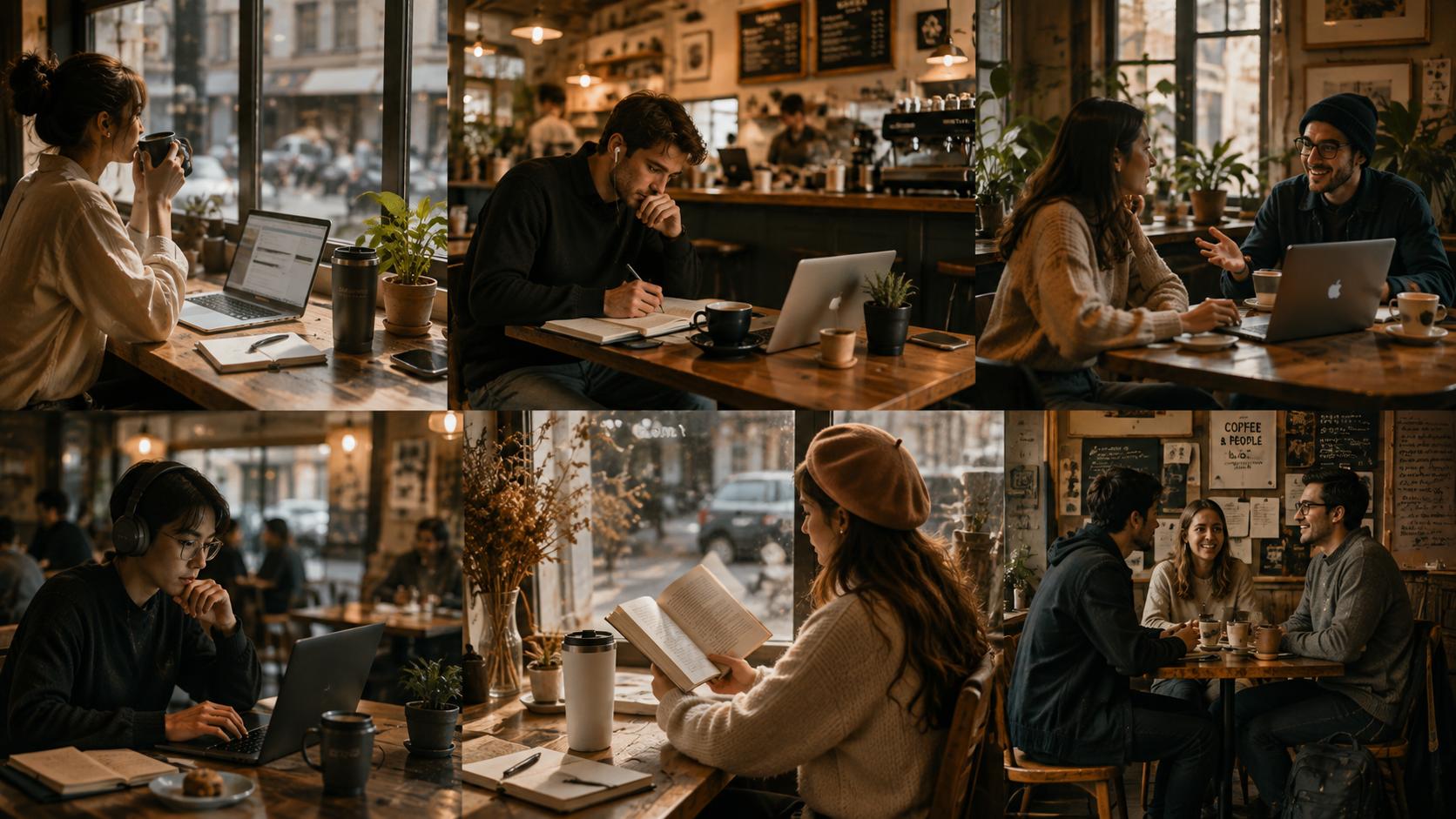
Some people are attending virtual meetings.
A graphic designer is refining a brand identity.
A software developer is writing code.
A photographer is editing hundreds of images.
Two entrepreneurs are discussing a startup idea.
A university student is preparing a research paper.
A travel blogger is planning the next journey.
Another customer is simply enjoying a quiet morning with a notebook and a cup of coffee.
These people aren't just drinking coffee.
They're creating.
Building.
Learning.
Collaborating.
Thinking.
Coffee shops have quietly transformed into something much larger than cafés.
They have become one of the defining spaces of modern urban life—a place where work, creativity, community, and personal growth naturally intersect.
Sociologists call these environments "third places."
And in today's flexible, connected world, they may be more important than ever.
The Rise of the Third Place
Our daily lives are often divided between two familiar environments.
The first place is home.
It is where we rest, spend time with family, and recharge.
The second place is work.
Whether it's an office, a factory, a classroom, or a studio, work provides structure, productivity, and professional relationships.
But life isn't complete with only these two spaces.
People also need somewhere in between.
Somewhere they can feel relaxed without being isolated.
Productive without feeling pressured.
Social without needing formal invitations.
This idea was famously described by sociologist Ray Oldenburg, who introduced the concept of the third place—public spaces that encourage conversation, belonging, and community outside home and work.
Historically, third places included parks, libraries, public squares, neighborhood pubs, and community centers.
Today, coffee shops have naturally taken on this role.
They offer something surprisingly valuable in modern cities:
The freedom to simply be.
Why Coffee Shops Became the Office Without Feeling Like One
Traditional offices serve an important purpose, but they are not always ideal environments for every type of work.
Meetings interrupt concentration.
Phone calls create background noise.
Fixed schedules leave little flexibility.
Corporate environments often encourage efficiency, but not always creativity.
Coffee shops provide something different.
There is movement without chaos.
Conversation without obligation.
Music without distraction.
People working independently while sharing the same space.
Many creative professionals describe cafés as places that offer just the right amount of stimulation.
Psychologists sometimes refer to this phenomenon as moderate ambient noise—a level of background activity that may encourage creative thinking more effectively than complete silence.
Instead of feeling isolated, people feel connected to the energy around them.
Watching others work can also become quietly motivating.
Without saying a word, everyone contributes to an atmosphere of productivity.
The Rise of SOHO and Flexible Work
Twenty years ago, working outside a traditional office was relatively uncommon.
Today, flexible work has become part of everyday life.
Freelancers.
Consultants.
Graphic designers.
Software developers.
Writers.
Marketing specialists.
Architects.
Online educators.
Content creators.
Photographers.
Independent business owners.
Millions of professionals now choose where they work based on the task rather than the company office.
Sometimes that place is home.
Sometimes it's a co-working space.
And increasingly, it's a neighborhood café.
Coffee shops provide reliable internet, comfortable seating, electricity, and a welcoming atmosphere without requiring long-term commitments.
For many freelancers, cafés have become affordable, inspiring workspaces that support both productivity and personal wellbeing.
The rise of the creator economy has only accelerated this trend.
Work is no longer defined by location.
It is defined by connection.
Creativity Often Begins Outside Traditional Offices
Some of history's greatest ideas were born far away from boardrooms.
Creative thinking rarely follows a strict schedule.
It often appears during moments of reflection, observation, and unexpected conversation.
Coffee shops naturally encourage these moments.
A designer notices an interesting color combination.
A writer overhears a conversation that inspires a new story.
A founder sketches a business idea on a napkin.
A photographer edits images while watching city life unfold through the window.
Unlike formal workplaces, cafés allow ideas to develop without pressure.
There is no expectation that every minute must produce measurable results.
Sometimes creativity simply needs space.
Many psychologists describe this as the incubation effect.
When the mind relaxes, it often continues solving problems subconsciously.
This is why solutions sometimes appear while walking, traveling—or sitting quietly with a cup of coffee.
Community Happens Around Coffee
One of the most remarkable things about coffee shops is that they create opportunities for connection without forcing interaction.
You may not know the person sitting beside you.
Yet you share the same environment.
The same music.
The same atmosphere.
The same routine.
Sociologists often describe these casual social connections as weak ties.
Although they are less intimate than close friendships, weak ties play an important role in discovering new opportunities, exchanging ideas, and expanding professional networks.
Many collaborations begin unexpectedly.
A conversation about photography.
A recommendation for a freelance project.
A startup founder meeting a future business partner.
A designer finding a new client.
Coffee shops create these encounters naturally.
Not through networking events.
But through everyday presence.
Sometimes, the best opportunities begin with a simple question:
"Is this seat available?"
Digital Nomads and the Freedom to Work Anywhere
Technology has made geography increasingly flexible.
Today, many professionals can work from almost anywhere with reliable internet access.
This has given rise to the global digital nomad movement.
Cities such as Bali, Chiang Mai, Kuala Lumpur, Lisbon, Medellín, Ho Chi Minh City, and Tokyo have become popular destinations because they combine comfortable living with vibrant café cultures.
For digital nomads, coffee shops are far more than places to buy drinks.
They become temporary offices.
Meeting rooms.
Creative studios.
Places to connect with local communities.
The essentials are surprisingly simple.
A laptop.
Reliable Wi-Fi.
A notebook.
Headphones.
A favorite coffee.
Sometimes, that's all that's needed to build an international career.
Coffee Shops Are Shaping Modern Cities
The growing popularity of cafés is also changing cities themselves.
Modern coffee shops are no longer designed only for serving beverages.
Many now host photography exhibitions.
Book launches.
Live acoustic music.
Art markets.
Language exchange evenings.
Startup meetups.
Creative workshops.
Community charity events.
They support local artists, independent businesses, and neighborhood culture.
Some cafés even become landmarks that define the character of an entire district.
People don't visit simply because of the menu.
They visit because of the atmosphere.
The stories.
The people.
The sense of belonging.
Coffee shops have quietly become the modern public living room.
Everyday Essentials for Life Between Home and Work
As work becomes more mobile, the tools people carry every day become increasingly important.
Modern professionals rarely leave home with only a wallet and keys.
Today's everyday essentials often include:
A laptop.
Wireless headphones.
A notebook.
A reusable water bottle.
A travel mug.
A backpack.
A portable charger.
These aren't luxury accessories.
They are tools that support flexible lifestyles.
Good design matters because these products travel everywhere.
From home to cafés.
From cafés to offices.
From airports to co-working spaces.
From weekend trips to creative meetings.
When thoughtfully designed, everyday essentials reduce friction and allow people to focus on their work instead of managing their belongings.
Why Coffee Shops Feel Like Home
Many people return to the same café week after week.
Not because it's the closest.
But because it feels familiar.
The barista remembers their order.
The music feels comforting.
Their favorite table is near the window.
The lighting is just right.
The atmosphere encourages focus.
Over time, these small details create something much deeper than convenience.
They create belonging.
Humans naturally seek places where they feel welcomed.
Coffee shops often become personal landmarks within busy cities.
Not home.
Not work.
But somewhere comfortably in between.
And perhaps that's exactly why third places matter.
They remind us that community isn't built only through grand events.
It's built through familiar routines and shared spaces.
The Future of Coffee Shops
As artificial intelligence, remote work, and flexible careers continue reshaping modern life, the role of coffee shops is likely to grow even further.
Future cafés may include more collaborative workspaces.
Smarter technology.
Sustainable architecture.
Hybrid meeting areas.
Community education programs.
Creator studios.
Rather than replacing offices, coffee shops will increasingly complement them.
They provide something many workplaces cannot easily offer:
Freedom.
Choice.
Human connection.
Creativity.
As cities become denser and work becomes increasingly digital, physical spaces that encourage real-world interaction may become even more valuable.
Coffee shops are uniquely positioned to fill that role.
The MODOFO GLOBAL Philosophy
At MODOFO GLOBAL, we believe everyday products should support the way modern people actually live.
Today's lifestyle is flexible.
People move between home, cafés, offices, airports, parks, and creative spaces throughout the day.
The objects they carry should adapt just as naturally.
A well-designed tumbler.
A reliable water bottle.
A comfortable backpack.
A notebook filled with ideas.
These everyday essentials quietly support countless conversations, creative breakthroughs, business meetings, and memorable journeys.
Great design doesn't interrupt life.
It makes life's transitions smoother.
Because inspiration rarely arrives on schedule.
Sometimes it appears during an ordinary morning in your favorite neighborhood café.
Conclusion: Great Ideas Rarely Need a Corner Office
For generations, success was often associated with impressive offices and formal meeting rooms.
Today, some of the world's most meaningful work begins somewhere much simpler.
A quiet table beside a window.
A notebook waiting for new ideas.
A laptop connected to Wi-Fi.
A cup of coffee slowly growing cold while inspiration takes over.
Coffee shops have become much more than places that serve beverages.
They have become places where communities grow, careers begin, friendships form, and creativity finds room to breathe.
Perhaps that is the true power of the modern third place.
It gives people the freedom to belong, to think, and to create—without needing permission.
Because sometimes, all a great idea needs is a welcoming space, a little time, and one good cup of coffee.
The best ideas don't always begin in an office. Sometimes, they begin at a corner table in your favorite café.