
Pendahuluan: Bersih Tidak Selalu Berarti Aman
Botol air minum stainless steel sering dianggap sebagai alternatif yang lebih bersih dan aman daripada plastik. Botol ini tidak mudah bernoda, tidak mudah menyimpan rasa, dan terasa lebih tahan lama. Namun, inilah kenyataan yang sering diabaikan sebagian besar pengguna:

Botol yang terlihat bersih belum tentu higienis.
Seiring waktu, bahkan botol stainless steel berkualitas tertinggi sekalipun dapat mengalami:
- Bau yang tertinggal dari kopi, teh, atau minuman protein
- Penumpukan bakteri tersembunyi di tutup dan segel
- Jamur terkait kelembapan di area yang sulit dijangkau
Dan dampaknya melampaui rasa. Kebiasaan membersihkan yang buruk dapat memengaruhi kesehatan Anda, pengalaman minum Anda, dan bahkan masa pakai botol Anda.
Panduan ini menjelaskan dengan tepat cara membersihkan botol air minum stainless steel dengan benar—langkah demi langkah—agar tetap segar, aman, dan tahan lama.
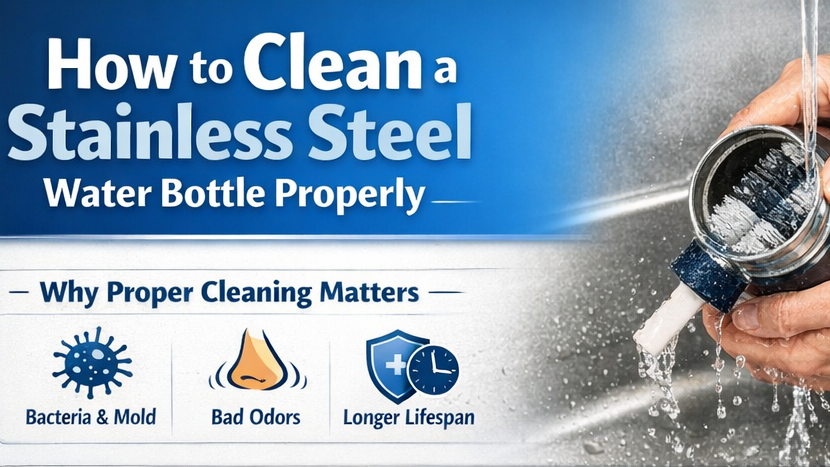
Mengapa Pembersihan yang Tepat Itu Penting
Sebelum menyelami metode, penting untuk memahami mengapa pembersihan bukanlah pemeliharaan opsional—ini adalah bagian dari penggunaan sehari-hari.
1. Higiene: Risiko Tersembunyi
Botol air menciptakan lingkungan lembap dan tertutup, yang ideal untuk pertumbuhan bakteri. Tambahkan gula dari minuman, kontak air liur, atau suhu hangat, dan Anda memiliki tempat berkembang biak yang sempurna.
Tanpa pembersihan yang tepat:
- Bakteri dapat menumpuk dalam 24–48 jam
- Jamur dapat tumbuh di tutup dan segel
- Bau menandakan aktivitas mikroba
2. Kinerja: Rasa dan Pengalaman
Botol yang tidak bersih memengaruhi rasa minuman Anda:
- Air mulai terasa basi
- Rasa kopi atau teh tertinggal
- Residu elektrolit atau protein menumpuk
Meskipun botol secara struktural kuat, pengalaman pengguna cepat menurun.
3. Ketahanan: Memperpanjang Masa Pakai Produk
Pembersihan yang tidak tepat justru dapat memperpendek masa pakai botol Anda:
- Bahan kimia keras dapat merusak permukaan internal
- Menggosok dengan alat abrasif dapat menggores lapisan pelindung
- Segel yang diabaikan dapat cepat rusak
Pembersihan yang konsisten dan tepat = masa pakai lebih lama + kinerja lebih baik
Kesalahan Umum dalam Pembersihan (Dan Mengapa Penting)
Banyak pengguna percaya mereka membersihkan botol mereka dengan benar—tetapi kesalahan kecil dapat menyebabkan masalah jangka panjang.
Kesalahan 1: Hanya Membilas dengan Air
Pembilasan cepat menghilangkan residu yang terlihat tetapi tidak berpengaruh terhadap bakteri atau minyak.
👉 Hasil: Penumpukan bau dan pertumbuhan bakteri
Kesalahan 2: Tidak Membersihkan Setiap Hari
Terutama setelah minum kopi, teh, atau digunakan di gym.
👉 Hasil: Akumulasi residu dan noda yang lebih sulit dihilangkan
Kesalahan 3: Mengabaikan Tutup dan Sedotan
Area ini menjebak kelembapan dan lebih sulit dibersihkan.
👉 Hasil: Jamur tersembunyi dan bau tidak sedap
Kesalahan 4: Menggunakan Bahan Kimia Keras
Pemutih atau pembersih kuat dapat merusak bahan dan meninggalkan residu.
👉 Hasil: Degradasi material + masalah keamanan
Kesalahan 5: Tidak Mengeringkan dengan Benar
Menutup botol yang lembap menciptakan lingkungan yang lembap.
👉 Hasil: Pertumbuhan jamur di dalam botol
Panduan Langkah demi Langkah: Cara Membersihkan Botol Anda dengan Benar
Ini adalah proses inti—sederhana, dapat diulang, dan efektif.
1. Rutinitas Pembersihan Harian (Kebiasaan Penting)
Terbaik untuk: Penggunaan sehari-hari
Apa yang Anda butuhkan:
- Air hangat
- Sabun cuci piring ringan
- Sikat botol (bulu lembut)
Langkah-langkah:
- Isi botol dengan air hangat
- Tambahkan beberapa tetes sabun ringan
- Gunakan sikat botol untuk menggosok bagian dalam
- Bersihkan area mulut dan ulir dengan hati-hati
- Bilas sampai bersih dengan air bersih
👉 Wawasan utama: Pembersihan mekanis (menggosok) sama pentingnya dengan sabun
2. Metode Pembersihan Mendalam (Pembersihan Mingguan)
Terbaik untuk: Menghilangkan penumpukan dan bau
Metode A: Larutan Baking Soda
- Tambahkan 1–2 sendok teh baking soda
- Isi dengan air hangat
- Diamkan selama 1–2 jam
- Gosok dan bilas sampai bersih
👉 Efektif untuk menghilangkan bau dan residu ringan
Metode B: Bilasan Cuka
- Campurkan cuka dan air dengan perbandingan yang sama
- Diamkan selama 10–15 menit
- Bilas sampai bersih
👉 Ideal untuk menguraikan endapan mineral dan bakteri
Pendorong Alami Opsional: Lemon
- Tambahkan irisan lemon dengan air hangat
- Diamkan untuk kesegaran dan pembersihan ringan
👉 Menambahkan efek penghilang bau alami
3. Membersihkan Tutup, Sedotan, dan Segel (Langkah Krusial)
Sebagian besar masalah kebersihan berasal dari komponen-komponen yang terabaikan ini.
Langkah-langkah:
- Bongkar semua bagian yang dapat dilepas
- Gunakan sikat kecil untuk sedotan dan ruang sempit
- Cuci dengan air sabun hangat
- Bilas sampai bersih
- Biarkan setiap bagian mengering secara terpisah
👉 Perhatikan secara khusus pada:
- Segel silikon
- Tutup flip
- Bagian dalam sedotan
4. Mengeringkan dengan Benar (Langkah yang Tidak Bisa Ditawar)
Pembersihan tidak lengkap tanpa pengeringan yang tepat.
Praktik terbaik:
- Keringkan dengan udara terbalik
- Biarkan botol tetap terbuka
- Simpan di area yang berventilasi baik
👉 Jangan pernah menutup botol yang lembap
Cara Menghilangkan Bau dari Botol Air Minum
Bau adalah salah satu keluhan pengguna yang paling umum—dan salah satu yang paling mudah diperbaiki.
Penyebab Umum
- Residu kopi atau teh
- Minuman protein
- Minuman manis
- Jarang membersihkan
Solusi Efektif
1. Perendaman Baking Soda
- Menetralkan bau secara alami
2. Perawatan Cuka
- Menguraikan bakteri penyebab bau
3. Penyegar Lemon
- Menambahkan aroma segar dan keasaman ringan
👉 Tip profesional:
Jika bau masih ada, ulangi prosesnya dan pastikan tutup dan segel juga dibersihkan secara menyeluruh.
Seberapa Sering Anda Harus Membersihkan Botol Anda?
Konsistensi lebih penting daripada intensitas.
Frekuensi Pembersihan yang Direkomendasikan:
- Penggunaan harian (air): Bersihkan setiap hari
- Kopi / minuman berasa: Bersihkan setelah setiap penggunaan
- Penggunaan di gym: Bersihkan setiap hari + pembersihan mendalam mingguan
- Penggunaan sesekali: Bersihkan sebelum digunakan kembali
Aturan Sederhana untuk Diingat:
Jika Anda menggunakannya hari ini, bersihkanlah hari ini.
Tips Perawatan untuk Memperpanjang Masa Pakai Botol
Pembersihan hanyalah salah satu bagian dari menjaga botol Anda dalam kondisi optimal.
1. Hindari Alat Abrasif
Sabut baja atau sikat keras dapat merusak permukaan.
2. Lindungi Insulasi
Menjatuhkan botol dapat memengaruhi kinerja insulasi vakum.
3. Periksa Segel Secara Teratur
Segel yang aus dapat menyebabkan kebocoran dan masalah kebersihan.
4. Simpan dengan Benar
Jaga botol tetap kering dan terbuka saat tidak digunakan.
👉 Wawasan:
Kebiasaan perawatan yang baik mengurangi kebutuhan pembersihan agresif di kemudian hari
Mengapa Desain Botol Lebih Penting dari yang Anda Kira
Tidak semua botol sama mudahnya dibersihkan—dan ini memiliki dampak langsung pada kegunaan jangka panjang.
Fitur Desain Utama yang Meningkatkan Pembersihan:
-
Bukaan mulut lebar
→ Akses lebih mudah untuk menggosok -
Struktur internal sederhana
→ Lebih sedikit area untuk penumpukan residu -
Komponen yang dapat dilepas
→ Kebersihan yang lebih baik untuk tutup dan sedotan -
Baja tahan karat berkualitas tinggi
→ Tahan noda dan retensi bau
Dari perspektif pengalaman pengguna, botol yang dirancang dengan baik tidak hanya berkinerja lebih baik—botol ini mengurangi gesekan dalam perawatan harian.
Itulah mengapa desain peralatan minum modern semakin berfokus tidak hanya pada insulasi atau estetika, tetapi pada kemudahan pembersihan sebagai fitur inti.
Kesimpulan: Botol Bersih, Pengalaman Lebih Baik
Membersihkan botol air minum stainless steel Anda bukan hanya tentang kebersihan—ini tentang menjaga nilai penuh dari apa yang Anda gunakan setiap hari.
Botol yang dibersihkan dengan benar:
- Menjaga minuman Anda tetap segar
- Melindungi kesehatan Anda
- Tahan lebih lama secara signifikan
Yang lebih penting, ini mengubah hidrasi menjadi pengalaman yang selalu positif.
Pergeseran sebenarnya sederhana:
Pembersihan tidak boleh diperlakukan sebagai langkah tambahan—itu harus menjadi bagian dari cara produk dirancang dan digunakan.
Referensi
- CDC – Pedoman kebersihan dan sanitasi
- NSF International – Rekomendasi kebersihan rumah
- Healthline – Membersihkan botol air minum yang dapat digunakan kembali
- Good Housekeeping – Tips membersihkan botol
- WebMD – Bakteri dalam wadah yang dapat digunakan kembali