

How Walking Is Transforming Everyday Life Through Better Cities, Healthier Habits, and More Meaningful Moments
Introduction: A New Way of Moving Through Life
For decades, convenience was measured by speed.
The fastest route.
The shortest commute.
The quickest drive to work.
The easiest way to get from one destination to another.
Today, a different definition of convenience is quietly emerging.
Across North America and Europe, more people are choosing neighborhoods where cafés, parks, grocery stores, bookstores, and public spaces are all within walking distance.
They're replacing short car trips with morning walks.
They're meeting friends on foot instead of in parking lots.
They're discovering that the journey itself can become one of the most enjoyable parts of the day.
Walking is no longer just transportation.
It's becoming a lifestyle.
And in a world that often feels rushed, choosing to slow down—even for twenty minutes—can completely change how we experience everyday life.
The Rise of Walkable Living
The idea of a walkable lifestyle is gaining momentum around the world.
People are increasingly looking for neighborhoods where daily life happens naturally within a comfortable walking distance.
A local bakery.
A neighborhood café.
A small grocery store.
A public library.
A community park.
A weekend farmers' market.
Instead of spending every errand behind the wheel, residents are enjoying the freedom of simply stepping outside.
Urban planners often describe these as "walkable communities," but for the people who live there, it's about something much simpler.
Life feels more connected.
Children play in neighborhood parks.
Neighbors greet one another during evening walks.
Small local businesses become familiar faces rather than places passed by in traffic.
Walking brings people closer—not only to their destinations, but also to their communities.
Coffee Walks Are Becoming a Daily Ritual
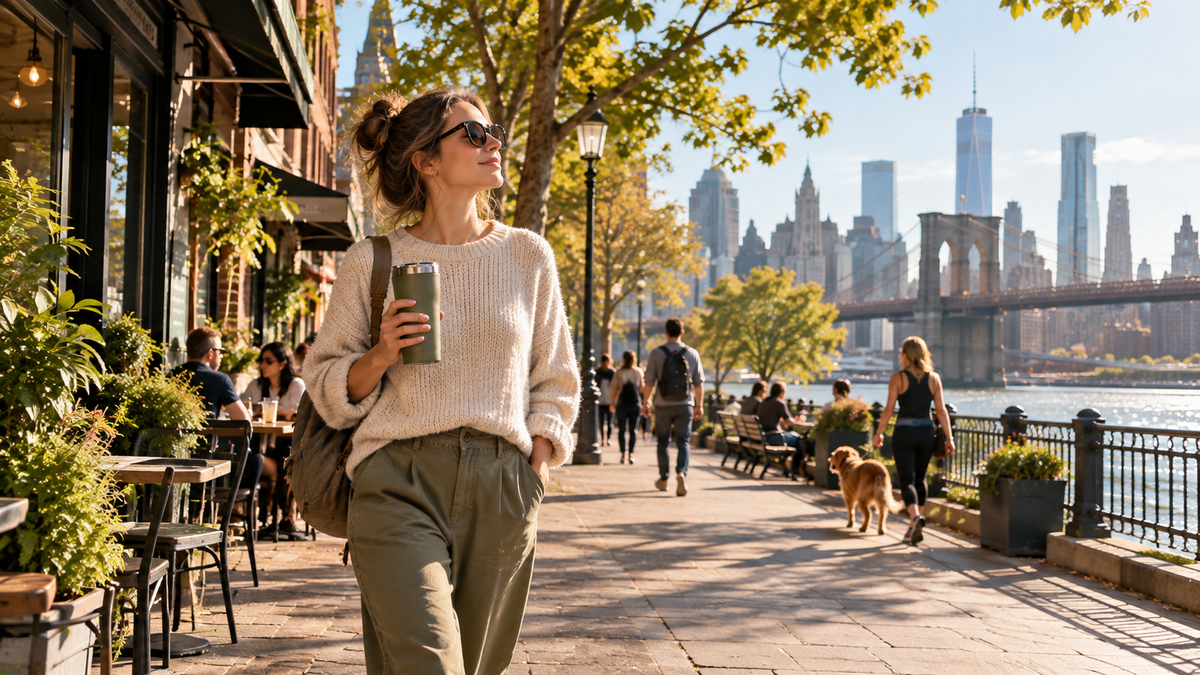
One of the simplest lifestyle trends to emerge is the "coffee walk."
Rather than grabbing coffee and immediately heading back indoors, many people now turn their morning cup into a short walk through the neighborhood.
The experience feels completely different.
Fresh air replaces office air conditioning.
Birdsong replaces notifications.
Morning sunlight replaces fluorescent lighting.
A twenty-minute walk with coffee becomes more than a routine.
It becomes a gentle transition into the day.
Some people walk through quiet residential streets.
Others explore local parks or waterfront paths.
Many leave their phones in their pockets and simply enjoy observing the changing seasons.
Coffee tastes better when there's no rush.
Walking Meetings Are Changing Modern Work
As remote work and flexible schedules continue to grow, many professionals are rethinking how meetings happen.
Instead of sitting in conference rooms for hours, people are beginning to take conversations outside.
Walking meetings have become popular among freelancers, entrepreneurs, designers, and creative teams.
Movement often encourages clearer thinking.
Ideas flow more naturally.
Conversations become less formal and more collaborative.
Even a short walk around the neighborhood during a phone call can improve focus and reduce mental fatigue.
For people working from home, walking also creates healthy boundaries between work and personal life.
A fifteen-minute walk after finishing a project signals that the workday is complete.
Sometimes the best productivity tool isn't another app.
It's simply stepping outside.
Cities Feel Different at Walking Speed
Driving allows us to move through a city.
Walking allows us to experience it.
When we slow down, details begin to appear.
The smell of fresh bread from a neighborhood bakery.
Colorful flowers growing along apartment balconies.
Independent bookstores hidden between larger buildings.
Street musicians performing in quiet squares.
Historic architecture we never noticed from behind a windshield.
Walking transforms familiar streets into places worth exploring.
Even cities we've lived in for years begin to feel new again.
The destination becomes only part of the experience.
Everything in between becomes equally meaningful.
Weekend Walks Are the New Mini Adventure
Not every weekend needs a flight or a detailed itinerary.
Sometimes the most refreshing adventure is only a few miles away.
A riverside trail.
A botanical garden.
A forest path.
A coastal boardwalk.
A historic neighborhood you've never explored.
A scenic coffee shop at the end of a walking route.
Weekend walks offer something many people are searching for:
A chance to disconnect from schedules while reconnecting with the world around them.
Families explore together.
Friends spend hours talking while walking.
Couples discover new neighborhoods.
Solo travelers photograph hidden corners of their own cities.
These small adventures often become the weekends we remember most.
Hydration Becomes Part of Everyday Movement
Walking naturally encourages healthier daily habits.
Instead of only thinking about hydration during workouts, people begin carrying water throughout the day.
A reusable insulated bottle becomes part of the morning routine.
A travel tumbler accompanies coffee walks.
Fresh water is always within reach during afternoon strolls or weekend explorations.
Hydration stops feeling like another health goal.
It simply becomes part of everyday movement.
Small habits repeated consistently often have a greater impact than occasional dramatic changes.
Sometimes wellness begins with something as simple as carrying a bottle while enjoying a walk.
Walking Helps Us Notice What We've Been Missing
Modern life often moves too quickly to appreciate ordinary beauty.
Walking changes that.
We notice trees changing color.
The sound of birds after rain.
A family-owned flower shop opening for the morning.
The scent of roasted coffee drifting from a local café.
Children laughing in nearby parks.
The rhythm of neighborhoods waking up.
Without constantly rushing toward the next destination, our attention shifts outward.
Observation becomes appreciation.
Appreciation becomes gratitude.
And everyday streets begin to feel full of possibility again.
Choosing Better Neighborhoods Instead of Bigger Houses
For many young professionals and families, quality of life is becoming more important than square footage.
Instead of choosing homes farther away from everything, people increasingly value neighborhoods where daily essentials are close by.
A nearby grocery store.
A local coffee shop.
Parks within walking distance.
Safe sidewalks.
Bike paths.
Public transportation.
Bookstores.
Community events.
Walkability has become part of how people define a good place to live.
A neighborhood isn't simply where we sleep.
It's where everyday life happens.
Walking Creates Everyday Rituals
The most meaningful routines are often the simplest.
A morning coffee walk before work.
A lunchtime stroll between meetings.
An evening walk after dinner.
A Sunday visit to the local market.
A weekend photography walk.
A quiet walk while listening to nothing at all.
These aren't workouts.
They're rituals.
They provide rhythm to busy lives.
Over time, they become small moments people genuinely look forward to.
Not because they're extraordinary.
But because they remind us to slow down and enjoy ordinary life.
The MODOFO GLOBAL Philosophy
At MODOFO GLOBAL, we believe the journey deserves just as much attention as the destination.
A reusable tumbler filled with fresh coffee before a neighborhood walk.
A water bottle carried through city streets, quiet parks, and weekend markets.
Simple everyday essentials quietly become part of life's most memorable moments—not because they stand out, but because they support the experiences that matter.
Whether you're walking to your favorite café, exploring a nearby trail, or enjoying an evening stroll after work, thoughtful essentials help make every step a little more comfortable.
Because sometimes the best adventures begin just outside your front door.
Conclusion: One Step Can Change the Way You Experience Life
Walking isn't simply about covering distance.
It's about changing perspective.
It's choosing fresh air over traffic.
Conversation over rushing.
Curiosity over routine.
Presence over distraction.
A short walk may not change the world.
But it can change how we experience the world around us.
Perhaps that's why walkable lifestyles continue to grow in popularity.
Not because people are walking farther.
But because they're discovering that slowing down allows them to notice more.
The neighborhood café they've never visited.
The park they've always driven past.
The quiet street filled with autumn leaves.
The conversation that lasted longer because no one was in a hurry.
Life isn't always waiting somewhere far away.
Sometimes it's already outside the front door, inviting us to experience it one step at a time.
The most rewarding journeys don't always begin with a boarding pass. Sometimes they begin with a comfortable pair of shoes, a favorite tumbler, and the decision to simply start walking.