
Most people believe cups wear out because of daily use. In reality, many cups fail early because of how they are cleaned. Scratches, loose lids, fading finishes, stubborn odors—these problems often begin not with drinking, but with cleaning habits that seem harmless at the time.
Cleaning is meant to protect a cup. Done incorrectly, it quietly does the opposite.
Understanding common cleaning mistakes helps extend cup lifespan, preserve performance, and avoid unnecessary replacements.
Cleaning Is About Longevity, Not Just Cleanliness
Clean does not always mean better.
Many users approach cup cleaning with the same mindset used for cookware or heavily soiled items: stronger detergents, harder scrubbing, higher heat. While that approach removes visible residue quickly, it also accelerates material fatigue.
Cups are designed for repeated use, not aggressive treatment. When cleaning methods exceed what the materials are built to tolerate, wear compounds over time.
Longevity comes from consistency and restraint, not intensity.
Overcleaning: When Good Intentions Cause Damage
One of the most overlooked mistakes is overcleaning.
Cleaning a cup thoroughly after every light use may feel responsible, but repeated aggressive action adds cumulative stress. Constant scrubbing wears down surface finishes. Repeated exposure to strong detergents weakens protective coatings.
Over time, micro-scratches appear. These scratches are not just cosmetic. They create tiny pockets that trap residue and odors, making future cleaning harder and encouraging even more aggressive methods. The cycle reinforces itself.
In practice, light daily use does not require deep cleaning every time.
Using the Wrong Cleaning Tools
Abrasive Sponges and Brushes
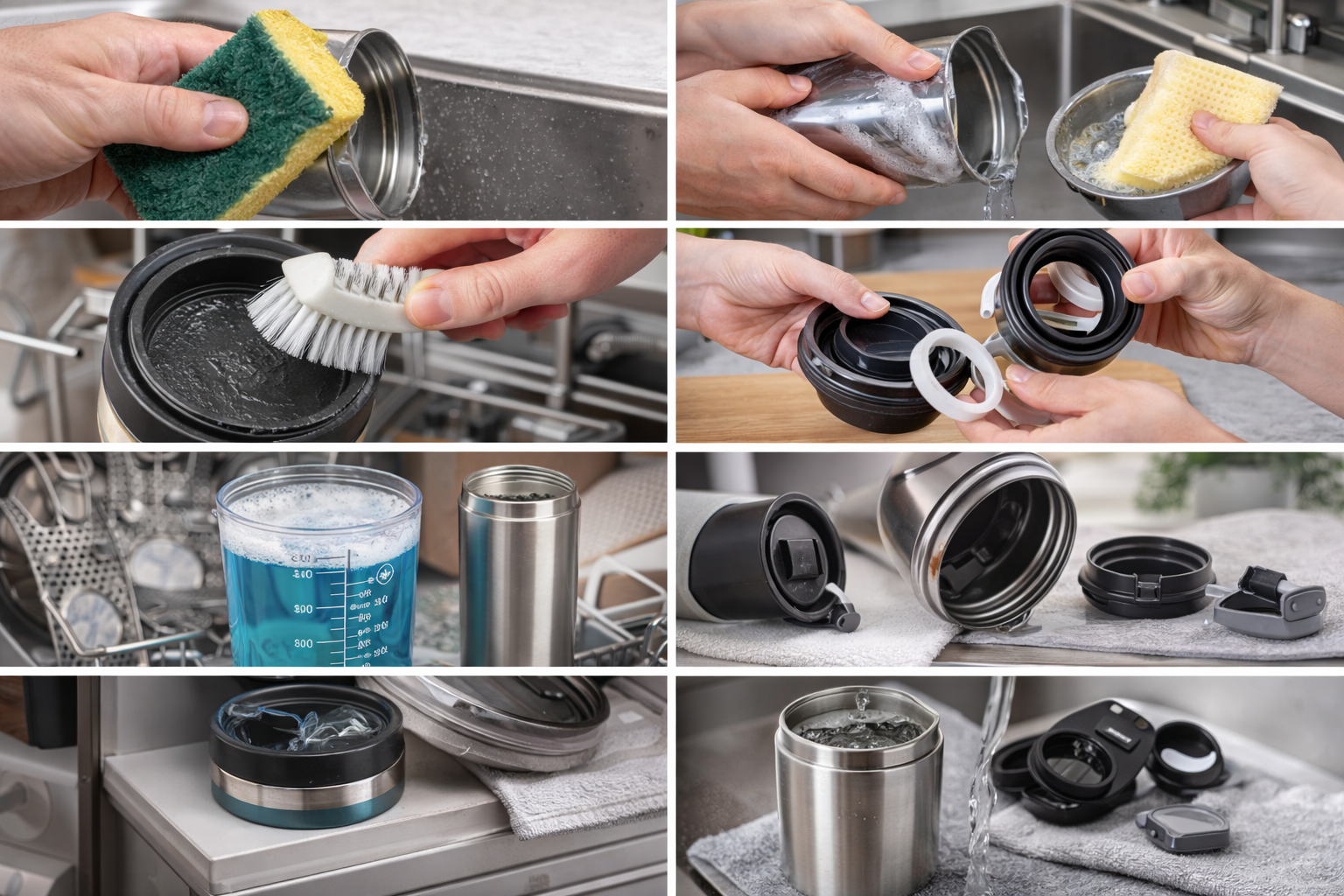
Abrasive sponges and stiff brushes are among the most common causes of premature wear.
Stainless steel, coatings, and painted finishes can all tolerate gentle friction. They are not designed for constant abrasion. Scratches dull surfaces, reduce stain resistance, and shorten the visual lifespan of the product.
Once scratched, a cup becomes harder to keep looking clean, even when it is hygienically safe.
Improvised Tools That Create Hidden Damage
Metal brushes, hard plastic tools, or sharp-edged implements are often used to reach corners or remove stubborn buildup. These tools may solve an immediate problem, but they damage edges, seams, and lid grooves where wear is already concentrated.
Damage in these areas affects function before appearance. Seals loosen. Lids stop fitting precisely. Small defects become performance issues.
Detergents and Chemicals That Do More Harm Than Good
Stronger is not safer.
Highly concentrated detergents, degreasers, or multipurpose cleaners are formulated for heavy-duty applications. Cups do not need that level of chemical strength.
Over time, harsh chemicals:
- Degrade surface finishes
- Leave residues that affect taste and smell
- Accelerate aging of seals and gaskets
Residue buildup is especially problematic. It creates the illusion that the cup is never fully clean, leading users to increase detergent strength even further.
Mild, consistent cleaning agents are more effective in the long run.
Dishwasher Misuse and Its Hidden Costs
Many cups are labeled dishwasher-safe, but that does not mean dishwasher-proof.
Dishwashers expose cups to:
- High temperatures
- Prolonged moisture
- Concentrated detergents
- Mechanical vibration
Repeated cycles stress insulation layers, loosen bonded components, and harden seals faster than hand washing. Lids and small parts are particularly vulnerable.
Using the dishwasher occasionally may be convenient. Relying on it as the default cleaning method shortens lifespan, even when no immediate damage is visible.
Neglecting Lids, Seals, and Small Components
Cups rarely fail as a single piece. They fail at the interfaces.
Lids, seals, gaskets, and straws experience the most stress and the least attention. Many users clean the cup body thoroughly while rushing through lid components or reassembling them while still damp.
Residue and moisture trapped in small parts lead to odors, stiffness, and eventual failure. Once a seal deforms or hardens, performance declines quickly.
Ignoring small components forces premature replacement of the entire cup.
Improper Drying and Storage After Cleaning
Cleaning does not end when rinsing stops.
Moisture trapped in lids or seal channels creates ideal conditions for odor development and material degradation. Storing a cup fully assembled before it is completely dry accelerates this process.
Airflow matters. Orientation matters. Storage habits influence long-term material stability more than most users realize.
A cup that dries fully and evenly ages more slowly than one cleaned aggressively and stored carelessly.
Cleaning Frequency Should Match Actual Usage
Not every use creates the same cleaning requirement.
Water-only use does not demand the same approach as sugary drinks, dairy-based beverages, or flavored liquids. Treating all uses equally leads to unnecessary wear.
A sustainable routine balances hygiene and material preservation:
- Light rinse for light use
- Gentle wash for daily use
- Deep cleaning only when needed
This approach reduces cumulative damage without compromising cleanliness.
How Cup Design Influences Cleaning Tolerance
Global brands design cups with real-world behavior in mind. Some designs tolerate cleaning mistakes better than others.
Wide openings are easier to clean but may sacrifice insulation efficiency. Complex lid mechanisms improve convenience but require more careful maintenance.
No design is immune to misuse. Understanding design trade-offs helps users adjust expectations and habits accordingly.
Cleaning performance is a shared responsibility between design and use.
Best Practices That Extend Cup Lifespan
Longevity is built through small, repeatable decisions:
- Use non-abrasive tools
- Choose mild detergents
- Avoid unnecessary heat exposure
- Separate and dry components properly
- Replace worn seals instead of scrubbing harder
Replacing a small part at the right time preserves the entire product.
Conclusion: Smart Cleaning Protects Your Investment
Most cups are not worn out by drinking. They are worn out by cleaning habits that prioritize speed and intensity over consistency and care.
Understanding common cleaning mistakes shifts cleaning from a reactive chore to a protective routine. The result is a cup that lasts longer, performs better, and looks good through years of daily use.
Good cleaning is not about doing more.
It is about doing enough—correctly, every time.