

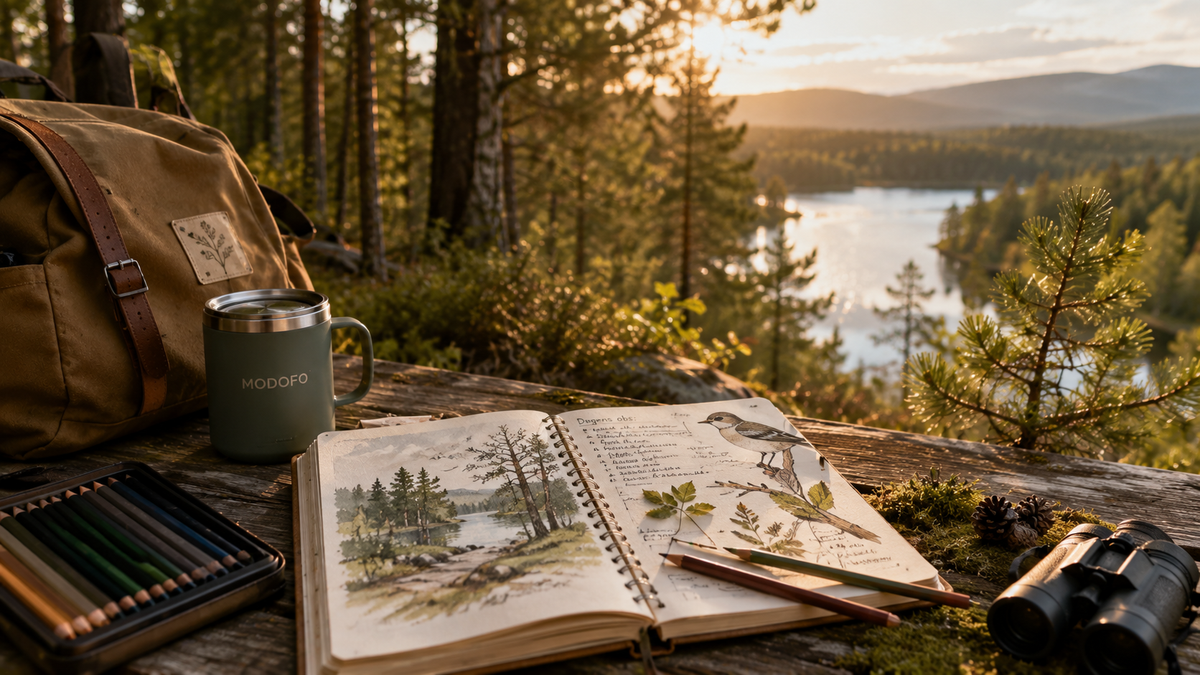
From Forest Walks to Weekend Sketches, Discover How Nature Journaling Inspires Creativity, Curiosity, and Slower Living
Introduction: Looking Beyond the Camera Lens
For many years, outdoor adventures were often measured by the number of photos we brought home.
A mountain summit.
A beautiful sunset.
A colorful bird perched on a tree.
A quiet forest path.
Today, however, more people are discovering another way to experience nature.
Instead of reaching for a smartphone, they're opening a notebook.
They pause to sketch a wildflower.
Write down the sound of birds singing.
Record the weather, the changing colors of leaves, or the feeling of walking through an unfamiliar forest.
This growing practice is known as nature journaling.
It's not about creating perfect artwork or keeping scientific records.
It's about slowing down, paying attention, and developing a deeper appreciation for the natural world.
Across Europe, nature journaling has quietly become part of a broader movement toward slower living, outdoor exploration, and intentional everyday experiences.
Sometimes, the best way to remember a journey isn't through hundreds of photos.
It's through a single handwritten page.
Why Nature Journaling Is Becoming More Popular
Nature journaling isn't a new idea.
Naturalists, explorers, artists, and travelers have carried notebooks for centuries.
What has changed is why people are returning to the habit.
Modern life is increasingly digital.
Work happens on laptops.
Conversations take place through messaging apps.
Even vacations are often planned, shared, and remembered through screens.
As technology becomes more integrated into daily life, many people are intentionally creating moments that feel more tangible.
Writing by hand.
Drawing what they see.
Collecting observations instead of notifications.
Nature journaling offers exactly that.
It combines walking, creativity, mindfulness, and exploration into one simple activity that anyone can enjoy.
No artistic experience is required.
Only curiosity.
Europe's Deep Connection with Nature
One reason nature journaling has grown across Europe is the region's long tradition of spending time outdoors.
Many European cities are designed with easy access to parks, rivers, forests, and walking trails.
In Germany, woodland paths invite weekend hikers to slow their pace beneath towering trees.
In the United Kingdom, public footpaths weave through rolling countryside, encouraging long walks across open landscapes.
Scandinavian countries embrace outdoor living throughout the year, where forests and lakes become natural extensions of everyday life.
The Alps offer breathtaking scenery that changes dramatically with every season.
Meanwhile, botanical gardens, coastal paths, and nature reserves provide peaceful escapes even near busy cities.
These places aren't visited simply to reach a destination.
They're enjoyed for the experience itself.
Nature journaling fits naturally into this culture because it encourages people to notice what they might otherwise overlook.
Every Walk Becomes an Opportunity to Observe
When carrying a notebook, a familiar walking trail suddenly feels different.
Instead of rushing toward the end of the path, attention shifts to the small details.
A butterfly resting on a flower.
Morning dew reflecting sunlight.
The texture of tree bark.
Birds gathering before sunset.
Clouds moving across the sky.
Nature journaling transforms ordinary walks into opportunities for discovery.
People often find themselves asking questions they might never have considered before.
What species is this bird?
Why are these leaves changing color first?
What flowers bloom after the rain?
Observation naturally encourages curiosity.
Curiosity turns every outdoor walk into a learning experience.
A Nature Journal Can Be Anything You Want It to Be
One of the most appealing aspects of nature journaling is that there are no rules.
Some people enjoy making detailed sketches of flowers and insects.
Others write short reflections about their weekend hikes.
Many combine simple drawings with handwritten notes.
A single page might include:
- A sketch of a mushroom discovered along the trail
- Notes about birds heard during the morning walk
- Weather observations
- The location of a favorite picnic spot
- Seasonal changes noticed over time
- Pressed leaves collected during autumn
- A memorable quote inspired by the journey
- A small map of a walking route
- Thoughts written while enjoying coffee beside a quiet lake
Every journal becomes unique because every person's experience of nature is different.
Outdoor Sketching Helps You Notice More
You don't need to be an artist to enjoy sketching outdoors.
In fact, the goal isn't to create a masterpiece.
It's to slow down long enough to truly see what's in front of you.
Drawing a leaf requires noticing its shape.
Sketching a bird encourages patience.
Illustrating a tree reveals patterns in its branches that might otherwise go unnoticed.
Even quick pencil sketches help strengthen observation.
Many people discover that they remember places more vividly after drawing them than after simply taking photographs.
The act of sketching creates a stronger connection between the experience and the memory.
Weekend Nature Walks Become Meaningful Rituals
Across Europe, weekend nature walks have become an important way to recharge after busy workweeks.
Some people visit nearby forests every Saturday morning.
Others explore new hiking trails each month.
Families spend afternoons in botanical gardens.
Friends meet at nature reserves before enjoying coffee together.
Nature journaling adds another layer to these traditions.
Instead of simply completing a walk, people return home with stories captured on paper.
Over time, journals become personal records of changing seasons, favorite places, and memorable adventures.
Looking back through previous pages becomes a journey of its own.
Creativity Often Begins Outdoors
Many writers, photographers, designers, and artists describe nature as one of their greatest sources of inspiration.
Fresh air encourages clear thinking.
Birdsong replaces background traffic.
Natural light changes throughout the day.
Quiet surroundings create space for ideas to emerge naturally.
Some of history's most creative minds developed ideas while walking outdoors.
Today, many people continue that tradition.
A notebook carried into nature often becomes more than a sketchbook.
It becomes a place where new projects begin.
A travel idea.
A poem.
A business concept.
A personal reflection.
Sometimes creativity doesn't arrive while searching for it.
It appears while watching sunlight filter through the trees.
Simple Essentials for Every Nature Walk
One reason nature journaling is so accessible is that it requires very little equipment.
A few carefully chosen essentials are often enough:
- A lightweight notebook that fits easily into a backpack
- A pencil or pen for quick sketches and notes
- Colored pencils for adding seasonal details
- A reusable water bottle to stay refreshed during longer walks
- A travel tumbler filled with coffee or tea for cooler mornings
- Comfortable walking shoes suitable for different trails
- A small backpack to keep everything organized
- Optional binoculars for observing birds and wildlife
These simple items encourage spontaneous adventures without adding unnecessary weight.
The goal is to travel lightly and enjoy the experience.
Nature Journaling Is an Activity for Every Age
Nature journaling is also wonderfully adaptable.
Children enjoy drawing insects, collecting leaves, and recording interesting discoveries.
Parents appreciate the opportunity to spend quality time outdoors together.
Students use journals to strengthen observation and creativity.
Retirees often find joy in documenting familiar walking routes throughout the changing seasons.
Even people who have never considered themselves artistic quickly discover that the notebook isn't judging their drawings.
The value lies in noticing, not perfection.
That's what makes nature journaling accessible to everyone.
Everyday Essentials That Quietly Support Every Adventure
The most memorable outdoor experiences are often supported by simple everyday items.
A trusted notebook.
A comfortable backpack.
A favorite travel mug.
Fresh water during a long walk.
Warm tea on a cool autumn morning.
These objects rarely become the focus of the adventure.
Instead, they quietly make every outing more comfortable and enjoyable.
Quality everyday essentials don't distract from nature.
They help people spend more time appreciating it.
The MODOFO GLOBAL Philosophy
At MODOFO GLOBAL, we believe that meaningful adventures don't always begin with distant travel.
Sometimes they begin at the entrance to a local park.
A forest trail you've walked many times.
A quiet lakeside bench.
A notebook waiting to capture new observations.
A warm drink accompanying an early morning walk.
Thoughtfully designed drinkware becomes part of these everyday explorations, supporting moments of curiosity, creativity, and connection with the outdoors.
Because the best journeys aren't always measured by how far you travel.
They're measured by how deeply you experience the places around you.
Conclusion: Every Walk Tells a Different Story
Nature never repeats itself.
The same forest looks different after rain.
The same trail changes with every season.
Birds migrate.
Flowers bloom.
Leaves fall.
Light shifts.
Nature journaling reminds us that there's always something new to discover—even on familiar paths.
You don't need artistic talent.
You don't need expensive equipment.
You simply need the willingness to slow down and pay attention.
One notebook.
One quiet walk.
One page at a time.
Those small observations gradually become a collection of meaningful memories that no photograph can fully replace.
In a fast-moving world, perhaps the greatest adventure is learning to notice what's already around us.
Nature journaling isn't about creating perfect sketches—it's about creating a deeper connection with every walk, every season, and every moment spent outdoors.