
Reusable water bottles have become an essential part of everyday life. From commuting to outdoor adventures, people rely on them to stay hydrated while reducing single-use plastic waste. However, one important factor is often overlooked: the material used to make the water bottle.
Different bottle materials can affect not only durability and convenience but also health and drinking safety. Some materials may react with acidic drinks, while others may release trace chemicals when exposed to heat or long-term use. This process, known as chemical leaching, occurs when substances from a container migrate into the liquid it holds.
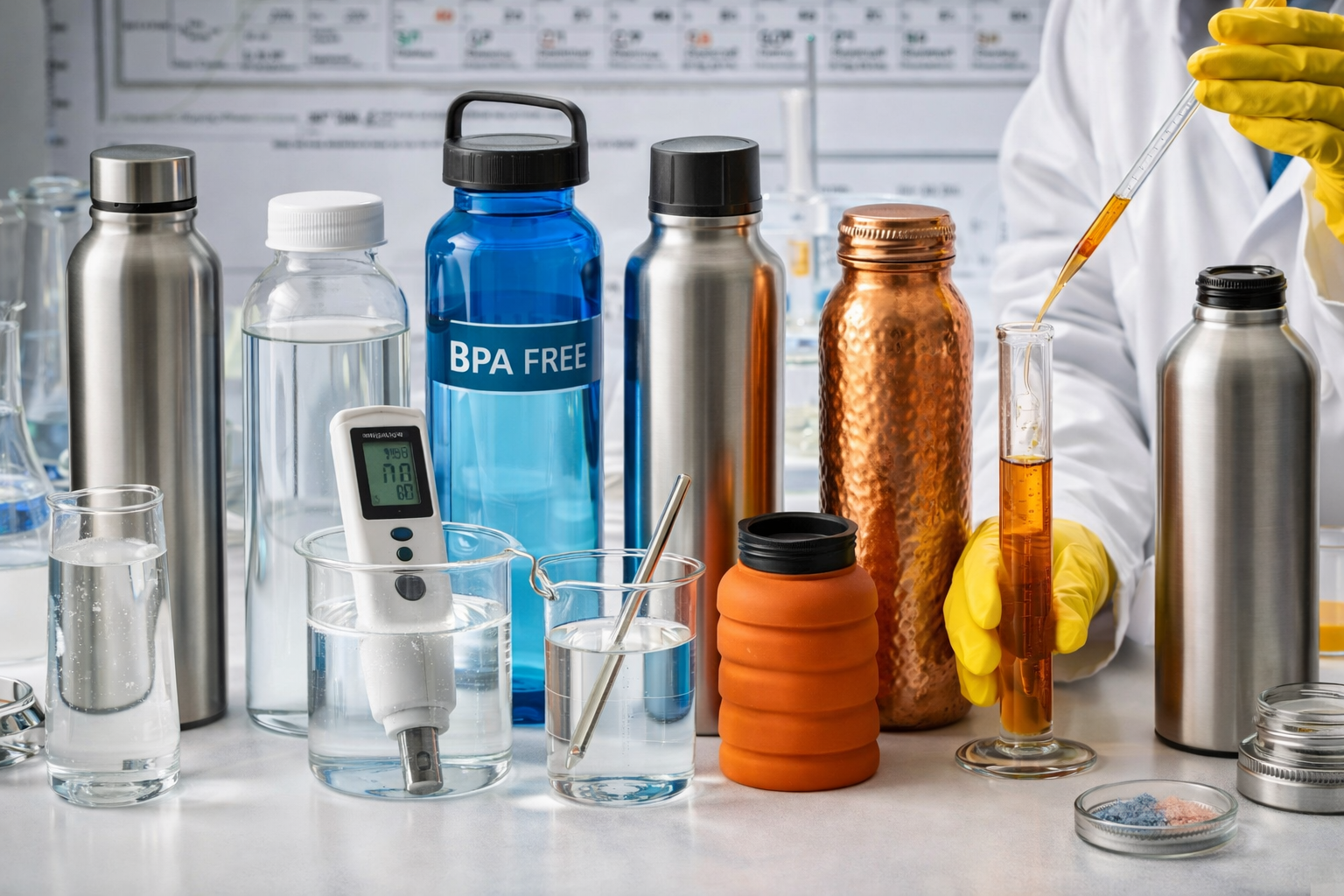
With so many options available—stainless steel, plastic, glass, aluminum, copper, silicone, and titanium—choosing the safest material can feel confusing.
In this guide, we break down the seven most common water bottle materials, explain how they compare in terms of safety and practicality, and provide a clear ranking to help you make an informed decision.
How We Evaluated Water Bottle Materials
To provide a balanced comparison, each material was evaluated based on five key criteria.
Chemical Stability
Does the material release chemicals or metals into the water over time?
Durability
How resistant is the bottle to dents, scratches, or breakage during daily use?
Heat Resistance
Can the material safely hold hot beverages without degrading?
Taste Neutrality
Does the material affect the taste or smell of the water?
Environmental Impact
Is the material recyclable or environmentally sustainable?
These criteria help determine not only which materials are the safest, but also which ones are most practical for everyday hydration.
Water Bottle Materials Safety Comparison
| Material | Chemical Safety | Durability | Heat Resistance | Taste Neutrality | Environmental Impact | Overall Safety |
|---|---|---|---|---|---|---|
| Titanium | Excellent | Excellent | Excellent | Excellent | Good | ⭐⭐⭐⭐⭐ |
| Stainless Steel | Excellent | Excellent | Excellent | Excellent | Good | ⭐⭐⭐⭐⭐ |
| Glass | Excellent | Moderate | Excellent | Excellent | Excellent | ⭐⭐⭐⭐⭐ |
| Silicone | Good | Good | Good | Moderate | Moderate | ⭐⭐⭐⭐ |
| Aluminum | Moderate | Good | Moderate | Good | Moderate | ⭐⭐⭐ |
| Plastic | Moderate | Good | Moderate | Moderate | Low | ⭐⭐⭐ |
| Copper | Moderate | Good | Moderate | Good | Moderate | ⭐⭐⭐ |
Quick Overview of Each Material
Titanium
Titanium bottles are extremely durable, lightweight, and resistant to corrosion. They are considered one of the most chemically stable materials available for drinkware.
Stainless Steel
Food-grade stainless steel bottles are widely used because they are durable, rust-resistant, and do not contain BPA.
Glass
Glass offers the highest level of chemical stability and does not interact with beverages, making it one of the safest options for drinking water.
Silicone
Food-grade silicone is flexible and heat-resistant, often used in collapsible travel bottles.
Aluminum
Aluminum bottles are lightweight but typically require an internal coating to prevent reactions with liquids.
Plastic
Plastic bottles are lightweight and inexpensive but may release small amounts of chemicals when exposed to heat or prolonged use.
Copper
Copper bottles have antimicrobial properties but may react with acidic beverages, so they are usually recommended only for plain water.
Comparison of Common Water Bottle Materials
Stainless Steel Bottles
Stainless steel is one of the most widely used materials for reusable water bottles. Most high-quality bottles are made from food-grade stainless steel, typically 18/8 or 304 stainless steel.
These alloys contain chromium and nickel, which create a protective oxide layer that helps prevent rust and corrosion.
Advantages
- Highly durable and resistant to impact
- Naturally BPA-free
- Resistant to rust and corrosion
- Does not retain odors or flavors
- Compatible with insulated bottle designs
Potential Drawbacks
Lower-quality stainless steel bottles may sometimes develop minor metallic flavors if the steel composition is poor. However, reputable brands typically avoid this issue.
Safety Rating
★★★★★
Glass Water Bottles
Glass is widely considered one of the most chemically stable materials available for food and beverage containers. It does not react with liquids and does not absorb odors or flavors.
Because of this inert nature, glass is often used in laboratory settings and food storage.
Advantages
- Completely chemical-free
- Does not absorb flavors
- Easy to clean and sterilize
- Highly resistant to staining
Potential Drawbacks
The main disadvantage is fragility. Glass bottles can break if dropped, which is why many products include protective silicone sleeves.
Safety Rating
★★★★★
Titanium Bottles
Titanium is a premium material commonly used in aerospace, medical devices, and high-performance outdoor gear. It offers exceptional strength while remaining extremely lightweight.
Titanium is also highly resistant to corrosion and does not react with most beverages.
Advantages
- Extremely strong and lightweight
- Resistant to corrosion and oxidation
- Highly stable and non-reactive
- Long lifespan
Potential Drawbacks
Titanium bottles are typically more expensive than other options, which limits their popularity among everyday users.
Safety Rating
★★★★★
Silicone Bottles
Food-grade silicone is often used for collapsible or flexible water bottles, especially in travel and outdoor activities.
Silicone is heat-resistant and relatively safe when manufactured to food-grade standards.
Advantages
- Flexible and collapsible
- Lightweight and portable
- Resistant to high temperatures
- BPA-free
Potential Drawbacks
Silicone may absorb odors over time, especially when used for flavored beverages.
Safety Rating
★★★★☆
Aluminum Bottles
Aluminum bottles are lightweight and relatively inexpensive, making them common in sports and outdoor use.
However, aluminum itself can react with acidic liquids. For this reason, most aluminum bottles are manufactured with an internal protective lining.
Advantages
- Lightweight
- Affordable
- Easy to carry
Potential Concerns
If the internal coating becomes scratched or damaged, the aluminum surface may react with beverages.
Safety Rating
★★★☆☆
Plastic Water Bottles
Plastic bottles remain one of the most common hydration options due to their low cost and light weight.
Modern reusable plastic bottles are often made from materials such as:
- Tritan
- HDPE
- PET
Many manufacturers now advertise BPA-free plastics, which aim to reduce exposure to certain chemicals.
Advantages
- Lightweight and affordable
- Durable and impact resistant
- Widely available
Potential Concerns
Some plastics may release small amounts of chemicals when exposed to heat or prolonged sunlight. Additionally, concerns about microplastics have increased in recent years.
Safety Rating
★★★☆☆
Copper Water Bottles
Copper bottles have been used in certain cultures for centuries, particularly in traditional wellness practices.
Copper naturally has antimicrobial properties, meaning it can help inhibit bacterial growth.
Advantages
- Naturally antimicrobial
- Unique aesthetic design
- Traditionally associated with health benefits
Potential Concerns
Copper can react with acidic liquids and may dissolve into beverages in high concentrations. Excessive copper intake can be harmful, so copper bottles are typically recommended for storing plain water only.
Safety Rating
★★★☆☆
Water Bottle Material Safety Ranking
Based on chemical stability, durability, and overall practicality, the materials can be ranked as follows:
- Titanium
- Stainless Steel
- Glass
- Silicone
- Aluminum
- Plastic
- Copper
While titanium offers the highest level of performance and durability, stainless steel and glass provide the best balance of safety, practicality, and affordability for everyday use.
Which Material Is Best for Daily Use?
For most people, stainless steel water bottles offer the best combination of safety and functionality.
They are durable, resistant to corrosion, and widely available in insulated designs that keep beverages hot or cold for extended periods.
Glass bottles are another excellent option for those who prioritize chemical purity and taste neutrality. However, their fragility may limit their practicality in certain environments.
Titanium bottles are arguably the most advanced option but are often reserved for outdoor enthusiasts due to their higher cost.
Tips for Choosing a Safe Water Bottle
When selecting a reusable water bottle, consider the following guidelines.
Choose Food-Grade Materials
Look for bottles made from certified food-safe materials such as stainless steel, borosilicate glass, or BPA-free plastic.
Avoid Low-Quality Products
Cheaper bottles may use lower-grade materials that degrade more quickly.
Consider Your Lifestyle
For commuting or travel, durable materials like stainless steel are often the most practical.
Clean Bottles Regularly
Proper cleaning helps prevent bacterial buildup and maintains the quality of the bottle.
Conclusion
The material of a water bottle plays a crucial role in both safety and long-term usability.
Among the most common options, stainless steel, glass, and titanium are widely regarded as the safest materials for daily drinking due to their high chemical stability and resistance to contamination.
Plastic and aluminum bottles can still be safe when properly manufactured, but they require more careful consideration of quality and usage conditions.
Ultimately, the best water bottle material depends on your lifestyle, budget, and hydration habits. Choosing a well-made bottle from a trusted material can help ensure safe and enjoyable hydration every day.
FAQ
What is the safest material for a water bottle?
Stainless steel, glass, and titanium are generally considered the safest materials because they are chemically stable and resistant to contamination.
Are stainless steel bottles safer than plastic bottles?
In most cases, stainless steel bottles are considered safer because they do not contain BPA and are less likely to degrade over time.
Do aluminum bottles contain chemicals?
Most aluminum bottles use an internal protective lining to prevent reactions with liquids. If this lining becomes damaged, the aluminum surface may interact with beverages.
Is glass better than stainless steel?
Glass offers the highest chemical stability and does not affect taste. However, stainless steel is more durable and better suited for daily use and travel.