

Introduction: It’s Not About Owning More—It’s About Using Better
For a long time, the idea of improving life was tied to adding more—more products, more upgrades, more options. But quietly, something has shifted.
A growing number of people are no longer chasing more. Instead, they are paying closer attention to what they already use every day.
Not the big, visible purchases.
Not the occasional luxuries.
But the small, repeat interactions—the objects that sit quietly in the background of daily life.
A water bottle. A bag. A kitchen knife. A workspace setup.
Individually, they seem insignificant. Collectively, they shape how a day feels.
This is where a different kind of lifestyle begins to take form—one that doesn’t revolve around accumulation, but around intentional use.
A lifestyle that values better everyday tools.
1. What Are “Everyday Tools”?
1.1 The Objects You Stop Noticing
Everyday tools are the items you use so frequently that they become invisible:
- The bottle you reach for without thinking
- The bag you carry through your routine
- The cup, the container, the small utilities of daily living
They are not exciting. They are not aspirational in the traditional sense.
But they are constant.
And that constancy is exactly what makes them powerful.
1.2 Small Frictions, Repeated Daily
When something is used once, its flaws are tolerable.
When it is used 20 times a day, those same flaws compound.
- A lid that doesn’t open smoothly
- A container that is slightly inconvenient to carry
- A tool that interrupts rather than supports your flow
None of these are deal-breakers. But over time, they create friction.
And friction, when repeated daily, becomes fatigue.
1.3 From Invisible to Intentional
The shift begins when you start noticing these micro-frictions.
Not as isolated annoyances—but as part of a pattern.
At that point, everyday tools stop being background objects and become active components of your lifestyle.
2. The Shift: From “Good Enough” to “Designed for Use”
2.1 The Old Model: Replaceable and Disposable
For years, everyday products followed a simple logic:
- Low cost
- Basic function
- Easy replacement
If something broke or felt inconvenient, the solution was simple: replace it.
This created a cycle where tools were treated as temporary.
2.2 The New Perspective: Built for Repetition
But when you begin to look at usage differently—through frequency rather than price—the equation changes.
An item used daily is no longer a casual purchase.
It becomes part of your routine infrastructure.
In this context, better tools are defined not by branding or price, but by:
- How they feel in repeated use
- How seamlessly they fit into your routine
- How little resistance they create over time
2.3 Why This Shift Is Happening Now
Several factors are driving this change:
- Increased access to product knowledge and comparisons
- Greater awareness of long-term value vs short-term cost
- A broader cultural move toward intentional living
People are no longer just buying objects.
They are evaluating experiences—especially the ones they repeat every day.
3. The Psychology of Better Tools
3.1 Reducing Friction, Increasing Flow
Every tool either adds friction or reduces it.
- A poorly designed object interrupts your rhythm
- A well-designed one disappears into it
This difference is subtle, but it compounds.
Over time, low-friction environments create a sense of ease.
High-friction ones create resistance, even when the tasks themselves are simple.
3.2 The Hidden Cost of Decision Fatigue
When tools are inconsistent or inconvenient, they force small decisions:
- Should I use this or something else?
- Is this worth the effort right now?
Individually, these decisions are minor.
But repeated throughout the day, they drain attention.
Better tools reduce this noise.
They make the “right choice” the easiest one.
3.3 Identity, Without Intention
Interestingly, the tools people use often reflect how they see themselves.
Not in an obvious or performative way, but subtly:
- Someone who values efficiency
- Someone who prioritizes health
- Someone who prefers simplicity
Everyday tools become quiet signals of these priorities.
4. The Lifestyle Behind It
This is where tools move beyond objects and become part of a broader way of living.
4.1 Consistency Over Intensity
This lifestyle does not rely on extreme habits or bursts of motivation.
Instead, it focuses on consistency:
- Small actions, repeated daily
- Systems that support those actions
Better tools make consistency easier.
4.2 Systems Over Hacks
There is a difference between optimizing moments and designing systems.
- Hacks solve temporary problems
- Systems reduce the need for constant adjustment
Everyday tools are part of these systems.
They don’t just help you act—they shape how often and how easily you do.
4.3 Long-Term Thinking
The value of a tool is not measured at purchase, but over time.
- How does it perform after months of use?
- Does it still feel intuitive?
- Does it continue to support your routine?
This perspective shifts focus from cost to lifetime usefulness.
5. Where Better Tools Make the Biggest Difference
5.1 Hydration and Daily Health
Few examples are as clear as something as simple as a water bottle.
Hydration is not complicated in theory.
But in practice, it depends heavily on behavior.
And behavior is influenced by:
- Accessibility
- Convenience
- Comfort
A well-designed bottle doesn’t just hold water.
It makes drinking water easier, more frequent, and more natural.
Over time, that changes the habit itself.
5.2 Work and Focus
The tools you use while working—whether physical or environmental—directly affect focus.
- A comfortable setup reduces distraction
- A well-organized space lowers cognitive load
These aren’t dramatic improvements.
But they are consistent ones.
5.3 Movement and Mobility
What you carry, and how you carry it, shapes daily movement.
- Weight distribution
- Accessibility
- Ease of use
Better tools reduce unnecessary effort.
5.4 Home and Routine
At home, tools define the flow of everyday life.
- Cooking becomes easier or more complicated
- Cleaning becomes seamless or delayed
- Routines become smooth or fragmented
Again, the difference is rarely dramatic in a single moment.
But over time, it becomes noticeable.
6. Why Most People Overlook This
6.1 The “Good Enough” Threshold
If something works, even imperfectly, it is rarely questioned.
This creates a baseline where improvement is not considered necessary.
6.2 Price as the Primary Filter
When decisions are driven mainly by price, usage is often overlooked.
But for high-frequency items, this approach is misleading.
6.3 Lack of Awareness
Perhaps the biggest reason is simple:
Most people have never connected the quality of their tools with the quality of their daily experience.
Once that connection becomes clear, priorities begin to shift.
7. The Economics of Better Everyday Tools
7.1 Cost Per Use
A tool used daily quickly reduces its cost per use.
Even a higher upfront investment becomes minimal over time.
7.2 Replacement Cycles
Lower-quality tools often require:
- Frequent replacement
- Additional purchases
- Compounding inconvenience
This creates hidden costs that are rarely considered upfront.
7.3 Long-Term Value
Better tools are not always about saving money.
They are about:
- Saving time
- Reducing friction
- Improving consistency
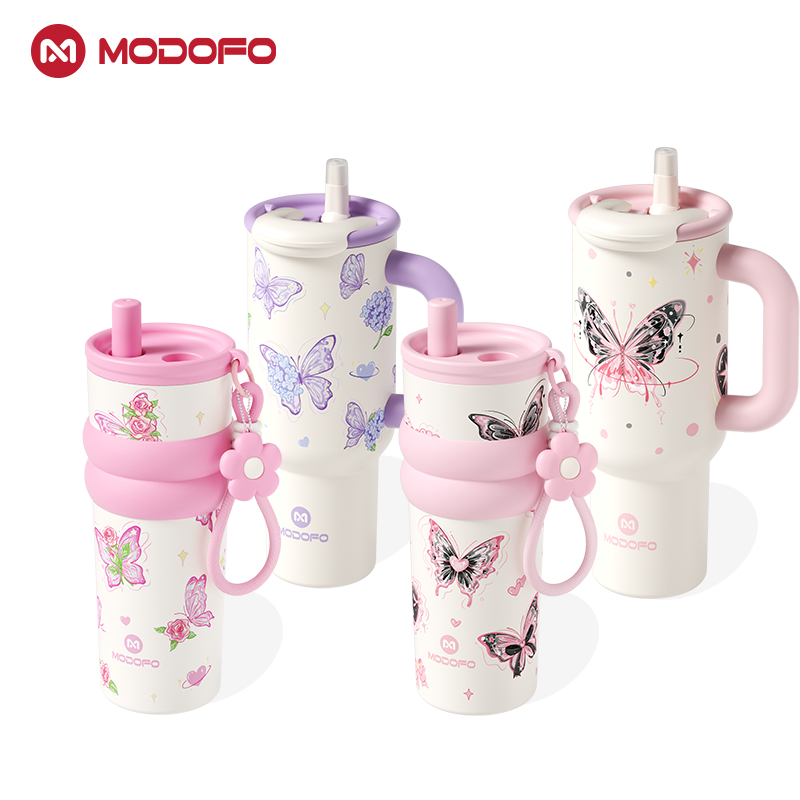
8. A Closer Look: Drinkware as a Daily System
Among all everyday tools, drinkware offers one of the clearest examples of how design influences behavior.
8.1 More Than a Container
A bottle is not just something you drink from.
It determines:
- How often you drink
- How convenient it feels
- Whether hydration becomes a habit or an afterthought
8.2 Design That Shapes Behavior
Small design differences matter:
- A straw encourages frequent sipping
- A wide opening encourages occasional chugging
- Insulation affects temperature preference and consistency
These details influence usage more than intention alone.
8.3 From Object to System
When designed well, a simple tool becomes part of a system.
It supports:
- Daily hydration
- Routine consistency
- Environmental adaptation
In that sense, it stops being just a product—and becomes part of how you live.
9. Building a Lifestyle Around Better Tools
9.1 Start With One High-Impact Item
Change does not require replacing everything.
It often starts with a single upgrade:
- Something you use every day
- Something that currently creates friction
9.2 Upgrade Gradually
As awareness grows, other improvements follow naturally.
Not through impulse, but through observation.
9.3 Focus on Daily Impact
The most valuable upgrades are not the most impressive ones.
They are the ones you interact with repeatedly.
10. The Bigger Insight: Tools Shape Behavior
At a certain point, a pattern becomes clear:
- Tools influence actions
- Actions shape habits
- Habits define lifestyle
This chain is often invisible—but always present.
The tools you use are not neutral.
They are active participants in how your day unfolds.
Conclusion: A Quiet Upgrade That Changes Everything
There is nothing dramatic about choosing better everyday tools.
No immediate transformation.
No visible milestone.
But over time, the effect becomes undeniable.
- Tasks feel smoother
- Routines feel more natural
- Decisions feel simpler
And gradually, without forcing change, your lifestyle begins to shift.
A better life is rarely built on big changes.
It is built on better things you use, every single day.