
Understanding Heat, Humidity, Urban Living, and the Hidden Science Behind Restless Nights
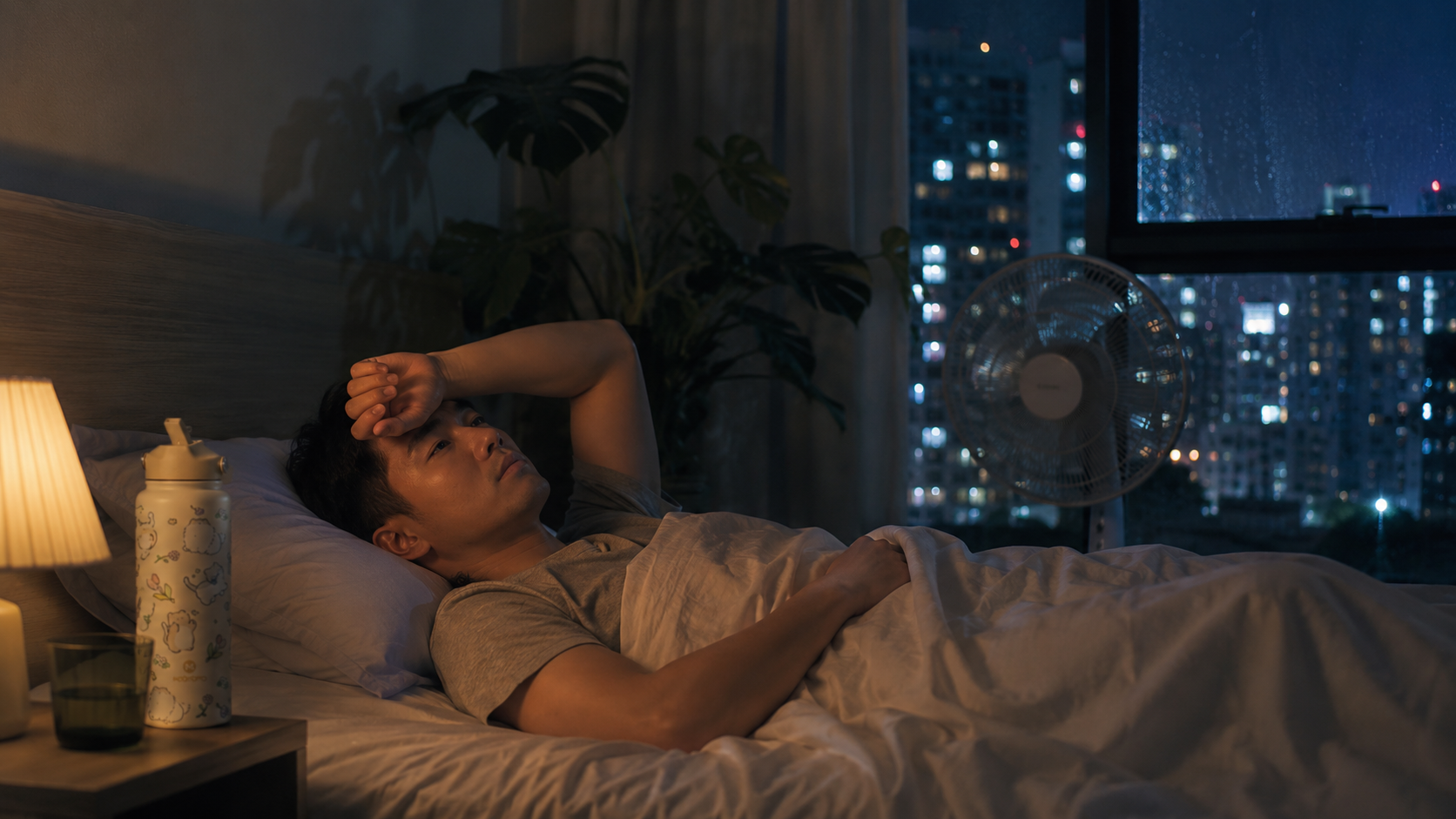
Hot weather changes the way people live.
It changes how cities feel, how buildings hold heat, how people move throughout the day, and perhaps most importantly, how people sleep at night.
Many people experience the same situation every summer or during long humid seasons:
- feeling exhausted before bed
- lying awake despite being tired
- waking up repeatedly during the night
- sweating during sleep
- feeling unrested the next morning
At first glance, the explanation seems simple:
“It’s just too hot.”
But in reality, poor sleep during hot weather is influenced by far more than temperature alone.
Humidity, airflow, dehydration, urban heat retention, artificial cooling, stress, and even modern lifestyle habits all affect how the body enters recovery mode at night.
In many tropical and high-density cities, nighttime no longer feels like true recovery time.
Instead, the body continues fighting the environment long after the sun goes down.
This article explores why hot weather makes sleep difficult, why humid nights feel especially exhausting, and how modern living environments may quietly interfere with the body’s natural ability to rest.
Your Body Needs to Cool Down Before Sleeping
One of the most important biological processes related to sleep is body temperature regulation.
Before falling asleep, the human body naturally lowers its core temperature.
This process signals the nervous system that it is safe to enter deeper stages of rest.
In other words:
Cooling down is part of falling asleep.
This is why cooler nighttime environments often feel more relaxing.
But during hot weather, especially in humid climates, the body struggles to release heat efficiently.
As a result, the nervous system remains more alert than it should be.
The body continues trying to regulate temperature instead of fully transitioning into recovery mode.
This creates a strange feeling many people recognize:
You feel tired mentally, but your body still feels awake.
Why Heat Makes Falling Asleep Feel Slower
When temperatures remain high at night, several things happen simultaneously:
- heart rate may stay elevated
- sweating continues
- skin temperature remains warm
- breathing may feel heavier
- movement during sleep increases
The body essentially keeps working when it should be resting.
This is why people often toss and turn more during hot nights.
The brain is searching for comfort.
The body is searching for balance.
And sleep becomes lighter and easier to interrupt.
Deep Sleep Suffers More Than People Realize
Many people eventually fall asleep in hot weather.
The real issue is sleep quality.
Research and sleep observations increasingly suggest that excessive heat may reduce deeper sleep stages, including slow-wave sleep and REM sleep.
These stages are associated with:
- physical recovery
- memory consolidation
- nervous system restoration
- emotional regulation
When sleep becomes fragmented by heat, people may technically spend enough hours in bed but still wake up feeling exhausted.
This explains why hot weather fatigue often accumulates over several days.
Humidity Makes Hot Nights Feel Much Worse
Temperature alone does not fully explain sleep discomfort.
Humidity is often the hidden factor.
In tropical environments, humidity prevents sweat from evaporating efficiently.
Sweat evaporation is one of the body’s primary cooling systems.
When moisture stays trapped on the skin instead of evaporating, the body struggles to release heat naturally.
This creates the familiar sensations of:
- stickiness
- heaviness
- damp skin
- overheating
- restlessness
Even relatively moderate temperatures can feel oppressive when humidity is high.
This is one reason why a dry 30°C environment may feel more tolerable than a humid 27°C room.
Why Tropical Cities Feel Hot Even at Night
Modern urban environments intensify nighttime heat.
Cities absorb and store heat throughout the day through:
- roads
- concrete
- glass buildings
- vehicles
- infrastructure
This phenomenon is commonly referred to as the Urban Heat Island effect.
At night, these surfaces slowly release trapped heat back into the environment.
As a result, many cities remain significantly warmer after sunset than surrounding rural areas.
In dense tropical cities, the problem becomes even more noticeable because airflow is often reduced by:
- tall buildings
- limited green space
- enclosed urban layouts
The air feels stagnant.
The body never fully cools down.
Sometimes Airflow Matters More Than Temperature
One overlooked factor in sleep comfort is air movement.
Many people focus only on lowering temperature.
But airflow strongly affects how humans perceive comfort.
For example:
A room with moderate warmth and strong natural airflow may feel significantly more comfortable than a colder room with stale, unmoving air.
The body responds psychologically and physically to moving air because it improves evaporation and cooling sensation.
This is why fans sometimes improve sleep more effectively than excessively cold air conditioning.
Why Air Conditioning Doesn’t Always Solve the Problem
Air conditioning can absolutely improve sleep comfort.
But many people notice another issue:
After several hours, the room begins feeling uncomfortable again.
Some wake up feeling:
- dry
- stiff
- cold
- congested
- dehydrated
This happens because “cold” is not always the same as “comfortable.”
Overcooling Can Stress the Body
Extremely cold indoor environments may create their own physical strain.
Overnight exposure to aggressive cooling may contribute to:
- muscle tension
- dry throat
- nasal irritation
- skin dryness
- disrupted sleep cycles
Many people also wake up during early morning hours because room temperature changes faster than the body can comfortably adapt.
The nervous system becomes reactive again.
The body restarts temperature regulation.
Sleep becomes lighter.
The Problem Is Often Environmental Instability
Modern living environments constantly expose people to environmental switching.
During the day:
- outdoor heat
- transportation systems
- office air conditioning
- artificial lighting
- screen exposure
- urban stress
At night:
- trapped indoor heat
- inconsistent cooling
- dry air
- interrupted airflow
The body rarely experiences stable recovery conditions.
This is one reason modern fatigue feels cumulative.
People are not simply tired from one event.
They are tired from continuous environmental adaptation.
Modern Life Quietly Makes Sleep Harder
Heat alone is not the entire story.
Modern lifestyles also interfere with nighttime recovery.
Many people spend entire days overstimulated through:
- work pressure
- notifications
- screens
- commuting
- indoor environments
- irregular schedules
By nighttime, the nervous system may already be overloaded before sleep even begins.
Then hot weather adds additional physical stress.
The result is a body that struggles to fully relax.
Why Hot Weather Makes Mental Fatigue Feel Worse
Interestingly, heat affects not only physical comfort but also mental energy.
Studies and environmental psychology observations suggest that excessive heat may contribute to:
- irritability
- lower concentration
- slower cognitive performance
- mood instability
- reduced patience
After an entire day spent managing heat exposure, the brain itself feels fatigued.
This mental exhaustion often carries into nighttime restlessness.
Dehydration Quietly Affects Sleep Quality
One of the most overlooked sleep disruptors during hot weather is dehydration.
People lose fluids throughout the day through:
- sweating
- breathing
- dry indoor air
- heat exposure
Yet many people do not fully rehydrate before bed.
Even mild dehydration may contribute to:
- dry mouth
- nighttime waking
- headaches
- elevated heart rate
- discomfort during sleep
In air-conditioned environments, dehydration becomes even easier to overlook because people feel less sweaty while still losing moisture gradually.
Why Nighttime Hydration Habits Matter
Hydration is not just about drinking large amounts of water.
It is also about consistency and accessibility.
People are more likely to stay hydrated when water is:
- nearby
- cold or refreshing
- easy to drink
- part of a calming routine
This is why nighttime hydration habits increasingly become part of modern wellness routines.
Some people keep insulated tumblers or bedside bottles nearby not simply for convenience, but because easy access encourages more consistent hydration without interrupting rest.
Small environmental improvements often influence behavior more than people realize.
Warm Drinks Can Sometimes Improve Relaxation
Although cold drinks help cool the body, warm beverages may also support relaxation psychologically.
Many cultures traditionally associate nighttime routines with:
- herbal tea
- warm tea rituals
- calming drinks
- slower evening habits
The effect is not necessarily magical.
Rather, the routine itself signals the body to slow down.
This reflects a broader lifestyle trend:
People increasingly seek evening environments that reduce stimulation instead of adding more to it.
Small Environmental Changes Can Improve Sleep
Improving sleep during hot weather often depends less on extreme solutions and more on reducing environmental stress.
1. Improve Airflow
Fans, open airflow pathways, and cross ventilation often help the body cool more naturally.
2. Reduce Indoor Heat Retention
Curtains, blinds, and limiting daytime heat exposure help prevent rooms from storing excess warmth.
3. Avoid Overcooling
Moderate cooling usually feels more sustainable than extremely cold environments.
4. Stay Hydrated Throughout the Day
Hydration works best proactively rather than reactively.
Waiting until bedtime to drink water may be too late.
5. Reduce Evening Stimulation
Lower lighting, quieter environments, and reduced screen exposure may help the nervous system transition toward rest.
6. Choose Breathable Materials
Lightweight fabrics, breathable bedding, and moisture-friendly textiles often improve nighttime comfort significantly.
Why Sleep Problems During Hot Weather May Become More Common
Climate trends and urbanization suggest that nighttime heat exposure may continue increasing globally.
Many cities now experience:
- warmer nights
- higher humidity
- reduced airflow
- longer heat periods
At the same time, modern populations spend more time indoors under artificial climate systems.
The result is a growing disconnect between human biological rhythms and built environments.
Sleep quality is increasingly becoming a modern wellness issue rather than simply a personal habit issue.
Sleep Is Becoming Part of Lifestyle Design
In recent years, more people have begun treating sleep as part of overall lifestyle quality.
This includes attention toward:
- bedroom atmosphere
- lighting
- airflow
- hydration habits
- evening routines
- sensory comfort
People are slowly realizing that recovery is not passive.
The environment surrounding sleep matters deeply.
A comfortable night is not necessarily the coldest one.
It is the one where the body no longer feels forced to fight the environment.
Final Thoughts
Hot weather makes sleep difficult because the body struggles to fully cool, regulate moisture, and transition into recovery mode.
But temperature is only part of the story.
Humidity, airflow, dehydration, urban heat retention, indoor climate systems, stress, and modern living patterns all contribute to nighttime fatigue.
In many modern cities, the body spends the entire day adapting to environmental pressure.
By nighttime, true recovery becomes harder than people expect.
Improving sleep during hot weather is often less about searching for one perfect solution and more about creating an environment where the body finally feels stable, supported, and calm again.
Sometimes better sleep begins not with lowering the temperature dramatically, but with reducing the number of things the body must continuously fight against.
References & Perspective Notice
This article was created as a lifestyle and environmental wellness discussion based on publicly available information, environmental observations, sleep-related educational resources, and general wellness research topics.
Reference directions and publicly discussed concepts may include:
- Sleep foundation and sleep environment discussions
- Urban Heat Island research
- Humidity and thermal comfort studies
- Hydration and environmental fatigue topics
- Indoor climate and airflow observations
- General wellness and recovery lifestyle research
This article does not constitute medical advice, diagnosis, or treatment recommendations.
The perspectives and interpretations presented are intended for informational and lifestyle discussion purposes only and may include subjective observations and generalized wellness viewpoints.
Readers experiencing chronic sleep problems, severe fatigue, breathing difficulties, or other persistent health concerns should consult qualified healthcare professionals or sleep specialists for personalized guidance.