

Mengapa Botol Minum yang Tepat Penting untuk Anak-Anak
Bagi orang tua, hidrasi bukan hanya tentang memberi anak air—tetapi juga tentang memberi mereka air yang aman . Botol air anak yang digunakan anak Anda setiap hari dapat memengaruhi kesehatan dan kebiasaan mereka. Bahan yang salah dapat membuat mereka terpapar bahan kimia atau bakteri berbahaya, sementara botol yang dipilih dengan baik akan menumbuhkan kemandirian dan kesadaran lingkungan seumur hidup.
1. Utamakan Keselamatan — Memahami BPA dan Risikonya
BPA (Bisphenol A) adalah senyawa sintetis yang digunakan dalam berbagai jenis plastik untuk membuatnya kaku dan transparan. Namun, beberapa penelitian menunjukkan bahwa BPA dapat larut ke dalam minuman , terutama ketika botol terpapar panas, goresan, atau cairan asam.
Menurut Otoritas Keamanan Pangan Eropa (EFSA, 2023) , bahkan paparan BPA pada tingkat rendah pun dapat mengganggu fungsi endokrin, memengaruhi keseimbangan hormon dan berpotensi berdampak pada pertumbuhan dan metabolisme anak.
Demikian pula, penelitian dari Harvard TH Chan School of Public Health mengaitkan paparan BPA dengan peningkatan risiko perubahan perilaku dan perubahan sistem kekebalan tubuh pada perkembangan awal.
Badan Pengawas Obat dan Makanan AS (FDA) telah melarang penggunaan BPA dalam botol bayi dan gelas minum sejak tahun 2012, memperkuat kesadaran global akan risikonya.
Alternatif yang Lebih Aman:
- Plastik Tritan™ — Plastik generasi baru bebas BPA, sangat transparan, tahan lama, dan tahan panas.
- Baja Tahan Karat 316 — Logam kelas makanan, tahan korosi, tidak beracun, dan ideal untuk desain yang dapat digunakan kembali.
2. PP (Polipropilena) — Plastik yang “Lebih Aman tetapi Umur Pakainya Lebih Pendek”
PP, atau Polipropilen , adalah bahan umum lain yang digunakan untuk botol bayi. Bahan ini ringan, fleksibel, dan relatif tahan panas. Namun, PP dapat mengalami degradasi setelah berulang kali dicuci dengan mesin pencuci piring atau terpapar sinar UV, yang menyebabkan retakan mikro yang menjadi tempat berkembang biaknya bakteri.
Meskipun PP secara teknis aman dan sering diberi label sebagai bahan yang aman untuk makanan, bahan ini kurang tahan lama dibandingkan baja tahan karat atau Tritan. Seiring waktu, perubahan warna atau penyerapan bau dapat terjadi—menunjukkan bahwa sudah saatnya mengganti botol.
Tips: Pilih botol PP hanya dari merek bersertifikat yang memiliki persetujuan kontak makanan dari FDA atau EFSA dan ganti setiap 6–12 bulan.

3. Desain yang Lebih dari Sekadar Lucu — Mendorong Kebiasaan Hidrasi
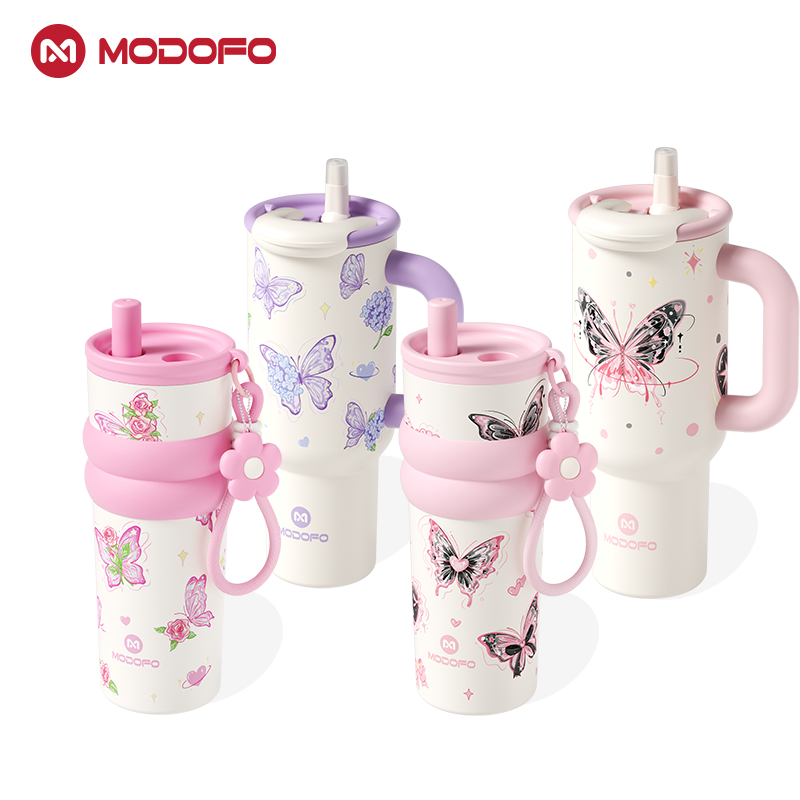
Anak-anak merespons secara visual. Botol air dengan warna cerah, gambar hewan, atau motif kartun dapat memotivasi mereka untuk sering minum. Namun, desain juga harus mendukung kemandirian : pegangan ergonomis, struktur ringan, dan tutup sedotan anti tumpah sangat berpengaruh.
Orang tua sebaiknya mencari botol yang mudah dibongkar dan dibersihkan , untuk mencegah pertumbuhan bakteri.
Untuk balita, kapasitas 350–400ml ideal, sedangkan anak yang lebih besar mungkin lebih menyukai 500ml–600ml .
4. Daya Tahan dan Kebersihan
Anak-anak sering menjatuhkan barang. Itulah mengapa daya tahan dan kebersihan berjalan beriringan. Botol stainless steel mungkin tahan bertahun-tahun, sementara botol Tritan dapat tahan terhadap penggunaan kasar tanpa retak atau bau.
Beberapa merek (seperti MODOFO) menerapkan lapisan anti-mikroba pada tutup dan sedotan, mengurangi kemungkinan pertumbuhan jamur—sentuhan praktis untuk iklim tropis.
5. Pilihan Ramah Lingkungan Dimulai Sejak Dini
Polusi plastik telah menjadi salah satu krisis lingkungan paling mendesak di planet ini. Menurut UNEP (Program Lingkungan Perserikatan Bangsa-Bangsa, 2024) , diperkirakan 11 juta ton sampah plastik masuk ke lautan setiap tahun, membentuk mikroplastik yang mengancam ekosistem laut.

Botol yang dapat digunakan kembali dapat membantu anak-anak memahami keberlanjutan sejak usia dini. Alih-alih plastik sekali pakai, botol yang dapat digunakan kembali dan bebas BPA mengurangi limbah dan mendorong kesadaran lingkungan.
Memilih material yang tahan lama seperti baja tahan karat atau Tritan berarti lebih sedikit penggantian dan lebih sedikit limbah seiring waktu.
“Setiap kali mengisi ulang botol yang dapat digunakan kembali, kita menyelamatkan planet ini dari sampah plastik lainnya.”
Tabel Perbandingan Material
| Jenis Material | Bebas BPA | Daya tahan | Berat | Kemudahan Pembersihan | Kesehatan dan Keselamatan | Dampak Lingkungan |
|---|---|---|---|---|---|---|
| Plastik Tritan | ✅ Ya | ★★★★☆ | Sangat Ringan | Mudah | Bagus sekali | Dapat didaur ulang, emisi rendah |
| Baja Tahan Karat 316 | ✅ Ya | ★★★★★ | Sedang | Mudah | Bagus sekali | Tahan lama, dapat digunakan kembali |
| Plastik PP (Dasar) | ⚠️ Seringkali Ya | ★★☆☆☆ | Lampu | Sedang | Aman dalam jangka pendek | Sedang — sering diganti |
| PVC / Plastik Murah | ❌ Tidak | ★☆☆☆☆ | Lampu | Miskin | Tidak aman | Polusi tinggi |
Refleksi Akhir
Botol air anak yang ideal menyeimbangkan kesehatan, keamanan, dan keberlanjutan . Botol yang berkualitas, bebas BPA, dan ramah lingkungan akan menumbuhkan kebiasaan minum anak Anda sekaligus rasa tanggung jawab mereka terhadap lingkungan.
Dari desain penuh warna yang membangkitkan kegembiraan hingga material yang melindungi kesehatan, botol yang tepat lebih dari sekadar aksesori—ini adalah komitmen harian untuk kesejahteraan dan planet yang lebih bersih.