
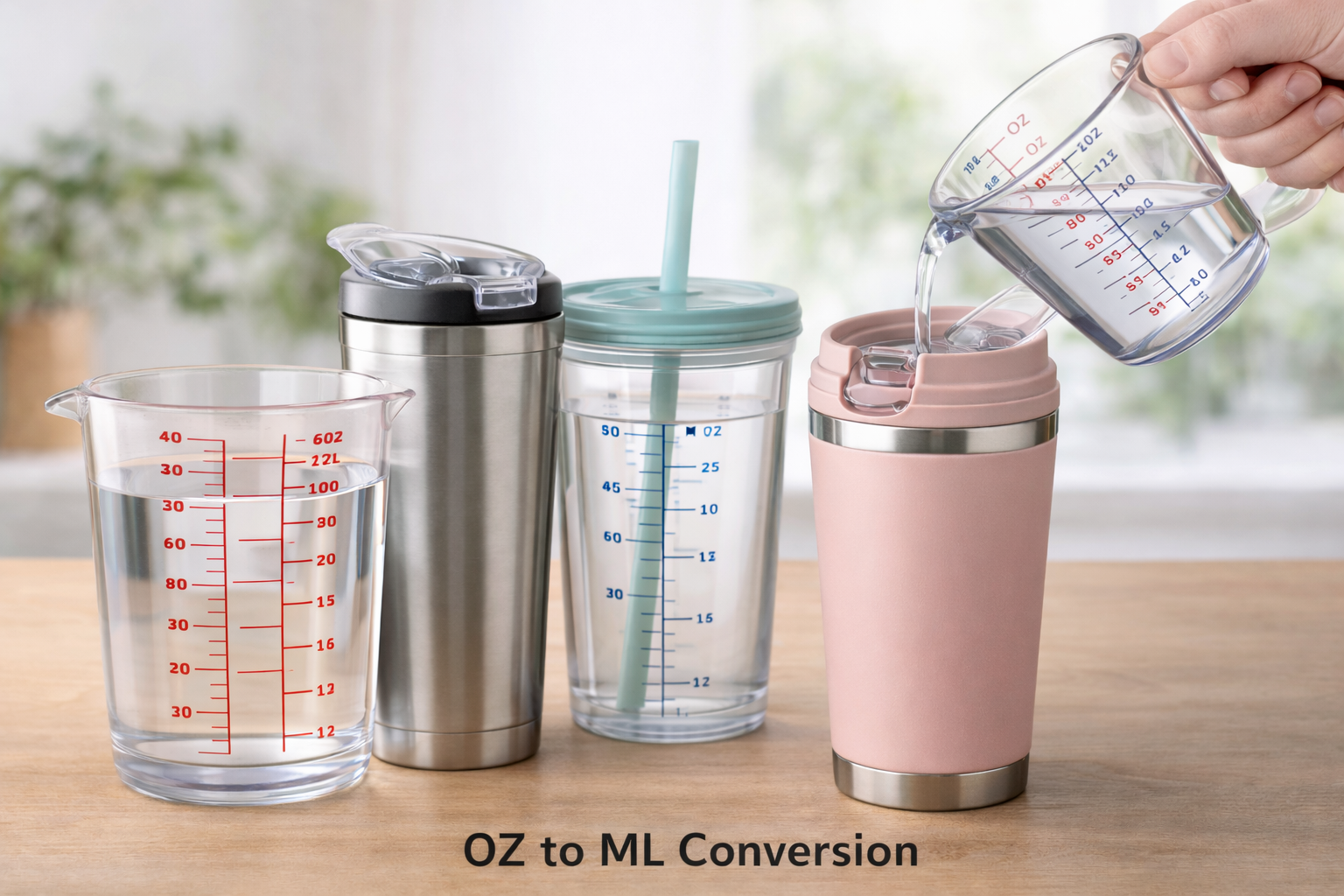
Di pasar peralatan minum global, pelabelan kapasitas tampak sederhana di permukaan. Sebuah angka dan satuan. Namun di balik detail kecil itu terdapat serangkaian keputusan kompleks yang melibatkan kebiasaan regional, psikologi persepsi, realitas manufaktur, dan strategi merek.
Bagi merek global, memilih antara OZ (ons cairan) dan ML (mililiter) bukanlah soal matematika. Ini soal komunikasi. Label kapasitas membentuk pemahaman konsumen tentang suatu produk sebelum mereka menyentuhnya, dan pemahaman tersebut sangat bervariasi di berbagai pasar.
Mengapa Label Kapasitas Lebih Penting daripada yang Terlihat
Konsumen jarang mengukur cairan saat minum. Mereka mengandalkan intuisi, kebiasaan, dan isyarat visual. Label kapasitas berfungsi sebagai jalan pintas yang memberi tahu pengguna apa yang diharapkan.
Angka yang familiar membangun kepercayaan diri. Satuan yang tidak familiar menciptakan gesekan.
Bagi sebuah merek global, satu produk mungkin dijual di Amerika Utara, Eropa, Asia Tenggara, dan pasar online secara bersamaan. Tantangannya bukanlah pada akurasi konversi unit, melainkan pada bagaimana membuat produk tersebut terasa cocok di mana pun.
Itulah mengapa OZ dan ML terus hidup berdampingan.
OZ dan ML: Dua Sistem Pengukuran, Satu Realitas
OZ dan ML mewakili dua tradisi pengukuran yang berbeda.
- OZ berasal dari sistem imperial dan sangat melekat dalam bahasa sehari-hari di Amerika Serikat.
- ML termasuk dalam sistem metrik dan mendominasi di sebagian besar dunia.
Dalam peralatan minum, kedua satuan tersebut menggambarkan volume , bukan berat. Namun, konsumen sering menafsirkannya secara berbeda.
OZ cenderung terasa informal, berorientasi pada gaya hidup, dan berbasis pengalaman.
ML terasa teknis, terstandarisasi, dan presisi.
Tidak ada interpretasi yang benar secara objektif. Keduanya dipelajari secara budaya.
Merek global tidak mencoba untuk memperbaiki persepsi ini. Mereka merancang produk dengan mempertimbangkan persepsi tersebut.
Ekspektasi Regional Membentuk Pilihan Pelabelan
Amerika Utara: OZ sebagai Bahasa Default
Di pasar AS, OZ tidak hanya diterima; tetapi juga diharapkan.
Ukuran cangkir seperti 12oz, 20oz, atau 40oz langsung dipahami. Ukuran-ukuran ini terhubung langsung dengan budaya kopi, toko serba ada, dan minuman dalam kemasan besar. Penggunaan ML saja di pasar ini seringkali menimbulkan kebingungan atau keraguan.
Oleh karena itu, merek yang menargetkan Amerika Utara biasanya:
- Gunakan OZ sebagai satuan utama.
- Sesuaikan kapasitas dengan konvensi ukuran yang sudah dikenal.
- Hindari penggunaan metrik yang sama persis dalam teks yang ditujukan untuk konsumen.
ML mungkin masih muncul, tetapi jarang sebagai unit utama.
Eropa dan Sebagian Besar Asia: ML sebagai Standar
Di wilayah yang didominasi sistem metrik, ML adalah pilihan yang tepat. Konsumen tumbuh menggunakan pengukuran metrik dalam kehidupan sehari-hari, pendidikan, dan kemasan di berbagai kategori.
Di sini, ML berkomunikasi:
- Standardisasi
- Ketepatan
- Keselarasan peraturan
Penggunaan OZ saja di pasar-pasar ini dapat terasa asing atau bahkan tidak dapat dipercaya. Merek beradaptasi dengan mengedepankan ML dan, bila perlu, menambahkan OZ sebagai referensi sekunder.
Pasar Transisi dan Campuran
Beberapa wilayah berada di antara dua sistem, terutama pasar yang sangat dipengaruhi oleh produk impor atau perdagangan elektronik internasional.
Dalam kasus ini, pelabelan ganda menjadi kompromi strategis. Menampilkan kedua unit mengurangi beban kognitif dan memberi sinyal bahwa merek tersebut memahami audiens global.
Pelabelan Ganda sebagai Alat Strategis
Pelabelan ganda bukan hanya tentang inklusi. Urutan, ukuran, dan penempatan unit sangat penting.
Merek membuat pilihan yang disengaja tentang:
- Unit mana yang muncul pertama?
- Apakah kedua unit tersebut sama-sama menonjol
- Bagaimana angka-angka tersebut diseimbangkan secara visual.
Penggunaan huruf OZ sebagai huruf awal menandakan keselarasan dengan gaya hidup dan penggunaan sehari-hari.
Penggunaan istilah "ML" sebagai penanda kejelasan teknis dan kepatuhan terhadap standar.
Bahkan tipografi pun berperan. Unit yang terlihat lebih dominan pada label secara halus mengkomunikasikan prioritas.
Pembulatan, Angka yang Rapi, dan Nilai yang Dirasakan
Konversi tepat antara ons (oz) dan mililiter (ml) hampir selalu menghasilkan angka yang kurang tepat. Misalnya, 20 ons tidak dapat dikonversi menjadi angka ml yang tepat.
Merek global jarang menampilkan angka yang persis sama. Sebaliknya, mereka membulatkan angka tersebut.
Ini bukan penipuan. Ini adalah rancangan.
Angka yang jelas lebih mudah diingat, lebih mudah dibandingkan, dan terasa lebih terarah. Gelas berlabel 20oz lebih mudah dipahami daripada gelas berlabel 591ml, meskipun yang terakhir lebih presisi.
Pelabelan kapasitas berkaitan dengan kemudahan penggunaan yang dirasakan , bukan akurasi laboratorium.
Kendala Manufaktur dan Desain di Balik Label
Aspek lain yang sering diabaikan adalah realitas manufaktur.
Sebagai contoh, cangkir berinsulasi memiliki:
- Ketebalan dinding yang bervariasi
- Perbedaan volume internal yang disebabkan oleh desain isolasi
- Toleransi kecil yang bervariasi antar batch produksi
Oleh karena itu, banyak merek menggunakan kapasitas nominal daripada volume terukur yang tepat. Label tersebut mewakili kategori, bukan wadah yang terkalibrasi.
Fleksibilitas ini memungkinkan merek untuk mempertahankan konsistensi di berbagai pasar tanpa perlu mendesain ulang produk itu sendiri.
Pertimbangan Regulasi Tanpa Istilah Hukum yang Rumit
Berbagai wilayah memberlakukan persyaratan yang berbeda untuk pengungkapan satuan. Beberapa wilayah mewajibkan satuan metrik, yang lain memperbolehkan satuan imperial, dan beberapa wilayah mengharapkan keduanya.
Alih-alih menciptakan produk terpisah, merek global sering beradaptasi melalui:
- Penyesuaian kemasan
- Lapisan label
- Tata letak cetak khusus pasar
Tujuannya adalah kepatuhan tanpa memecah lini produk. Merek-merek yang sukses memperlakukan pelabelan sebagai elemen modular, bukan sebagai fitur tetap.
Pelabelan Kapasitas sebagai Penentuan Posisi Merek
Label kapasitas juga mengkomunikasikan maksud merek.
Merek premium seringkali:
- Gunakan pelabelan yang terkendali dan percaya diri.
- Hindari membanjiri produk dengan terlalu banyak angka.
- Percayalah pada pengguna untuk memahami konteksnya.
Merek-merek pasar massal cenderung:
- Tekankan kapasitas secara lebih terlihat.
- Gunakan tolok ukur yang sudah dikenal
- Menyoroti nilai melalui persepsi ukuran.
Dalam kedua kasus tersebut, pilihan unit memperkuat citra merek.
Pola Umum di Antara Merek Peralatan Minum Global
Di seluruh industri, beberapa pola muncul secara konsisten:
- Strategi produk tunggal, banyak label.
- Adaptasi regional tanpa mengubah desain inti.
- Label kapasitas diselaraskan dengan skenario penggunaan, bukan sekadar volume.
Merek-merek yang paling sukses tidak mencari satu standar universal. Mereka mencari kejelasan lokal dalam kerangka global.
Masa Depan Pelabelan OZ dan ML
Seiring terus berkembangnya e-commerce, pemahaman kapasitas semakin banyak terjadi di layar daripada di tangan.
Daftar digital memungkinkan:
- Penjelasan unit ganda
- Perbandingan ukuran visual
- Pendidikan kontekstual di luar label itu sendiri
Hal ini mengurangi tekanan pada kemasan fisik untuk melakukan semua pekerjaan penjelasan. Alih-alih mengganti satu sistem dengan sistem lain, masa depan kemungkinan besar lebih mendukung koeksistensi yang didukung oleh konteks yang lebih baik .
Kesimpulan: Label Kapasitas Merupakan Keputusan Desain
Bagi merek peralatan minum global, OZ dan ML bukanlah satuan yang bersaing. Keduanya adalah alat bantu.
Masing-masing melayani audiens yang berbeda, mengkomunikasikan nada yang berbeda, dan memecahkan masalah yang berbeda. Merek-merek yang sukses secara internasional memahami bahwa pelabelan kapasitas adalah bagian dari pengalaman produk, bukan sekadar catatan teknis.
Pada akhirnya, label terbaik bukanlah label yang paling akurat.