
Pendahuluan: Satu Produk, Banyak Cara Hidup
Gaya hidup modern tidak lagi seragam. Rutinitas harian sangat bervariasi tergantung di mana orang tinggal, bagaimana mereka bekerja, seberapa sering mereka berpindah tempat, dan bagaimana prioritas pribadi mereka berkembang dari waktu ke waktu. Produk yang cocok dengan kehidupan seseorang mungkin terasa tidak nyaman atau tidak perlu bagi orang lain.
Akibatnya, produk sehari-hari—yang digunakan berulang kali di dapur, ruang kerja, perjalanan, dan lingkungan tempat tinggal bersama—semakin tertekan untuk beradaptasi. Konsumen tidak lagi hanya menilai produk berdasarkan penampilan atau harga. Mereka menilai apakah suatu produk dapat beradaptasi dengan perubahan kebiasaan, ruang, dan harapan.
Pergeseran ini secara diam-diam telah mendefinisikan ulang makna "desain yang baik". Alih-alih mengoptimalkan untuk satu kasus penggunaan, produk sehari-hari yang sukses semakin memprioritaskan kemampuan beradaptasi. Produk-produk tersebut diharapkan dapat berfungsi dengan andal di berbagai konteks, bertahan dari perubahan rutinitas, dan tetap relevan seiring dengan evolusi gaya hidup.
Artikel ini mengeksplorasi bagaimana produk sehari-hari beradaptasi dengan gaya hidup yang berbeda, bukan melalui teknologi kompleks atau fitur personalisasi, tetapi melalui pilihan desain yang cermat, pemilihan material, dan fleksibilitas struktural. Artikel ini mengkaji bagaimana produk merespons perbedaan lingkungan tempat tinggal, pola kerja, mobilitas, dan dinamika rumah tangga—dan mengapa kemampuan beradaptasi telah menjadi nilai inti dalam desain produk modern.
Apa Arti "Adaptasi Gaya Hidup" dalam Desain Produk?
Adaptasi gaya hidup dalam desain produk mengacu pada kemampuan suatu produk untuk tetap bermanfaat, nyaman, dan relevan di berbagai skenario penggunaan tanpa memerlukan modifikasi atau penggantian.
Hal ini tidak selalu berarti kustomisasi atau personalisasi. Bahkan, produk adaptif gaya hidup yang paling efektif seringkali adalah produk yang bekerja dengan baik dalam banyak situasi tanpa menarik perhatian.
Pada intinya, adaptasi gaya hidup adalah tentang mengurangi hambatan. Produk yang beradaptasi dengan baik meminimalkan upaya yang diperlukan untuk mengintegrasikannya ke dalam kehidupan sehari-hari. Produk tersebut mengakomodasi perbedaan ruang, rutinitas, dan intensitas penggunaan tanpa memaksa pengguna untuk menyesuaikan perilaku mereka secara signifikan.
Kemampuan beradaptasi ini biasanya dicapai melalui tiga mekanisme utama:
Pertama, fleksibilitas fungsional. Produk dirancang untuk berkinerja baik dalam berbagai kondisi, bukan hanya unggul dalam skenario yang sempit.
Kedua, ketahanan struktural. Material dan metode konstruksi memungkinkan produk untuk mentolerir perubahan lingkungan, penanganan, dan intensitas penggunaan yang berulang.
Ketiga, netralitas desain. Pilihan estetika dan faktor bentuk menghindari spesialisasi berlebihan, memungkinkan produk untuk menyesuaikan diri dengan berbagai konteks visual dan fungsional.
Yang penting, adaptasi gaya hidup tidak memerlukan kecerdasan digital. Banyak produk yang paling mudah beradaptasi mengandalkan kesederhanaan mekanis dan desain fisik yang cermat, bukan sensor, konektivitas, atau perangkat lunak.
Dimensi Gaya Hidup Utama yang Membentuk Desain Produk
Untuk memahami bagaimana produk beradaptasi, ada baiknya kita meneliti dimensi gaya hidup utama yang memengaruhi penggunaan sehari-hari. Dimensi-dimensi ini seringkali tumpang tindih, tetapi masing-masing memberikan tuntutan yang berbeda pada desain produk.
Ukuran Rumah dan Lingkungan Tempat Tinggal
Ruang tempat tinggal adalah salah satu variabel terpenting yang memengaruhi cara penggunaan produk.
Di apartemen kecil atau tempat tinggal bersama, efisiensi ruang menjadi sangat penting. Produk harus mudah disimpan, ditumpuk rapi, atau memiliki banyak fungsi. Barang-barang besar atau yang memiliki desain tetap dan hanya memiliki satu tujuan akan cepat menjadi tidak praktis.
Di rumah yang lebih besar, keterbatasan ruang penyimpanan mungkin tidak terlalu parah, tetapi ekspektasi terhadap daya tahan dan umur pakai seringkali meningkat. Produk diharapkan dapat digunakan dalam jangka waktu yang lebih lama dan mempertahankan penampilan serta fungsinya seiring waktu.
Fitur desain yang mendukung adaptasi di berbagai lingkungan hunian meliputi ukuran yang ringkas, kompatibilitas penyimpanan vertikal, dan bentuk yang dapat ditumpuk atau disejajarkan secara efisien. Produk yang dapat beralih dari penggunaan di atas meja ke penyimpanan di lemari tanpa perlu dibongkar cenderung berkinerja lebih baik di berbagai ukuran rumah.
Pola Kerja dan Rutinitas Harian
Pola kerja telah mengalami diversifikasi yang signifikan. Pengaturan kerja berbasis kantor, jarak jauh, hibrida, dan seluler semuanya menciptakan tuntutan yang berbeda pada produk sehari-hari.
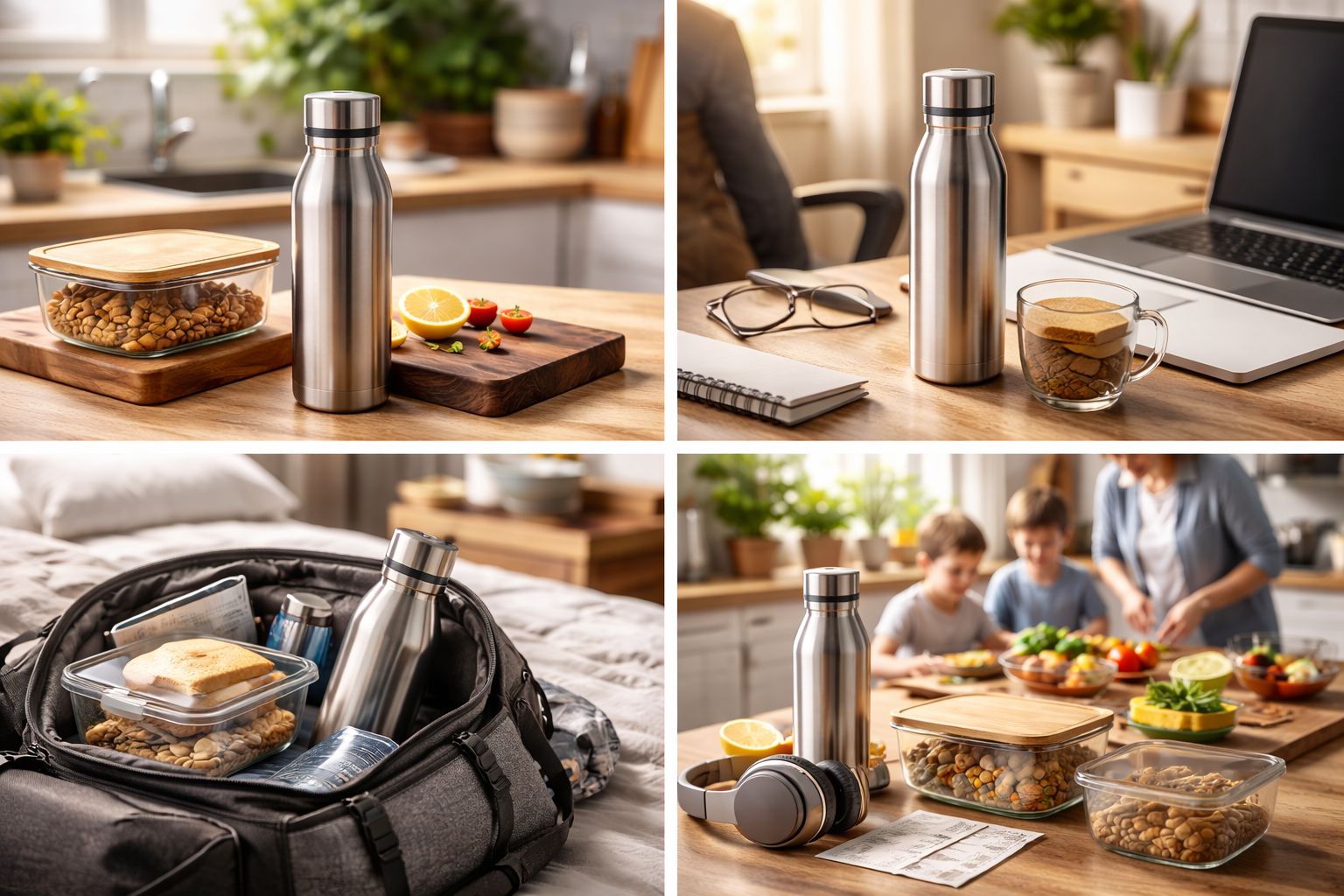
Produk yang digunakan di meja kerja tetap mungkin memprioritaskan stabilitas, kemudahan akses, dan perawatan minimal. Produk yang sama, jika digunakan saat bepergian atau antar lokasi, harus menekankan portabilitas, ketahanan terhadap tumpahan, dan daya tahan.
Produk yang beradaptasi dengan gaya hidup mengantisipasi transisi ini. Produk-produk ini dirancang untuk berpindah antar lingkungan tanpa kehilangan fungsionalitas. Gagang, tutup, dan permukaan dioptimalkan tidak hanya untuk penggunaan tetap, tetapi juga untuk pemindahan dan penanganan yang sering.
Kemampuan untuk berkinerja konsisten sepanjang hari—dalam rapat, perjalanan pulang pergi, dan penggunaan di rumah—telah menjadi karakteristik utama dari produk sehari-hari yang beradaptasi dengan baik.
Mobilitas dan Frekuensi Perjalanan
Mobilitas menghadirkan lapisan kompleksitas lain. Produk yang digunakan oleh individu yang sangat mobile harus tahan terhadap getaran, perubahan suhu, dan penanganan yang tidak teratur.
Desain yang ramah perjalanan tidak selalu berarti sangat ringan atau minimalis. Sebaliknya, seringkali melibatkan keseimbangan antara dua hal: daya tahan yang cukup tanpa bobot berlebihan, penutup yang aman tanpa mekanisme yang rumit, dan material yang tahan terhadap perubahan lingkungan.
Produk yang mampu beradaptasi dengan baik untuk gaya hidup menetap maupun berpindah-pindah cenderung menghindari komponen yang rapuh dan kerumitan yang tidak perlu. Produk tersebut dirancang untuk dikemas, dibawa, dan dibuka berulang kali tanpa mengalami kerusakan.
Kemampuan beradaptasi ini sangat berharga bagi konsumen yang rutinitasnya sering berubah antara rumah, tempat kerja, dan perjalanan.
Struktur Keluarga dan Komposisi Rumah Tangga
Komposisi rumah tangga sangat memengaruhi bagaimana produk dibagikan dan dipelihara.
Rumah tangga yang hanya dihuni satu orang mungkin memprioritaskan kenyamanan pribadi dan keselarasan estetika. Sebaliknya, rumah tangga keluarga menekankan daya tahan, kemudahan pembersihan, dan toleransi terhadap kebiasaan penggunaan yang beragam.
Produk yang dirancang untuk penggunaan bersama harus mengakomodasi berbagai gaya penanganan dan intensitas penggunaan. Produk tersebut juga harus mudah dirawat, karena frekuensi pembersihan cenderung meningkat di lingkungan yang digunakan oleh banyak orang.
Produk yang beradaptasi dengan gaya hidup mengantisipasi perbedaan ini dengan berfokus pada material yang kuat, proses pembersihan yang sederhana, dan desain yang tetap fungsional bahkan ketika digunakan dengan kurang hati-hati.
Pilihan Material sebagai Pendukung Gaya Hidup
Pemilihan material memainkan peran sentral dalam menentukan seberapa baik suatu produk beradaptasi dengan berbagai gaya hidup.
Setiap material memiliki kelemahan dan kelemahan bawaan yang memengaruhi daya tahan, berat, perawatan, dan pengalaman sensorik. Desain adaptif gaya hidup dimulai dengan memahami sifat-sifat ini dan memilih material yang mendukung fleksibilitas, bukan spesialisasi.
Baja tahan karat, misalnya, menawarkan daya tahan dan ketahanan aus yang tinggi, sehingga cocok untuk penggunaan jangka panjang dan frekuensi tinggi di berbagai lingkungan. Kinerjanya tetap konsisten dari waktu ke waktu, yang mendukung rutinitas yang stabil bahkan saat gaya hidup berubah.
Kaca memberikan kejernihan visual dan sifat inert, tetapi membutuhkan penanganan yang lebih terkontrol. Kaca cocok untuk gaya hidup menetap di rumah, tetapi kurang efektif untuk lingkungan yang mobile atau digunakan bersama.
Plastik menawarkan kemudahan yang ringan dan efisiensi biaya, tetapi kinerjanya sangat bervariasi tergantung pada formulasi dan kualitas konstruksinya. Plastik berkualitas rendah mungkin membatasi kemampuan adaptasi karena keausan atau deformasi akibat tekanan.
Bahan silikon dan elastomer sering meningkatkan kemampuan beradaptasi dengan memberikan fleksibilitas, ketahanan terhadap benturan, dan daya cengkeram. Jika digunakan secara strategis, bahan-bahan ini memungkinkan produk untuk berkinerja baik dalam berbagai kondisi tanpa mengurangi kegunaannya.
Produk yang paling mudah beradaptasi seringkali menggabungkan berbagai material dengan cermat, memanfaatkan kekuatan masing-masing untuk menciptakan kinerja yang seimbang di berbagai gaya hidup.
Fitur Desain yang Memungkinkan Penggunaan untuk Berbagai Gaya Hidup
Selain material, fitur desain tertentu memainkan peran penting dalam adaptasi gaya hidup.
Modularitas adalah salah satu fitur tersebut. Produk dengan komponen yang dapat dipertukarkan atau bagian yang dapat dikonfigurasi dapat menyesuaikan diri dengan berbagai kasus penggunaan tanpa memerlukan produk yang sepenuhnya terpisah.
Bentuk netral juga mendukung kemampuan beradaptasi. Desain yang menghindari bentuk ekstrem atau elemen yang terlalu bergaya cenderung lebih mudah berintegrasi ke berbagai lingkungan, mulai dari dapur rumah hingga ruang kantor.
Ergonomi adalah faktor penting lainnya. Produk yang terasa nyaman dalam berbagai genggaman dan orientasi akan mengakomodasi berbagai pengguna dan pola penggunaan.
Yang penting, desain yang adaptif terhadap gaya hidup sering menekankan kesederhanaan. Dengan menghindari fitur-fitur yang tidak perlu, produk mengurangi titik kegagalan dan menyederhanakan perawatan. Kesederhanaan ini memungkinkan produk untuk berkinerja andal di berbagai skenario yang lebih luas.
Adaptasi Tanpa Teknologi: Kesederhanaan yang Cerdas
Meskipun produk pintar dengan sensor dan konektivitas menjanjikan perilaku adaptif, banyak produk sehari-hari mencapai kemampuan adaptasi yang unggul melalui desain berteknologi rendah.
Keandalan mekanis seringkali mengungguli kompleksitas digital dalam penggunaan jangka panjang. Produk yang mengandalkan prinsip fisik, bukan pembaruan perangkat lunak atau baterai, mempertahankan fungsinya terlepas dari lingkungan atau perilaku pengguna.
Kesederhanaan yang cerdas berfokus pada mengantisipasi skenario umum dan merancang solusi secara struktural, bukan reaktif. Pendekatan ini mengurangi hambatan dan memperpanjang umur produk.
Untuk produk rumah tangga dan gaya hidup sehari-hari, bentuk adaptasi ini sangat sesuai dengan harapan konsumen akan keandalan dan kemudahan penggunaan.
Biaya vs. Kemampuan Beradaptasi: Perspektif Nilai Jangka Panjang
Produk yang mudah diadaptasi seringkali memiliki biaya awal yang lebih tinggi karena penggunaan material yang lebih baik, toleransi manufaktur yang lebih ketat, dan proses desain yang lebih matang.
Namun, biaya ini sering kali menghasilkan masa pakai yang lebih lama dan frekuensi penggantian yang lebih rendah. Jika dievaluasi dari waktu ke waktu, produk yang mudah beradaptasi cenderung menawarkan total biaya kepemilikan yang lebih rendah.
Konsumen tidak hanya diuntungkan secara finansial, tetapi juga dalam hal berkurangnya kelelahan pengambilan keputusan dan gangguan yang lebih sedikit terhadap rutinitas harian. Produk yang terus berfungsi dengan baik seiring perubahan hidup menghilangkan kebutuhan untuk penilaian ulang dan penggantian terus-menerus.
Proposisi nilai jangka panjang ini semakin penting karena konsumen berupaya menyederhanakan, bukan memperluas, koleksi barang-barang sehari-hari mereka.
Kompromi dan Keterbatasan Desain
Tidak ada produk yang dapat beradaptasi sempurna dengan semua gaya hidup. Desain selalu melibatkan kompromi.
Produk yang dioptimalkan untuk portabilitas mungkin mengorbankan sebagian kapasitas atau stabilitas. Produk yang dirancang untuk daya tahan mungkin lebih berat. Estetika netral mungkin terasa kurang ekspresif bagi sebagian pengguna.
Kunci keberhasilan adaptasi terletak pada penentuan prioritas. Produk yang sukses mengidentifikasi transisi gaya hidup yang paling umum dan mendesainnya untuk transisi tersebut, daripada mencoba mengatasi setiap kemungkinan skenario.
Memahami pertimbangan-pertimbangan ini membantu konsumen menetapkan ekspektasi yang realistis dan memilih produk yang sesuai dengan kebiasaan mereka sendiri.
Bagaimana Konsumen Dapat Mengevaluasi Kesesuaian Gaya Hidup Sebelum Membeli
Mengevaluasi kesesuaian gaya hidup membutuhkan langkah lebih jauh daripada sekadar perbandingan permukaan.
Konsumen akan mendapat manfaat dengan menanyakan seberapa sering dan di mana suatu produk akan digunakan, seberapa besar kemungkinan rutinitas akan berubah, dan apakah produk tersebut dapat mentolerir perubahan tersebut.
Produk yang berkinerja baik di berbagai skenario cenderung menawarkan kepuasan jangka panjang yang lebih besar, meskipun pada awalnya tampak kurang terspesialisasi.
Pola pikir evaluatif ini mendorong pembelian yang disengaja dan mengurangi penumpukan produk yang kurang dimanfaatkan atau berumur pendek.
Masa Depan Produk yang Adaptif terhadap Gaya Hidup
Seiring dengan semakin beragamnya gaya hidup, kemampuan beradaptasi menjadi harapan dasar, bukan lagi fitur premium.
Produk sehari-hari di masa depan kemungkinan akan menekankan sistem modular, material tahan lama, dan desain yang tak lekang oleh waktu. Alih-alih mengejar tren, mereka akan fokus pada tetap bermanfaat seiring dengan evolusi kebiasaan.
Pergeseran ini mencerminkan pergerakan budaya yang lebih luas menuju produk yang lebih sedikit namun lebih baik—barang-barang yang terintegrasi dengan lancar ke dalam kehidupan daripada membutuhkan penyesuaian dari kehidupan itu sendiri.
Kesimpulan: Produk yang Bergerak Seiring Kehidupan
Produk sehari-hari berhasil bukan karena sempurna hanya untuk satu momen, tetapi karena tetap bermanfaat dalam banyak kesempatan.
Desain adaptif gaya hidup menyadari bahwa kehidupan itu dinamis. Pola kerja berubah, ruang hidup bergeser, rutinitas berkembang, dan prioritas diselaraskan kembali. Produk yang beradaptasi dengan perubahan ini menawarkan stabilitas di tengah transisi.
Dengan berfokus pada integritas material, desain yang cermat, dan fleksibilitas fungsional, produk sehari-hari dapat berfungsi sebagai teman yang dapat diandalkan, bukan sekadar alat sekali pakai.
Di dunia yang terus berubah, kemampuan beradaptasi bukan lagi pilihan. Ini adalah karakteristik utama produk yang benar-benar sesuai dengan kehidupan modern.