
Meninjau Ulang Pilihan Material dalam Produk Rumah Tangga Sehari-hari
Material premium secara diam-diam telah menjadi nilai jual standar di berbagai produk rumah tangga modern. Baja tahan karat menggantikan plastik. Kayu solid menggantikan komposit. Kaca borosilikat menggantikan kaca soda-kapur. Kata-kata seperti kelas industri , profesional , dan rekayasa muncul di mana-mana—mulai dari peralatan minum hingga wadah penyimpanan hingga peralatan dapur.
Asumsinya sederhana: bahan yang lebih baik menghasilkan produk yang lebih baik.
Namun dalam penggunaan sehari-hari di rumah, asumsi itu hanya sebagian benar.
Material premium memang menambah nilai—tetapi tidak secara universal, tidak otomatis, dan tidak dalam setiap konteks. Dalam beberapa kasus, material premium secara signifikan meningkatkan daya tahan, kegunaan, dan kepuasan jangka panjang. Dalam kasus lain, material premium justru meningkatkan biaya tanpa memberikan manfaat yang sebanding, atau bahkan menimbulkan kompromi baru yang tidak disadari pada saat pembelian.
Artikel ini mengulas secara praktis, dari sudut pandang desain, kapan material premium benar-benar masuk akal dalam produk rumah tangga—dan kapan tidak . Alih-alih berfokus pada klaim kesehatan atau bahasa pemasaran, artikel ini meneliti material melalui lensa frekuensi penggunaan, siklus hidup, integrasi desain, dan total biaya kepemilikan .
1. Meningkatnya Penggunaan “Material Premium” di Rumah-Rumah Sehari-hari
Secara historis, material premium diperuntukkan bagi lingkungan profesional, industri, atau komersial—restoran, laboratorium, bengkel, dan pabrik. Sensitivitas biaya kurang penting dibandingkan kinerja, keandalan, dan daya tahan.
Selama dekade terakhir, material-material yang sama telah merambah ke rumah-rumah sehari-hari.
Beberapa faktor mempercepat pergeseran ini:
- Konsumen cenderung menyimpan produk lebih lama dan mengharapkan produk tersebut awet.
- Perdagangan online memungkinkan perbandingan material dan spesifikasi yang lebih mudah.
- Narasi keberlanjutan mendorong prinsip “beli sekali, gunakan lebih lama”.
- Estetika industri telah menjadi daya tarik budaya.
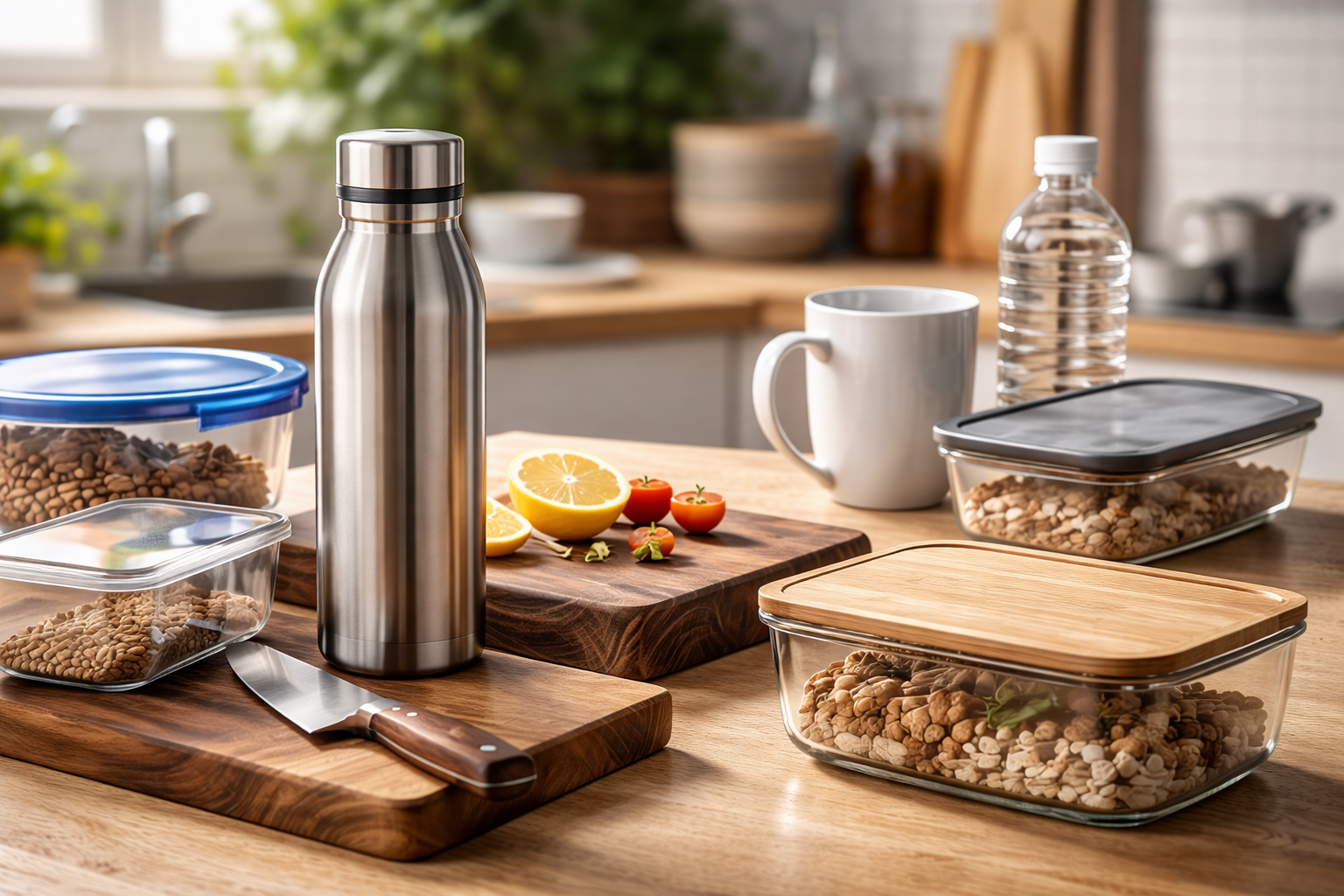
Akibatnya, material yang dulunya dianggap berlebihan untuk penggunaan rumah tangga kini diposisikan sebagai peningkatan standar. Peralatan masak stainless steel, botol air logam, furnitur kayu keras, wadah makanan keramik, dan aksesori aluminium telah menjadi hal yang umum.
Pertanyaan kuncinya bukan lagi apakah material premium lebih baik—tetapi apakah material tersebut lebih baik untuk cara produk tersebut benar-benar digunakan di rumah .
2. Apa Sebenarnya yang Kita Maksud dengan “Bahan Premium”?
Istilah material premium seringkali ambigu. Dalam bidang teknik, istilah ini merujuk pada material yang dipilih karena sifat mekanik, termal, atau kimia tertentu. Dalam pemasaran konsumen, istilah ini sering kali menandakan penentuan harga daripada kebutuhan fungsional.
Dalam kategori rumah, material premium biasanya terbagi dalam beberapa kelompok:
- Logam : baja tahan karat, paduan aluminium
- Bahan alami : kayu solid, batu, keramik
- Kaca rekayasa : borosilikat, kaca temper.
- Polimer berkinerja tinggi : plastik yang diperkuat atau plastik kelas makanan.
Yang terpenting bukanlah apakah suatu material berkualitas premium secara terpisah, tetapi bagaimana sifat-sifatnya selaras dengan tuntutan produk di dunia nyata .
Material premium tanpa desain, pemrosesan, atau kesesuaian penggunaan yang tepat dapat memiliki kinerja yang lebih rendah dibandingkan produk yang dirancang dengan baik yang terbuat dari material yang lebih sederhana.
3. Faktor Pendorong Nilai Sejati di Balik Material Premium
Material premium hanya menciptakan nilai ketika memperkuat satu atau lebih dari faktor-faktor pendorong berikut.
Ketahanan Seiring Waktu
Material yang tahan terhadap kelelahan, deformasi, korosi, atau degradasi permukaan dapat memperpanjang masa pakai produk secara signifikan. Hal ini sangat penting terutama jika produk sering digunakan dan terpapar keausan.
Stabilitas Penampilan
Beberapa material mempertahankan konsistensi visual meskipun tergores, terkena panas, atau dibersihkan berulang kali. Material lain mengalami degradasi yang terlihat meskipun strukturnya masih utuh. Untuk produk yang dimaksudkan untuk tetap berada di atas meja atau permukaan lainnya, penuaan visual menjadi penting.
Keandalan Struktural
Material tertentu lebih tahan terhadap benturan, tekanan, atau perubahan suhu dibandingkan alternatif lainnya. Hal ini terutama relevan untuk wadah, pegangan, dan komponen penahan beban.
Konsistensi Pengalaman Penggunaan
Berat, keseimbangan, sensasi termal, dan umpan balik taktil semuanya memengaruhi kegunaan sehari-hari. Material premium seringkali memberikan pengalaman yang lebih dapat diprediksi dan stabil—tetapi tidak selalu lebih nyaman.
Ketika faktor-faktor pendorong ini tidak relevan dengan fungsi atau pola penggunaan suatu produk, material premium kehilangan sebagian besar nilai pembenarannya.
4. Saat Material Premium Benar-Benar Masuk Akal
4.1 Produk Penggunaan Frekuensi Tinggi
Produk yang digunakan berkali-kali dalam sehari mengalami keausan yang lebih cepat. Dalam skenario ini, kualitas material memiliki efek yang memperburuk keadaan.
Contohnya meliputi:
- Peralatan minum yang digunakan sepanjang hari
- Peralatan dapur yang terpapar panas dan siklus pencucian
- Wadah penyimpanan berulang kali dibuka, ditutup, dan dibersihkan.
Di sini, material premium dapat mengurangi kerusakan mikro: retak, perubahan bentuk, perubahan warna, atau kerusakan permukaan. Seiring berjalannya waktu, keuntungan kecil ini akan terakumulasi menjadi peningkatan daya tahan yang nyata.
4.2 Produk Kepemilikan Jangka Panjang
Penggunaan material premium paling dapat dibenarkan ketika produk dirancang untuk kepemilikan bertahun-tahun .
Jika suatu produk diharapkan untuk:
- Tetap beroperasi selama lima hingga sepuluh tahun.
- Tahan terhadap pembersihan dan penanganan rutin.
- Tetap terlihat bagus secara visual dari waktu ke waktu
Kemudian, material yang menua secara lambat dan dapat diprediksi memberikan nilai nyata.
Hal ini sejalan dengan pemikiran siklus hidup: biaya di muka menjadi kurang penting ketika siklus penggantian panjang dan dapat diprediksi.
4.3 Ketergantungan Fungsional pada Sifat Material
Beberapa fungsi bergantung langsung pada perilaku material.
Contoh:
- Retensi termal atau isolasi
- Ketahanan terhadap deformasi di bawah beban
- Kekakuan struktural pada profil tipis
Dalam kasus ini, material bukanlah sekadar hiasan—melainkan pendukung fungsi. Mengganti dengan material berkualitas rendah dapat membahayakan kinerja secara langsung.
5. Ketika Material Premium Justru Tidak Menambah Nilai
5.1 Produk dengan Penggunaan Rendah atau Siklus Hidup Pendek
Banyak produk rumah tangga digunakan secara sporadis atau sering diganti karena perubahan gaya, pindah rumah, atau perubahan kebutuhan.
Dalam kasus-kasus ini:
- Ketahanan material kurang dimanfaatkan.
- Masa pakai produk berakhir sebelum kinerja material menjadi penting.
- Biaya premium menjadi nilai hangus yang tidak dapat dipulihkan.
Penggunaan material premium tidak dapat dibenarkan jika produk tersebut dihentikan penggunaannya lebih awal karena alasan non-material.
5.2 Produk dengan Keterbatasan Desain
Kualitas material tidak dapat menutupi desain yang buruk.
Masalah umum meliputi:
- Sambungan atau metode perakitan yang lemah
- Ergonomi yang buruk
- Struktur yang terlalu kompleks
Produk berbahan kelas menengah yang dirancang dengan baik seringkali mengungguli produk berbahan premium yang dirancang buruk dalam penggunaan nyata.
5.3 Material dengan Spesifikasi Berlebihan
Spesifikasi berlebih terjadi ketika material melebihi persyaratan fungsional yang sebenarnya.
Misalnya:
- Logam kelas industri yang digunakan dalam aplikasi bertegangan rendah.
- Bahan tahan panas digunakan di tempat yang tidak pernah terpapar panas.
Spesifikasi yang berlebihan meningkatkan biaya tanpa memberikan manfaat yang sebanding dan bahkan dapat menimbulkan kerugian seperti bobot yang tidak perlu.
6. Mengapa Material Premium Meningkatkan Harga Secara Tidak Proporsional?
Biaya material hanyalah sebagian dari persamaan penetapan harga.
Bahan-bahan premium seringkali memicu peningkatan biaya sekunder:
- Kompleksitas pemrosesan : material yang lebih keras membutuhkan pemesinan yang lebih lambat atau peralatan khusus.
- Kehilangan hasil produksi : toleransi yang lebih ketat meningkatkan tingkat penolakan.
- Pengujian dan validasi : ekspektasi yang lebih tinggi menuntut kontrol kualitas yang lebih baik.
- Volatilitas pasokan : bahan-bahan premium seringkali lebih sensitif terhadap harga di hulu.
Biaya-biaya ini bersifat kumulatif, artinya peningkatan kualitas material sebesar 20% dapat mengakibatkan kenaikan harga eceran sebesar 50–80%.
Memahami hal ini menjelaskan mengapa peningkatan material terasa mahal melebihi nilai sebenarnya.
7. Kerangka Kerja Pengambilan Keputusan Praktis untuk Produk Rumah Tangga
Untuk memutuskan apakah material premium sepadan dengan harganya, pertimbangkan empat faktor berikut secara bersamaan:
-
Frekuensi Penggunaan
Penggunaan sehari-hari atau intensif lebih menguntungkan investasi yang berfokus pada daya tahan. -
Perkiraan Durasi Kepemilikan
Semakin lama Anda berencana menyimpan produk tersebut, semakin penting kualitas materialnya. -
Ketergantungan Fungsional
Apakah produk tersebut bergantung pada sifat material untuk menjalankan fungsi intinya? -
Kualitas Desain
Apakah produk tersebut memiliki struktur dan ergonomi yang cukup baik untuk memanfaatkan material yang lebih baik?
Jika setidaknya tiga dari faktor-faktor ini selaras, maka penggunaan material premium kemungkinan besar masuk akal.
8. Nilai Material di Seluruh Kategori Produk Rumah Tangga
Berbagai kategori rumah memperoleh nilai yang berbeda dari material premium.
Peralatan Minum dan Wadah Makanan
Frekuensi tinggi, pembersihan yang sering, dan paparan perubahan suhu membuat pemilihan material menjadi penting— jika desainnya kompeten .
Peralatan Dapur
Panas, benturan, dan tekanan mekanis membenarkan peningkatan material, tetapi hanya untuk alat yang digunakan secara teratur.
Penyimpanan dan Pengorganisasian
Persyaratan struktural seringkali rendah. Desain dan tata letak lebih penting daripada mutu material.
Aksesori Dekoratif
Dalam banyak kasus, preferensi estetika lebih diutamakan daripada daya tahan material.
Memahami kepadatan nilai spesifik kategori mencegah investasi berlebihan.
9. Premium Adalah Sebuah Sistem, Bukan Sekadar Label
Produk premium akan berhasil jika material, desain, manufaktur, dan pengujian bekerja sama dengan baik.
Bahan premium:
- Tanpa geometri yang sesuai
- Tanpa manufaktur yang terkontrol
- Tanpa pengujian di dunia nyata
Hanya sekadar input yang mahal—bukan jaminan kualitas.
Desain produk yang matang memperlakukan material sebagai bagian dari sebuah sistem, bukan sebagai jalan pintas menuju nilai yang dirasakan.
10. Kesimpulan: Beli yang Lebih Baik, Bukan Hanya yang Lebih Mahal
Bahan-bahan premium bukanlah sesuatu yang mutlak diperlukan atau suatu pemborosan.
Itu adalah alat—ampuh bila digunakan dengan sengaja, tidak efisien bila digunakan tanpa pertimbangan.
Pembelian rumah yang paling cerdas tidak ditentukan oleh bahan-bahan yang paling mahal, tetapi oleh seberapa baik bahan-bahan tersebut selaras dengan penggunaan sebenarnya, jangka waktu sebenarnya, dan kualitas desain yang sebenarnya .
Memahami perbedaan tersebut mengarah pada rumah-rumah yang dipenuhi dengan produk-produk yang lebih awet, berfungsi lebih baik, dan sepadan dengan harganya—bukan karena produk tersebut premium, tetapi karena sesuai dengan kebutuhan.