
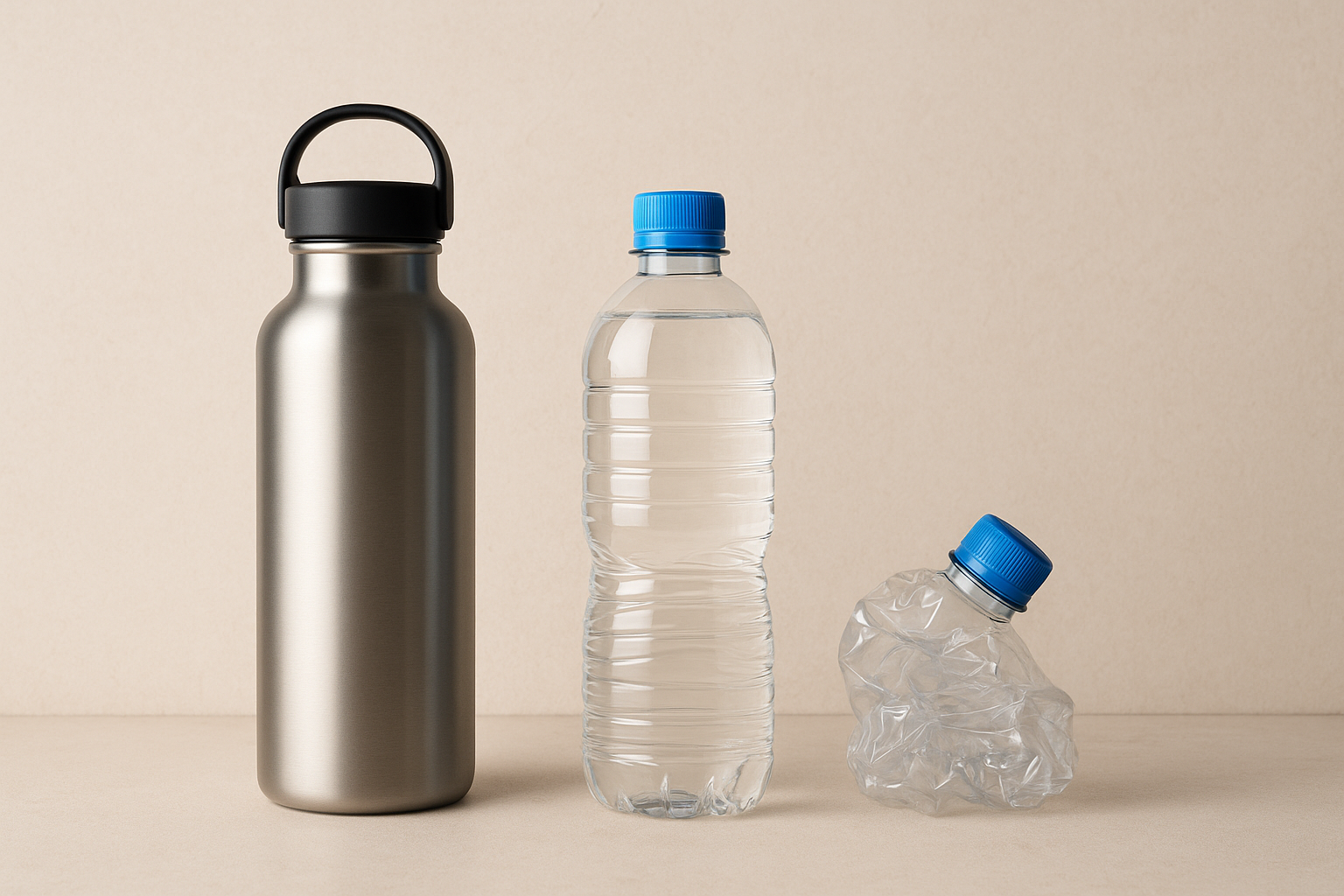
Single-use plastic bottles are woven into modern life. People buy them during commutes, in offices, at gyms, in airports, and even at home. The convenience is undeniable—but so is the cost. Behind every disposable bottle lies a chain of environmental, economic, and health impacts that accumulate over days, months, and years.
Switching to reusable bottles may seem like a small behavioral adjustment, yet the cumulative effect is surprisingly powerful. This article explains how daily hydration habits directly influence plastic waste generation, why reusable bottles create measurable reductions, and how different materials change sustainability performance. The goal is simple: help individuals and families drink smarter, waste less, and build a more sustainable hydration lifestyle.
1. The Hidden Cost of Everyday Plastic Habits
Plastic bottles represent one of the most persistent categories of global waste. Their convenience masks a deeper problem: each bottle requires energy-intensive production and often ends up in landfills or waterways. Despite global recycling advocacy, the recycling rate remains low, especially in regions lacking efficient recycling systems.
Hydration is universal. People need water throughout the day, and the easiest option—buying a disposable bottle—introduces constant waste into the system. When millions of people repeat the same behavior daily, plastic bottle consumption becomes a structural environmental issue rather than an individual choice.
Even moderate drinkers who purchase a single bottle per day create 365 pieces of plastic waste annually. A family of four can generate over 1,400 bottles a year without realizing it. This scale highlights why hydration behavior is a crucial entry point for sustainable living.
2. Where Single-Use Plastic Bottles Actually End Up
2.1 The Lifecycle of a Plastic Bottle
The production of a single PET (polyethylene terephthalate) bottle starts with petroleum extraction. Manufacturers convert crude oil into PET resin through high-energy chemical processes involving heat, pressure, and transportation. Each stage emits carbon emissions, increasing the product’s environmental footprint before the bottle ever reaches a store shelf.
Once used, the bottle enters the waste stream. Although PET is technically recyclable, real-world recycling rates remain far lower than theoretical estimates. Many bottles are contaminated with food or beverage residues, which makes them unsuitable for recycling. Others simply enter general waste bins, bypassing recycling programs entirely.
2.2 Environmental Impact
If a bottle isn’t recycled—and most aren’t—it either goes to landfills or becomes litter. Over time, sunlight, heat, and abrasion break it down into microplastics. These particles infiltrate soil, oceans, rivers, and food chains. The environmental impact extends far beyond visual pollution; microplastics affect marine life, water quality, and possibly human health.
Every stage of the bottle’s lifecycle—from petrochemical extraction to disposal—adds cumulative stress to ecosystems. Reducing production is far more effective than increasing recycling, and this is where reusable bottles present a practical solution.
3. Why Reusable Bottles Make an Immediate Difference
Choosing a reusable bottle doesn’t merely replace a disposable one—it fundamentally alters behavior.
3.1 A Habit That Reduces Waste Automatically
Carrying a bottle changes decision pathways. When hydration is accessible, the impulse to purchase disposable drinks decreases. The presence of a reusable bottle introduces friction against unnecessary purchases, resulting in automatic waste reduction.
In behavioral science, this effect is known as “habit substitution.” By integrating a reusable bottle into daily routines, consumers shift away from convenience buying and toward consistent personal hydration planning.
3.2 Quantifying the Impact
If one person avoids a single disposable bottle daily, the reduction is 365 bottles per year. For individuals who drink 2–3 bottles per day, the reduction can exceed 1,000 bottles annually.
Now extend that to:
- families
- workplaces
- sports teams
- campus communities
The impact multiplies quickly. A company of 300 employees switching to reusables could eliminate more than 100,000 bottles per year. Every avoided bottle represents reduced carbon emissions, fewer microplastics, and less landfill burden.
4. Choosing the Right Reusable Bottle: Material Matters
Reusable bottles vary significantly in sustainability performance, safety, durability, and user experience. Understanding material characteristics helps individuals select the right option for their daily lifestyle.
4.1 Stainless Steel Bottles
Benefits
- Exceptional durability for multi-year use
- Excellent insulation for hot and cold beverages
- Resistant to impact and outdoor wear
- Low long-term environmental impact due to long lifespan
Limitations
- Heavier than plastic options
- Not transparent
- Slight metallic taste in lower-quality models
Best For
Commuters, outdoor enthusiasts, athletes, office workers who want temperature control.
4.2 Tritan and Other BPA-Free Plastics
Benefits
- Lightweight and easy to carry
- Shatter-resistant
- Clear appearance makes hydration tracking easy
- Safe for children and students
Limitations
- Shorter lifespan than stainless steel
- Not ideal for high-temperature beverages
- Can retain odors if not cleaned regularly
Best For
Daily commuting, school use, gyms, lightweight travel.
4.3 Glass Bottles
Benefits
- Pure taste with zero flavor transfer
- Fully recyclable
- Ideal for home and office environments
Limitations
- Heavy
- Fragile
- Limited suitability for outdoor or high-mobility activities
Best For
Work desks, home hydration, controlled environments.
4.4 Comparative Overview
| Material | Durability | Safety | Heat Resistance | Weight | Environmental Benefit | Best Use Scenarios |
|---|---|---|---|---|---|---|
| Stainless Steel | High | Excellent | Excellent | Medium | Very High (long lifespan) | Work, travel, sports |
| Tritan/BPA-Free | Medium | High | Moderate | Light | High (reduced disposables) | Commuting, school |
| Glass | Low–Medium | Excellent | Low–Medium | Heavy | High (recyclable) | Home, desk use |
5. Where Reusable Bottles Deliver Maximum Waste Reduction
5.1 Commuting and Office Routines
Most unnecessary purchases occur during commutes or work hours. Carrying a bottle eliminates impulse buying from vending machines, convenience stores, or cafés.
5.2 Fitness and Outdoor Activities
Sports activities require higher hydration volumes. Athletes who refill reusable bottles reduce dozens of disposable bottles weekly.
5.3 Household Consumption
Families generate more plastic waste than individuals, especially when children are involved. Assigning reusable bottles to each family member creates consistent habits.
5.4 Travel and Tourism
Travelers often rely heavily on bottled water due to convenience. Planning ahead—carrying a reusable bottle and seeking refill stations—dramatically reduces travel waste.
6. Financial Benefits: A Cost-Efficient Choice
Disposable bottles seem inexpensive individually, but costs accumulate over time. For daily users, annual bottled water expenses can surpass the cost of a premium reusable bottle many times over.
A simple comparison:
- Buying one bottle of water daily = 365 bottles/year
- Buying two per day = 730 bottles/year
- Buying three per day = 1,095 bottles/year
A reusable bottle generally pays for itself within weeks. For families, the savings multiply exponentially.
7. Beyond Sustainability: Additional Health and Lifestyle Advantages
Reusable bottles improve more than environmental metrics—they enhance personal hydration behavior.
Key benefits include:
- Increased hydration frequency due to convenient access
- Reduced consumption of sugar-sweetened beverages
- Lower exposure to microplastics leaching from disposable bottle surfaces
- Better temperature control for hot climates or long work hours
Hydration is not just a wellness trend; it is a fundamental driver of cognitive function, metabolism, and daily energy levels.
8. The Future of Sustainable Hydration
8.1 Policy Trends
Countries and cities worldwide are enacting restrictions on single-use plastics. Public refill stations and “bottle-free zones” are rising across airports, universities, and urban centers.
8.2 Consumer Lifestyle Shifts
Refill culture is becoming the new normal. People increasingly prefer to bring their own bottles to workplaces and fitness spaces.
8.3 Technological Developments
Innovations such as self-cleaning bottles, antimicrobial coatings, and recycled stainless steel will accelerate reusable adoption in the next decade.
9. Conclusion: A Simple Tool for Everyday Sustainability
Switching from single-use plastic bottles to reusable alternatives is a straightforward, high-impact choice. It reduces environmental stress, saves money, and improves hydration habits in ways that compound over time.
Drinking water is essential. Creating waste is not.
Reusable bottles bridge the gap—helping people stay hydrated while protecting the planet.