
Introduction: When “More” Stops Making Sense
For a long time, owning multiple water bottles just felt normal.
One for the gym. One for work. Maybe another one for travel. And then a random extra sitting somewhere in the kitchen cabinet that nobody really uses anymore.
At first glance, it sounds practical. Different situations, different bottles, right?
But over time, something starts to feel slightly off.
You forget which one you used last. Some bottles don’t get cleaned often enough. Others just sit there, taking up space. And ironically, even with several options, none of them feels quite right for everything.
That’s when the question shifts.
Not “Do I need another bottle?”
But more like—“Do I just need a better one?”
The Quiet Shift Toward Owning Less
In recent years, there’s been a subtle but noticeable change in how people approach everyday products.
Instead of collecting more items, people are starting to focus on getting more out of fewer things.
This isn’t just about minimalism in the aesthetic sense. It’s more practical than that.
Owning fewer items means:
- less clutter
- fewer decisions
- less maintenance
And when it comes to something as frequently used as a water bottle, those small improvements actually add up pretty quickly.
It’s not about having less for the sake of it.
It’s about removing what doesn’t add value.
The Real Problem with Having Too Many Bottles
On paper, having multiple bottles sounds convenient. But in real life, it often leads to a different outcome.
You rotate between them inconsistently. Some get used more than others. A few might not get used at all.
And then there’s maintenance.
Each bottle needs to be cleaned, dried, and stored properly. When you have several, it’s easy to lose track. That’s when issues like odor, staining, or just general wear start to appear.
There’s also a quality gap.
Most people don’t invest equally in all their bottles. Usually, there’s one “good” one and several average ones. The average ones tend to fail faster—leaks, weak insulation, or lids that stop working properly after a while.
So instead of solving problems, having more bottles sometimes just spreads them out.
Why One Good Bottle Can Actually Do More
A well-designed water bottle doesn’t just “hold water.” It supports your entire daily routine.
That might sound like a stretch at first, but think about how often you actually use it.
Morning coffee. Midday hydration. Post-workout water. Maybe even something warm in the evening.
If one bottle can handle all of that reliably, it replaces the need for switching between different ones.
And more importantly, it creates consistency.
You know how it feels in your hand. You know how it drinks. You don’t have to think about it.
That kind of familiarity is underrated, but it matters.
What Makes a Water Bottle “Good” Enough to Replace the Rest?
Not every bottle can do this. And that’s where the distinction becomes important.
A truly versatile bottle needs to meet several conditions—not perfectly, but consistently.
Capacity That Works Across the Day
It should be large enough to reduce constant refilling, but not so big that it becomes inconvenient to carry.
This balance is harder to get right than it sounds.
Reliable Temperature Retention
Whether it’s cold water or hot coffee, temperature consistency plays a big role in daily satisfaction.
A bottle that loses temperature too quickly tends to get replaced—or ignored.
Durability That Holds Up Over Time
Daily use is not gentle.
Bottles get dropped, scratched, thrown into bags. A good one should handle that without becoming unusable after a few months.
Easy Cleaning (This One Gets Overlooked)
If a bottle is difficult to clean, it won’t be cleaned properly. It’s as simple as that.
Wide openings, fewer hidden parts, and smooth interiors make a noticeable difference over time.
A Comfortable Drinking Experience
This sounds subjective, but it’s not.
The way a bottle feels when you drink from it—whether it’s a smooth flow, a well-designed lid, or just the right opening size—affects how often you actually use it.
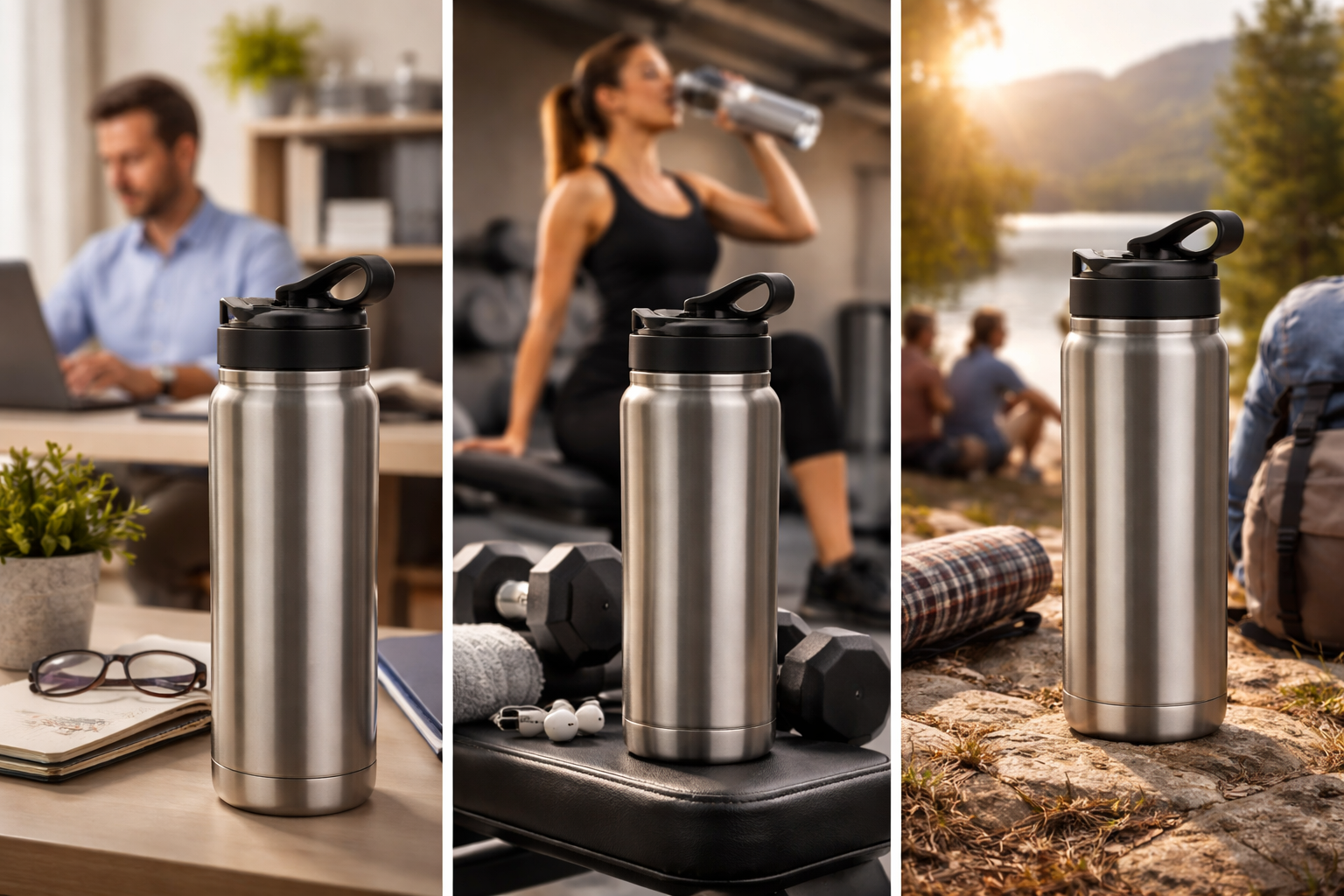
One Bottle, Multiple Environments
A strong argument for owning one good bottle is its ability to adapt.
A typical day might include:
- a morning commute
- hours at a desk
- some level of physical activity
- time outside or on the move
Switching bottles between these scenarios is possible, but not always practical.
A single, well-designed bottle removes that friction.
You just take it with you, and it works.
The Cost Perspective: Cheap vs. Reliable
At first, buying multiple lower-cost bottles may seem like a better deal.
But over time, the math shifts.
Lower-quality bottles tend to:
- wear out faster
- lose insulation performance
- develop functional issues
This leads to replacement cycles that aren’t always obvious—but they add up.
A higher-quality bottle, even with a higher upfront cost, often ends up being more stable in the long run.
Not cheaper necessarily, but more predictable.
Sustainability: Less Waste Without Trying Too Hard
There’s also an environmental angle, though it doesn’t need to be overstated.
Using one durable bottle reduces the need for:
- frequent replacements
- disposable alternatives
- unnecessary production cycles
It’s not about being perfect or extreme. It’s just a more efficient way of using what you already have.
The Habit Factor: Why One Bottle Works Better
There’s a behavioral side to this that’s easy to overlook.
When you rely on one bottle, you tend to:
- keep it nearby
- use it more consistently
- build a routine around it
With multiple bottles, usage becomes scattered. With one, it becomes predictable.
And predictable habits are easier to maintain.
It’s not a dramatic change, but it’s a stable one.
When Having More Than One Bottle Still Makes Sense
Of course, there are exceptions.
Different people in a household will need their own bottles.
Some specific use cases might justify a second option.
For example:
- a smaller bottle for very light travel
- a dedicated bottle for kids
- a backup for convenience
But for most individuals, the need for multiple bottles is often overestimated.
Looking Ahead: From Ownership to Efficiency
If you look at broader consumer behavior, the trend is fairly clear.
People are starting to expect more from fewer products.
Not necessarily luxury. Not necessarily premium in the traditional sense.
But efficient, reliable, and adaptable design.
In the context of water bottles, this likely means:
- more multi-purpose designs
- better balance between size and usability
- products that integrate into daily life without needing adjustments
In other words, the focus is shifting.
From owning more…
to needing less, but expecting more from it.
Conclusion: A Small Change That Actually Sticks
Owning multiple water bottles isn’t wrong. It’s just not always necessary.
In many cases, one well-designed bottle can do the job better—not by being perfect, but by being consistent.
It reduces friction, simplifies routines, and over time, just makes daily use easier.
And maybe that’s the point.
Not to optimize everything, but to remove the things that don’t need to be complicated in the first place.