
Memilih botol termos terbaik untuk air panas pada akhirnya merupakan latihan validasi kinerja. Konsumen modern tidak hanya membeli botol—mereka berinvestasi dalam retensi panas yang dapat diprediksi, keamanan material, dan keandalan operasional di berbagai konteks. Seiring pasar semakin ramai, merek yang mendasarkan penawaran mereka pada hasil yang terukur daripada daya tarik visual akan memenangkan kepercayaan jangka panjang dan visibilitas pencarian.
Retensi Termal: Tolok Ukur Utama
Metrik utama untuk termos air panas adalah keberlanjutan suhu. Termos berkualitas tinggi harus mampu mempertahankan suhu air panas yang layak minum minimal selama 6 hingga 12 jam. Termos kelas atas dapat menstabilkan suhu selama 18–24 jam. Variasi kinerja terutama dipengaruhi oleh tiga faktor teknik:
- Ketelitian isolasi vakum
- Ketebalan dan keseragaman lapisan baja tahan karat
- Kontrol perpindahan panas antara tutup dan badan
Pengujian industri menunjukkan bahwa bahkan ketidaksesuaian kecil dalam penyegelan vakum dapat menyebabkan penurunan suhu hingga 10–15°C dalam empat jam pertama. Inilah mengapa proses manufaktur premium—pengelasan laser, ekstraksi vakum canggih, dan penghalang termal multi-lapisan—merupakan pembeda strategis, bukan sekadar jargon pemasaran.
Integritas Material dan Kepercayaan Regulasi
Kesesuaian material kini menjadi pendorong konversi yang sangat penting. Konsumen secara aktif mencari istilah seperti bebas BPA , baja tahan karat kelas makanan , dan material tidak beracun . Untuk penggunaan air panas, baja tahan karat adalah satu-satunya kelas material yang secara konsisten lolos uji ketahanan, keamanan, dan kinerja termal.
Tingkatan material yang umum digunakan meliputi:
- Baja tahan karat 304 (18/8): Keseimbangan antara ketahanan korosi dan daya tahan; banyak digunakan.
- Baja tahan karat 316: Ketahanan klorida lebih tinggi dan unggul dalam aplikasi suhu tinggi.
- Tutup PP dengan gasket silikon: Tahan suhu tinggi tanpa pelepasan zat kimia.
Merek yang merujuk pada standar kepatuhan FDA/EFSA dan menawarkan dokumentasi pengujian pihak ketiga umumnya mencapai kepercayaan yang lebih kuat dan tingkat pentalan (bounce rate) yang lebih rendah pada halaman produk.
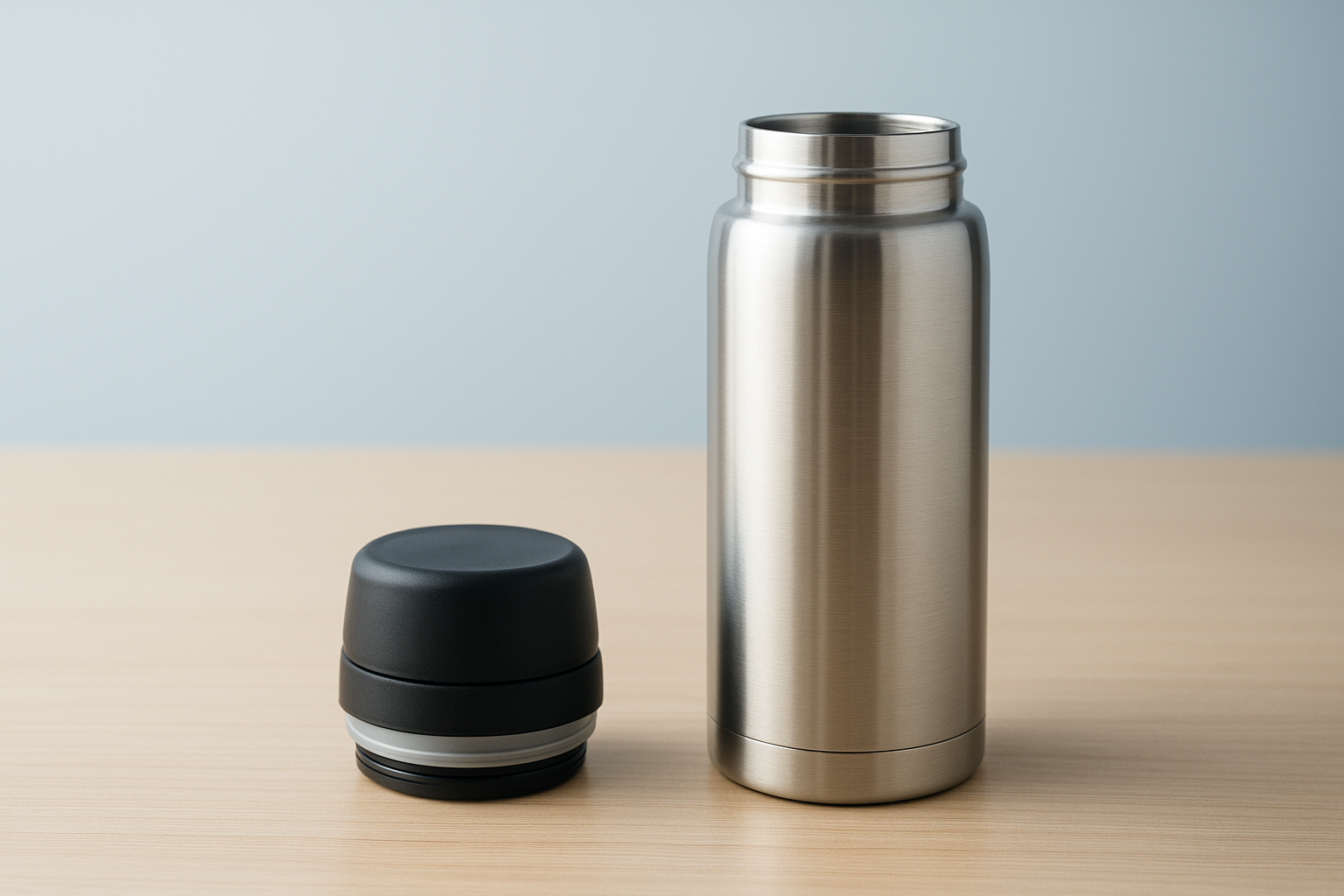
Arsitektur Tutup: Komponen Penentu Keberhasilan atau Kegagalan
Desain termos seringkali gagal pada bagian tutupnya. Data kehilangan panas menunjukkan bahwa area tutup menyumbang hingga 60% kebocoran suhu jika dirancang dengan buruk.
Termos air panas berkualitas tinggi harus memiliki fitur-fitur berikut:
• Struktur segel berlapis-lapis
• Cincin silikon ganda atau rangkap tiga
• Sistem penguncian kedap udara
• Tidak ada permukaan bagian dalam plastik yang terbuka.
Hal ini sangat relevan bagi pengguna yang membawa air mendidih untuk isi ulang harian atau menyeduh teh, di mana penurunan suhu mengganggu penggunaan yang dimaksudkan.
Rekayasa Kapasitas dan Pemetaan Kasus Penggunaan
Memilih kapasitas berdasarkan gaya hidup adalah metode praktis untuk mengurangi ketidakpuasan.
Format Kecil (350–500ml):
Berguna untuk kantor, perjalanan sehari-hari, atau sekolah. Ringan dan cepat diisi ulang.
Ukuran Sedang (600–750ml):
Target pengguna yang membutuhkan stabilitas air panas selama setengah hari, seperti jam kerja kantor yang panjang atau rutinitas dari rumah ke tempat gym.
Format Besar (1L+):
Ideal untuk perjalanan, berkendara jarak jauh, aktivitas luar ruangan, atau penggunaan termos rumah tangga. Massa air yang lebih besar secara alami mempertahankan panas lebih lama, memungkinkan konsistensi selama 12–24 jam.
Ketidaksesuaian kapasitas adalah salah satu alasan paling umum untuk ulasan negatif, bukan cacat produk.
Daya Tahan dan Total Biaya Kepemilikan
Dari perspektif pengadaan, daya tahan berkorelasi langsung dengan ROI (Return on Investment). Kemampuan menahan panas tidak akan berarti apa-apa jika lapisan luarnya terkelupas, botol mudah penyok, atau dinding bagian dalamnya berkorosi.
Karakteristik daya tahan utama meliputi:
• Lapisan interior anti korosi
• Eksterior dilapisi bubuk anti gores
• Pelat bawah yang diperkuat
• Rangka struktural tahan benturan
Botol berkualitas baik biasanya tahan 3–5 tahun penggunaan sehari-hari. Hal ini secara signifikan mengurangi biaya penggantian dan meningkatkan nilai seumur hidup merek.
Fitur Pengalaman Pengguna yang Meningkatkan Adopsi
Rekayasa fitur harus meningkatkan kenyamanan pengguna tanpa mengorbankan isolasi. Peningkatan yang paling berdampak meliputi:
• Pengoperasian satu tangan untuk para komuter
• Permukaan botol bebas keringat
• Bukaan lebar untuk pengisian ulang air panas
• Kompatibel dengan penyaring teh
• Struktur bodi yang ringan tanpa mengorbankan performa
Dalam saluran DTC modern, UX sering kali menentukan frekuensi pembelian berulang.
Kerangka Perbandingan Kinerja (Untuk Pembuatan Bagan di Masa Depan)
Untuk mendukung pengambilan keputusan yang objektif, versi artikel selanjutnya dapat mencakup perbandingan kuantitatif seperti:
• Kurva retensi panas 24 jam (penurunan °C per jam)
• Tabel perbandingan mutu material
• Desain tutup vs grafik kehilangan panas
• Hasil uji ketahanan jatuh
Format berbasis data ini memperkuat kredibilitas dan selaras dengan harapan EEAT tanpa membuat pembaca kewalahan.
Kesimpulan: Menentukan Botol Termos Terbaik untuk Air Panas
Botol termos terbaik pada akhirnya adalah botol yang memberikan retensi panas yang dapat diprediksi , bahan yang aman , sistem penyegelan yang andal , dan daya tahan jangka panjang . Konsumen semakin memprioritaskan nilai fungsional daripada tren estetika, sehingga menciptakan ruang bagi merek yang menekankan keunggulan teknik dan kinerja yang teruji.