

Di pasar peralatan minum, perbandingan antara baja tahan karat 304 dan baja tahan karat 316 hampir tak terhindarkan. Konsumen sering menempatkan 316 sebagai pilihan "premium" dengan ketahanan korosi yang lebih kuat, sementara 304 dipandang sebagai material standar untuk penggunaan sehari-hari. Namun, gambaran sebenarnya jauh lebih kompleks. Bagi merek manufaktur dengan portofolio multi-kategori, kedua material ini bukanlah pesaing—melainkan alat strategis yang melayani tujuan berbeda.
Di MODOFO, keputusan untuk menggunakan baja tahan karat 304 dan 316 didasarkan pada penilaian realistis terhadap fungsionalitas produk, efisiensi rantai pasokan, daya tahan jangka panjang, dan persepsi nilai pengguna. Alih-alih memperlakukan 316 sebagai peningkatan menyeluruh, kami mengoptimalkan setiap material di mana ia berkinerja terbaik. Hasilnya adalah ekosistem produk yang menyeimbangkan biaya, kinerja, dan pengalaman pelanggan.
1. Baja Tahan Karat 304 vs 316: Persepsi Pasar vs Kinerja di Dunia Nyata
Narasi di tingkat konsumen cenderung menggambarkan baja 316 sebagai "baja yang lebih baik" hanya karena mengandung molibdenum (Mo), unsur kimia yang meningkatkan ketahanan terhadap korosi—terutama terhadap klorida dan lingkungan asam. Ini akurat, tetapi hanya sampai batas tertentu.
Dari sudut pandang praktis:
Baja tahan karat 304 memberikan performa yang lebih dari cukup untuk penggunaan sehari-hari.
—air panas, air dingin, jus, teh, kopi, minuman untuk menghidrasi tubuh di luar ruangan.
Baja tahan karat 316 memberikan kinerja optimal di lingkungan khusus.
—retensi panas jangka panjang, minuman dengan kadar asam tinggi, minyak kopi, penggunaan profesional berulang.
Untuk sebagian besar skenario hidrasi sehari-hari, 304 sudah melampaui ekspektasi konsumen. Kesenjangan antara kebutuhan kinerja aktual dan persepsi keunggulan 316 sebagian besar diperlebar oleh narasi pemasaran—bukan oleh perbedaan fungsional yang nyata.
2. Mengapa Baja Tahan Karat 304 Tetap Menjadi Material Inti MODOFO
Keselarasan Biaya-ke-Nilai
Baja tahan karat 304 menonjol karena menyeimbangkan kinerja dan keterjangkauan harga. Sebagian besar kebutuhan hidrasi sehari-hari tidak memerlukan ketahanan korosi ekstrem yang ditawarkan oleh baja tahan karat 316.
Dengan mengadopsi 304 sebagai landasan utama, MODOFO memastikan:
• Harga terjangkau
• Produk yang tahan lama dan awet
• Mengurangi limbah material dan mengoptimalkan efisiensi manufaktur
Hal ini menjadikan 304 sebagai material ideal untuk sebagian besar kategori populer kami, termasuk:
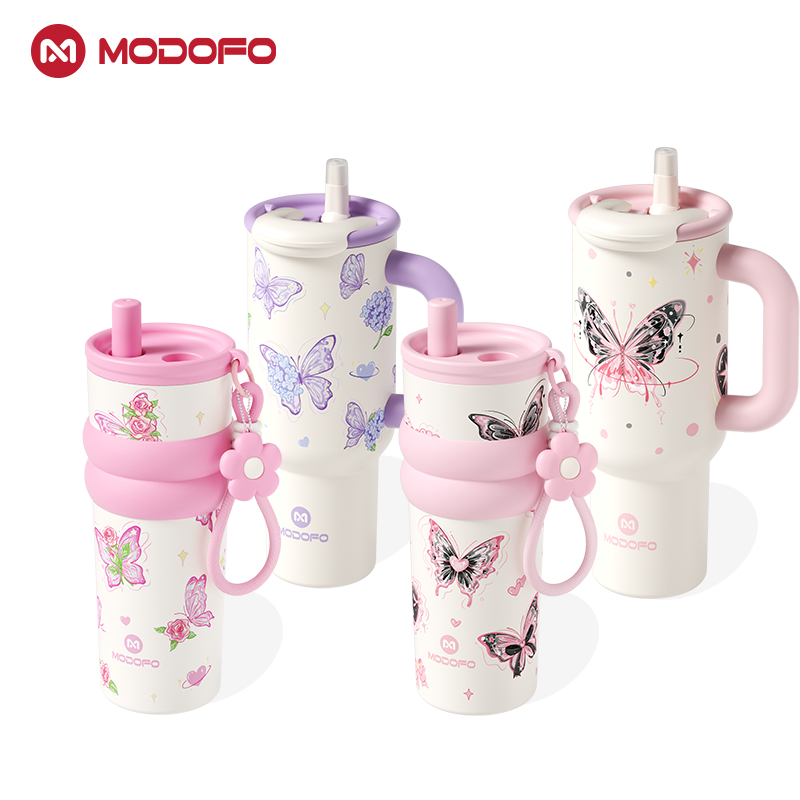
- Seri Bloom Joy
- Seri Tumbler Anak-Anak
- Seri Buah
- Gelas Minum Portabel untuk Sehari-hari
Kategori-kategori ini sangat bergantung pada struktur yang ringan, ekspresi warna yang cerah, dan beragam bentuk cangkir. 304 lebih kompatibel dengan desain-desain tersebut, memungkinkan kualitas dan konsistensi produksi yang lebih tinggi.
3. Keunggulan Manufaktur: Produktivitas dan Kustomisasi yang Lebih Baik dengan 304
Dari sudut pandang produksi dan operasional, baja tahan karat 304 menawarkan keunggulan yang jelas:
Fleksibilitas pemrosesan yang lebih tinggi
Hal ini mendukung desain yang rumit, pelapisan multi-lapisan, dan perawatan permukaan yang berwarna-warni.
Tingkat hasil yang lebih baik
Hal ini mengurangi cacat dan memungkinkan kontrol yang lebih tepat terhadap jadwal produksi.
Performa yang lebih stabil dalam kustomisasi OEM dan perusahaan.
Untuk pesanan khusus dalam jumlah besar, 304 memungkinkan MODOFO untuk mempertahankan jadwal pengiriman yang dapat diprediksi dan melindungi klien dari biaya kustomisasi yang tinggi.
Efisiensi operasional ini secara langsung berdampak pada pengalaman pelanggan yang lebih baik dan penetapan harga yang lebih kompetitif.
4. Di Mana Baja Tahan Karat 316 Cocok: Penggunaan Presisi untuk Skenario dengan Tuntutan Tinggi
MODOFO menggunakan baja tahan karat 316 secara strategis—bukan secara menyeluruh.
Dua produk unggulan yang menggunakan teknologi 316 meliputi:
• Teko Termos MODOFO 316 Stainless Steel 1L
https://modofo.net/products/modofo-316-stainless-steel-thermos-teapot-1-l-thermal-coffee-pot-for-hot-and-cold-drinks
• Cangkir Kopi MODOFO Bloom Joy Series 500ml (Stainless Steel 316)
https://modofo.net/products/modofo-coffee-cup-500ml-bloom-joy-series-thermos
Produk-produk ini dipilih untuk kode 316 karena alasan operasional yang jelas:
• Bahan-bahan ini banyak digunakan di lingkungan kopi dan teh, di mana tingkat keasamannya lebih tinggi.
• Pengguna menyimpan minuman untuk jangka waktu yang lama.
• Mempertahankan kemurnian rasa sangat penting secara komersial.
• Produk-produk ini dirancang untuk daya tahan jangka panjang dalam penggunaan profesional atau perkantoran.
MODOFO tidak menggunakan 316 sebagai "label premium." Sebaliknya, 316 diterapkan di mana keunggulan teknisnya menciptakan nilai pengguna yang terukur.
5. Perspektif Efisiensi Biaya: Perbedaan Nyata Antara 304 dan 316
Dari sisi perusahaan, perbedaan antara baja tahan karat 304 dan 316 bukan hanya bersifat teknis—perbedaan tersebut memengaruhi strategi bisnis.
Dampak Biaya Material
Baja tipe 316 biasanya memiliki biaya bahan baku 15–30% lebih tinggi , tergantung pada tren harga baja global.
Kompleksitas Manufaktur
316 memerlukan kalibrasi mesin yang lebih canggih, memiliki dampak abrasi yang lebih tinggi, dan biasanya mengakibatkan lebih banyak pemborosan produksi.
Kesesuaian berdasarkan Kategori Produk
Tidak semua bentuk produk kompatibel dengan 316 karena keterbatasan berat, ketebalan, atau struktur.
Faktor-faktor ini menjadikan 316 pilihan yang tepat hanya untuk produk-produk di mana peningkatan ketahanan korosi secara langsung memengaruhi nilai jualnya. Pendekatan MODOFO memastikan pengguna membayar untuk kinerja—bukan untuk pemasaran.
6. Perbandingan Pasar: Menghindari Jebakan Industri "Penetapan Harga Material yang Berlebihan"
Banyak merek di industri peralatan minum global menggunakan kode 316 sebagai pemicu penetapan harga. Mereka memperlakukan peningkatan kualitas material sebagai pembenaran nilai untuk kenaikan harga yang signifikan—jauh melebihi perbedaan biaya material sebenarnya.
MODOFO mengambil sikap yang berbeda:
• Kami menerapkan 316 hanya di area di mana manfaat kinerjanya nyata.
• Kami menjaga transparansi harga dengan menghindari inflasi biaya buatan.
• Kami memprioritaskan kepercayaan jangka panjang dan keberlanjutan merek di atas keuntungan jangka pendek.
Hal ini memungkinkan MODOFO untuk mempertahankan rangkaian produk yang seimbang yang memenuhi kebutuhan pelanggan yang memperhatikan anggaran maupun pengguna profesional.
7. Dari Pengalaman Pengguna: 304 Menawarkan “Kompatibilitas” yang Lebih Tinggi dalam Kehidupan Sehari-hari
Baja tahan karat 304 bukan sekadar "cukup baik"—tetapi juga sangat serbaguna dalam penggunaan di dunia nyata.
Keunggulannya meliputi:
Untuk keluarga
Ringan, mudah digenggam, aman untuk anak-anak dan pengguna lanjut usia.
Untuk pengguna korporat
Lebih tahan terhadap sidik jari dan penyok, ideal untuk kebutuhan hidrasi sehari-hari di kantor.
Untuk pengguna di luar ruangan
Rasio berat terhadap kekuatan yang lebih baik, sehingga lebih mudah dibawa untuk mendaki gunung, berkemah, dan bepergian.
Untuk penggunaan sehari-hari jangka panjang
Persyaratan perawatan lebih rendah dan kinerja stabil selama bertahun-tahun.
316, sebagai perbandingan, lebih terspesialisasi—unggul dalam daya tahan dan ketahanan terhadap korosi tetapi belum tentu meningkatkan kenyamanan pengguna secara umum.
8. Strategi Material Ganda: Membangun Ekosistem Produk yang Berkelanjutan
Keputusan MODOFO untuk menggabungkan baja tahan karat 304 dan 316 mendukung model pertumbuhan yang seimbang:
• Variasi produk yang lebih luas
• Rantai pasokan yang stabil dan terukur
• Pengendalian biaya yang lebih baik
• Fleksibilitas untuk inovasi masa depan
• Solusi yang tepat sasaran untuk berbagai kelompok pelanggan
Dengan memaksimalkan kekuatan kedua material tersebut, kami mengoptimalkan keandalan produk, efektivitas biaya, dan kredibilitas merek.
9. Kesimpulan: 304 dan 316 Bukanlah Pesaing—Mereka Adalah Mitra Strategis
Narasi bahwa “316 lebih baik daripada 304” terlalu menyederhanakan kenyataan. Dalam penerapannya secara praktis:
304 adalah pilihan bernilai tinggi dan berkompatibilitas tinggi.
untuk sebagian besar kebutuhan hidrasi sehari-hari.
316 adalah pilihan berkinerja tinggi dan berdaya tahan tinggi.
untuk minuman khusus dan skenario penyimpanan panas jangka panjang.
Strategi material ganda ini memungkinkan MODOFO untuk memberikan:
• Penetapan harga yang praktis
• Diferensiasi produk berbasis kinerja
• Filosofi merek yang transparan dan dapat dipercaya
• Penyelarasan yang lebih baik dengan beragam kebutuhan pengguna global
Hasilnya adalah rangkaian produk yang fungsional, mudah diakses, dan berlandaskan pada kepraktisan dunia nyata—persis seperti seharusnya peralatan minum modern dibuat.