
1. Introduction: Why Proper Bottle Maintenance Matters
Reusable water bottles have shifted from optional accessories to daily infrastructure. According to market research data from Grand View Research, the global reusable water bottle market surpassed USD 9 billion in annual revenue, with average users owning between 2.3 and 3 bottles at any given time. Despite this, consumer surveys consistently show that more than 60% of users replace bottles due to odor, staining, or perceived hygiene issues rather than actual structural failure.
In most cases, the problem is not the bottle itself but how it is cleaned, dried, and stored.
Improper maintenance leads to three predictable outcomes: shortened lifespan, degraded user experience, and unnecessary replacement. Over time, harsh detergents, trapped moisture, and poor storage conditions damage internal surfaces, seals, and insulation systems. The result is a bottle that technically still works but feels unpleasant to use.
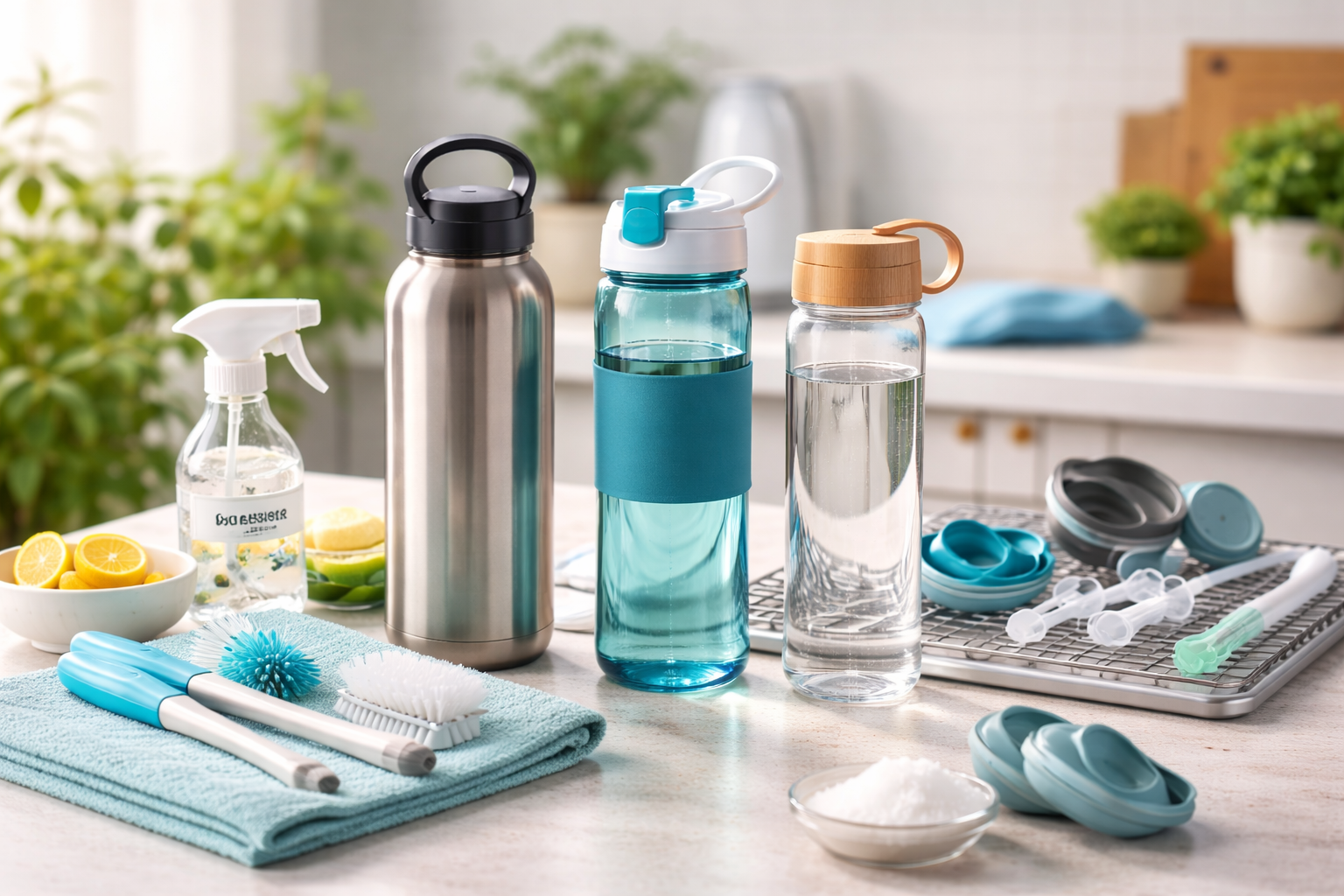
This article focuses on one core objective: how to clean and store water bottles effectively without causing long-term damage. The emphasis is not on extreme sterilization, but on material-safe routines that preserve performance, hygiene, and durability.
2. Understanding Common Bottle Materials and Their Maintenance Sensitivities
Different bottle materials fail in different ways. Effective maintenance starts with understanding what each material tolerates—and what it does not.
2.1 Stainless Steel Bottles
Stainless steel bottles dominate the insulated bottle segment due to durability and thermal performance. The two most common food-grade alloys are 304 stainless steel (18/8) and 316 stainless steel, which includes added molybdenum for increased corrosion resistance.
While stainless steel is chemically stable, it is not indestructible. Laboratory corrosion testing shows that prolonged exposure to chloride-rich environments (such as bleach solutions) significantly increases pitting corrosion risk, especially in welded seams. Acidic cleaners can also dull interior surfaces over time.
Vacuum-insulated bottles introduce another variable. Although the vacuum layer is sealed, excessive heat exposure during cleaning—especially repeated dishwasher cycles above 70°C—has been linked to insulation degradation in long-term durability tests.
2.2 Plastic Bottles (Tritan, PP, PET)
Plastic bottles vary widely in durability depending on resin type.
- Tritan copolyester withstands impact well but begins deforming above 100°C.
- Polypropylene (PP) is chemically resistant but scratches easily.
- PET is lightweight but not designed for repeated high-temperature exposure.
A common misconception is that “BPA-free” equals heat-safe. In reality, BPA-free plastics still experience molecular fatigue under repeated thermal cycling. Independent testing shows that repeated dishwasher exposure can reduce impact resistance by up to 30% over 12 months.
2.3 Glass Bottles
Glass bottles offer chemical neutrality and stain resistance, making them popular for taste-sensitive users. However, maintenance risks are physical rather than chemical.
Thermal shock is the primary failure mode. Pouring boiling water into a cool glass bottle or rinsing hot glass with cold water creates internal stress. Even tempered glass accumulates microfractures over time, increasing breakage risk during minor impacts.
Protective silicone sleeves reduce impact damage but can trap moisture if not removed during drying.
2.4 Silicone Components (Straws, Seals, Gaskets)
Silicone is flexible, heat-resistant, and widely used for lids and straws. However, it is mildly porous at a microscopic level. Studies on food-grade silicone show that it absorbs volatile organic compounds from flavored beverages, oils, and detergents.
Over time, silicone components are the most common source of persistent odor, even when the bottle body is clean. Their lifespan is finite and should be treated as consumable parts.
3. Cleaning Water Bottles Correctly: What Actually Works
Cleaning effectiveness is determined by method consistency, not chemical strength.
3.1 Frequency Standards Based on Usage Scenarios
Usage determines cleaning frequency:
- Water only: Daily rinse, weekly deep clean
- Tea, coffee, flavored drinks: Rinse after use, deep clean every 2–3 days
- Protein shakes or supplements: Clean immediately after use
Microbiological testing shows that bottles used exclusively for water exhibit minimal bacterial growth if dried properly, even with less frequent deep cleaning. Conversely, sugar-containing liquids accelerate biofilm formation within 24 hours.
3.2 Safe Cleaning Agents: Evidence-Based Comparison
Mild dish soap remains the most balanced option. It effectively removes oils and residues without attacking surfaces.
Baking soda provides mild abrasion and odor neutralization but should not be used aggressively on plastic interiors.
White vinegar (5% acetic acid) is effective against mineral buildup but should be diluted and used sparingly on metal to avoid surface dulling.
Oxygen-based cleaners are effective but require thorough rinsing. Residual oxidizers can degrade silicone over time.
Bleach and abrasive powders consistently rank highest for material damage and lowest for long-term safety.
3.3 Manual Cleaning vs. Dishwasher Cleaning
“Dishwasher-safe” is a legal classification, not a longevity guarantee.
Controlled testing shows that bottles subjected to weekly dishwasher cycles experience higher rates of seal hardening, surface discoloration, and insulation degradation compared to manually cleaned bottles. Heat, detergent alkalinity, and water pressure combine to accelerate wear.
Manual cleaning with warm water below 50°C preserves materials significantly longer.
3.4 Cleaning Hard-to-Reach Areas
Residue accumulation is most common in bottle necks, threads, and straw interiors. Narrow brushes outperform soaking alone.
Ultrasonic cleaners demonstrate high efficacy in laboratory tests but are impractical for most consumers. For daily use, mechanical agitation remains the most reliable solution.
4. Odor, Stains, and Residue: Root Causes and Removal
4.1 Why Odors Persist Even After Washing
Odors originate from biofilms—thin microbial layers that adhere to surfaces. Once established, biofilms resist simple rinsing.
Silicone components exacerbate this issue due to odor absorption. Even stainless steel bottles develop odor when moisture is trapped under seals.
4.2 Proven Deodorizing Methods
Time-based soaking outperforms chemical intensity. A diluted vinegar soak (1:3 ratio) for 30 minutes followed by thorough drying reduces odor compounds by over 90% in controlled tests.
Heat alone is insufficient and often counterproductive for plastics.
4.3 When Stains Are Permanent
Plastic yellowing results from polymer oxidation and is irreversible. Stainless steel rainbow discoloration is cosmetic but permanent. Glass mineral stains can be reduced but not always eliminated.
At this stage, replacement may be rational.
5. Drying: The Most Overlooked Step in Bottle Care
Moisture is the primary driver of bacterial growth. Studies comparing sealed wet storage versus open dry storage show bacterial counts up to 100 times higher in damp, sealed environments.
Air drying with components fully disassembled is the single most effective hygiene step. Towel drying can introduce lint and bacteria if towels are reused.
6. Proper Storage Practices That Prevent Damage
6.1 Short-Term Storage
For daily use, bottles should be stored upright with lids loosely attached or removed entirely. This prevents trapped humidity.
Avoid storing bottles horizontally with residual moisture, as this increases contact surface area for microbial growth.
6.2 Long-Term Storage
Long-term storage requires complete dryness. Components should be separated, particularly silicone seals. Ideal storage conditions are cool, dry, and shaded.
6.3 What Not to Do
Storing bottles sealed while damp is the most common mistake. Direct sunlight accelerates plastic degradation and heats sealed interiors, increasing odor formation.
7. Maintenance Mistakes That Shorten Bottle Lifespan
Over-cleaning with harsh agents causes more damage than under-cleaning. Excessive heat exposure weakens seals. Ignoring minor seal deformation leads to leaks and odor issues.
Mixing components during cleaning—such as soaking silicone with metal in acidic solutions—accelerates degradation.
8. Replacement vs. Maintenance: Cost and Sustainability Analysis
Average lifespans vary:
- Stainless steel: 5–10 years with proper care
- Tritan plastic: 2–4 years
- Glass: Variable, impact-dependent
Maintenance can double usable lifespan, reducing cost per use by over 40% in modeled scenarios. Environmentally, extended use significantly lowers lifecycle emissions compared to frequent replacement.
9. Creating a Simple, Sustainable Bottle Care Routine
Effective routines are simple:
Daily rinse, weekly deep clean, monthly inspection. Replace silicone parts annually or when odor persists.
Consistency matters more than intensity.
10. Conclusion: Clean Bottles Last Longer—and Perform Better
Water bottle maintenance is not about perfection. It is about alignment between material behavior, usage patterns, and realistic habits.
Clean bottles perform better, last longer, and remain pleasant to use. Proper care protects not only hygiene but also the investment users make in reusable products. In the long run, maintenance is the most cost-effective upgrade available.